Mobile Welding ServicesOn-site welding & metal repair across Texas — we come to you
Commercial kitchen stainless repair
Commercial Kitchen Stainless Steel Repair, Done On Site Between Services
A cracked prep table leg or a split sink seam can shut down a station during the dinner rush. Alpha Mobile Welding TX coordinates on-site commercial kitchen stainless steel repair across Texas through partner welders who TIG weld 304 and 316, blend the repair and passivate it so it cleans like the original surface. We work around your service hours, including early mornings and after close. Restaurants, hotels, school cafeterias, food plants and kitchen-equipment service companies send us photos, and we confirm a partner and a price before anyone arrives.
Partner availability and after-hours scheduling are confirmed per job before any work is booked.
What the work involves
What commercial kitchen stainless steel repair actually covers
Most kitchen stainless is thin sheet formed into tables, sinks, shelving, wall skins and hood panels, with tube or angle legs and brackets underneath. It takes a beating: dropped stock pots, carts rolled into corners, daily caustic cleaners and constant thermal cycling near fryers and ranges. Repairs on that material are less about strength and more about leaving a surface that can be cleaned, does not trap food soil and does not start to rust a week later.
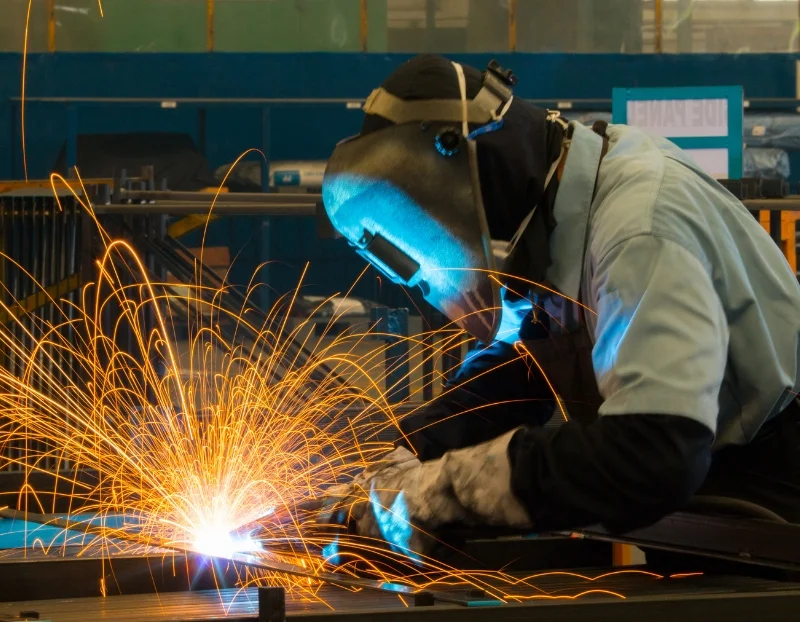
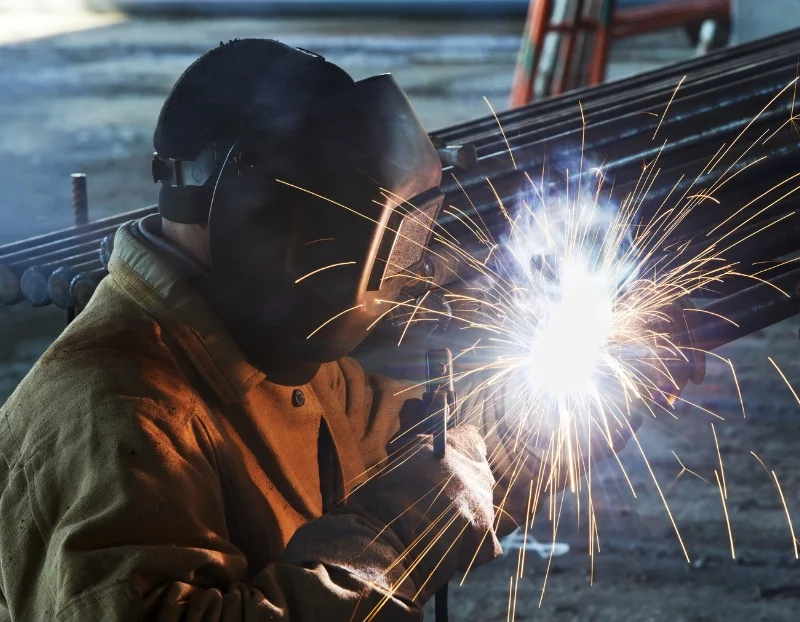
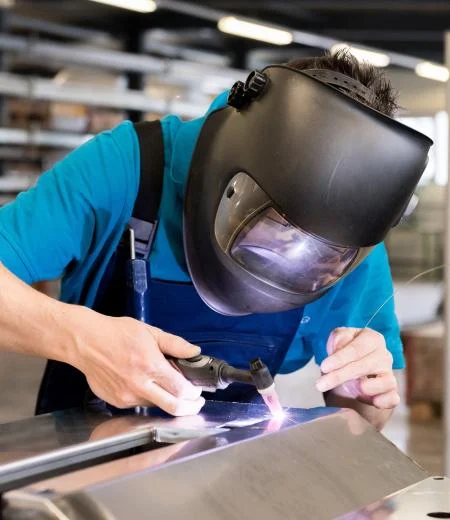
That is why the standard method is GTAW, or TIG, with filler matched to the base metal: 308L for 304 equipment and 316L for 316. TIG puts a small, controlled amount of heat into the sheet, so a partner welder can close a crack in a sink bowl or rebuild a corner without warping the whole top. The bead is then ground flush on food-contact and splash surfaces, blended to match the surrounding grain, and treated to remove heat tint and restore the passive layer.
Gas lines, refrigeration circuits, electrical components and anything carrying an NSF listing or manufacturer warranty belong to licensed trades or the equipment maker. We weld and finish the stainless; we do not certify equipment. For other on-site work for businesses, see commercial mobile welding.
- TIG welds on 304 and 316 with matched L-grade filler
- Ground, blended and passivated food-contact surfaces
- Scheduling around service, including after close
- No gas, refrigeration, electrical or NSF certification work
- Partner welder confirmed and quoted before arrival
Common failures
Stainless kitchen problems that bring operators to us
Most of these failures come from impact, vibration or corrosion at a weak joint rather than from the stainless itself.
Cracked sink seams and drainboards
Compartment sinks crack where the bowl meets the deck or along a corner weld, often after years of hot water and heavy pans. Small leaks soak cabinets and floors before anyone notices.
Broken table legs and gussets
Prep tables take side loads from carts and mixers. Leg-to-frame welds and gusset plates fatigue, the table starts to rack, and eventually a leg or crossrail snaps loose.
Loose shelving and wall brackets
Wall shelves and overshelves loaded with dry goods or plates pull at their brackets. Cracked welds and torn mounting tabs leave shelves sagging toward the line.
Damaged hood and backsplash panels
Panels near ranges and fryers get dented, buckled or torn at seams. Gaps behind the line collect grease and make cleaning harder, which inspectors tend to notice.
Torn wall and walk-in skins
Stainless skins on walls and walk-in exteriors get punctured by carts and pallet jacks. Torn edges snag mops and gloves, and open seams let moisture in.
Rust spots and failed old repairs
Brown staining near a weld usually means heat tint was left untreated or carbon steel tools contaminated the surface. Rough, porous MIG patches often fail first.
What partners repair
On-site stainless repairs for commercial kitchens
Each repair is welded, blended and cleaned on site so the station can go back into service quickly.
Prep table and worktop repair
Re-welding cracked tops, rebuilding torn edges and corners, reinforcing undershelves and crossrails, and replacing damaged legs or gussets with matching stainless tube and plate.
Sink and drainboard welding
Closing cracks in compartment sinks, re-welding bowl-to-deck seams and drainboard corners, and blending the bowl so it drains and cleans without ridges.
Shelving, brackets and overshelves
Re-welding wall brackets, fabricating replacement tabs and gussets, and stiffening sagging shelves. Wall fastening is coordinated with your facilities team.
Hood skirt and backsplash panels
Straightening, patching and seam welding stainless panels and backsplashes. Exhaust ducts, fire suppression systems and hood listings stay with licensed contractors.
Wall and walk-in skin patching
Cutting out torn sections, fitting new 304 sheet and welding seams where the construction allows, then blending to match the surrounding grain.
Carts, racks and custom brackets
Repairing broken cart frames, pan rack welds and caster mounts, and fabricating small stainless brackets or guards when no off-the-shelf part exists.
Why Alpha Welding
Why kitchens call Alpha for stainless repair
We focus on repairs that hold up to daily washdown and still look like stainless when the welder leaves.
Sanitary-minded finishing
Partners grind food-contact welds flush, blend the grain and remove heat tint, so the repair does not become a crevice for soil or a rust starter.
Clean stainless practice
Stainless-only brushes, discs and clamps keep carbon steel particles off your equipment, the most common cause of rust after a repair.
Scheduling around service
We plan visits before prep or after close, subject to partner availability, so nobody is welding beside a working line.
Straight answers on scope
If a repair touches gas, refrigeration, electrical or a listed assembly, we tell you who should handle it instead of working around it.
How it works
From a few photos to a repaired station
Most kitchen jobs can be quoted from clear photos and a short description.
Send photos and details
Share photos of the damage, the equipment type, the address and when the station can be taken out of service.
Confirm scope and price
We identify the grade, confirm what can be welded on site, and quote before a partner welder is booked.
Weld during a quiet window
A partner arrives at the agreed time, protects nearby surfaces, and TIG welds the repair with matched filler.
Finish, clean and hand back
The weld is blended and passivated, the area is wiped down, and you get photos of the finished repair.
Practical guide
What good kitchen stainless repair looks like
A kitchen repair has to pass two tests: it has to hold, and it has to clean. Here is what separates a lasting repair from a patch that rusts or cracks again.
Identify 304 or 316 before welding
Most tables, sinks and shelving are 304, while some sinks, dish areas and equipment exposed to brine or chlorides use 316. The two look identical, so partners check data plates or manufacturer information first. Filler follows the base metal: 308L for 304 and 316L for 316. Using 308L on 316 leaves a weld less resistant to chlorides than the sheet around it, which is exactly where pitting shows up in a dish area. Some light-duty racks are 400-series ferritic stainless, which behaves differently again.
Control heat on thin sheet
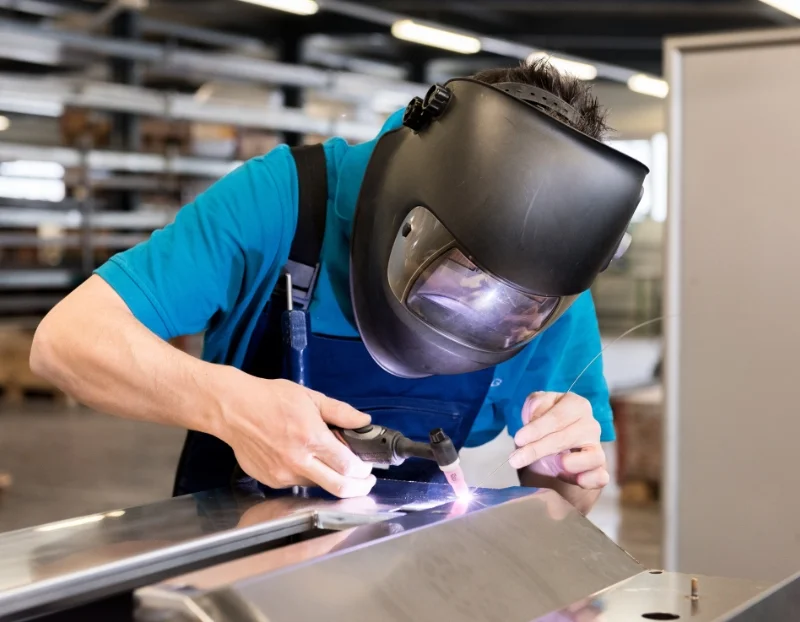
Thin stainless distorts quickly because it holds heat and expands more than mild steel. Partners use low-amperage TIG, short welds, staggered tacks and copper backing bars to pull heat away from the joint. On a sink deck or table top, that is the difference between a flat repair and an oil-canned surface that pools water. Excess heat also leaves dark heat tint and, on open-back joints, sugaring, a rough oxidized root that traps soil.
Blend, then restore the passive layer
On food-contact and splash surfaces, the weld is ground flush and blended so there is no ridge, pit or crevice where soil can collect. Partners step through finer abrasives to match the existing brushed grain as closely as practical; a repair may still be visible up close, and we say so before quoting. Heat tint is removed with pickling paste or an electrochemical weld cleaner, and the area is passivated and rinsed so the chromium oxide film reforms evenly. Skipping this step is the usual reason a repair stains after a few washdowns.
Health inspection expectations, in general terms
Local health inspectors in Texas generally expect food-contact surfaces to be smooth, durable, free of cracks and open seams, and easy to clean, and they look closely at sinks, prep surfaces and areas behind the line. A properly blended and passivated weld supports that expectation. We do not interpret code for your facility, and requirements vary by jurisdiction, so check with your health authority or equipment supplier if you are unsure whether repair or replacement is the right answer.
Know when to replace or call another trade
Gas appliances, refrigeration lines, electrical housings and fire suppression systems belong to licensed trades. Equipment under warranty or carrying an NSF listing may lose that status if modified, so check with the manufacturer first. Sheet that is thin and pitted throughout is often cheaper to replace than to patch. If a station is down unexpectedly, see how urgent requests are handled under emergency welding services.
How to prepare for a repair visit
- Clear and empty the table, sink or shelf being repaired
- Have your own staff or trades isolate nearby equipment
- Wipe grease and chemical residue from the work area
- Plan a window when no food is prepared nearby
- Tell us about fire alarm or sprinkler sensitivity in advance
Related welding services
Not sure if it can be welded?
Send photos of the damage and any data plate. We will tell you whether on-site repair, replacement or another trade is the better fit.
Service areas
Where partners repair kitchen stainless in Texas
Partner welders cover the major Texas metros, including restaurant districts, hotel corridors and food facilities. In North Texas, see our Dallas mobile welder and Fort Worth mobile welder pages. Coverage, travel and after-hours availability are confirmed per address before booking.
Austin and San Antonio
Other Texas
FAQs
Commercial kitchen stainless repair questions
What restaurant operators and facility managers ask most before booking a repair.
Can you repair stainless equipment without removing it from the kitchen?
Usually, yes. Most table, sink, shelf and panel repairs are done in place with portable TIG equipment in a cleared, protected area. Items needing extensive rework may be better handled in a shop, and we will say so when quoting.
Can the work be done after closing or before opening?
Yes, after-hours and early-morning visits are common for kitchen work. These windows depend on partner availability in your area and are confirmed when the job is booked, not assumed.
Will the repaired area pass a health inspection?
A properly welded, blended and passivated repair leaves a smooth, cleanable surface, which is what inspectors generally look for. We cannot speak for any inspector, so if a piece was cited, share the note with us and confirm with your health authority.
Do your partners work on gas lines, refrigeration or electrical parts?
No. Gas connections, refrigeration, electrical components and fire suppression systems belong to licensed contractors or the manufacturer. Partners repair the stainless around them once the right trade has safely isolated that equipment.
Can you certify equipment as NSF compliant after a repair?
No. NSF listing is held by the manufacturer for the original design, and we do not certify or relist equipment. If a piece is listed or under warranty, check with the manufacturer before modifying it.
Why does my stainless table have rust spots?
Usually from embedded iron left by carbon steel tools or steel wool, or from untreated heat tint at an old weld. Cleaning and passivation often fix contamination; rust along a weld line may mean the repair needs to be redone.
Can a cracked compartment sink be welded rather than replaced?
Often it can, if the surrounding sheet is sound. If the bowl is thin, pitted throughout or badly distorted, replacement may be more economical. Photos of the crack and the underside help us give a realistic answer.
What is the difference between 304 and 316 for kitchen equipment?
316 contains molybdenum, which improves resistance to chlorides from salt, brine and some sanitizers, so it appears in dish areas and specialty equipment. Most tables and shelving are 304. Partners match filler to the grade.
Do you work with kitchen equipment service companies?
Yes. Service companies sometimes bring us in for the welding while they handle mechanical, gas or electrical work. We coordinate timing with your technician and quote the stainless work separately.
How do I get an estimate?
Call 979-250-7486 or use the estimate form with photos, equipment type, grade if known, the address and your preferred window. We confirm scope, partner availability and price before booking; estimates are free.
Request an estimate
Get a damaged kitchen station back in service
Send photos of the stainless damage and your preferred repair window. We confirm a partner welder, the scope and the price before anyone arrives.
- Free, no-obligation estimates
- Photos help us understand the job faster
- Same-day requests depend on partner availability