Mobile Welding ServicesOn-site welding & metal repair across Texas — we come to you
Pontoon transom and motor mount repair
Pontoon Transom Welding in Texas: Motor Mount, Motor Pod and Splash Guard Repair
The motor mount is the hardest-working spot on a pontoon. Every pull out of the hole, every tight turn and every prop strike sends load straight into the transom bracket and the welds that hold it to the tubes. When cracks show up there, it’s not something to run on and watch. Alpha Mobile Welding TX coordinates partner welders who repair pontoon transom brackets, motor pods, splash guards and the structure around them, on site across Texas. Send photos and we’ll tell you what you’re looking at.
Clear photos of the mount and any cracks help us quote faster. Visit timing depends on partner availability.
How a pontoon transom works
What Pontoon Transom Welding Actually Involves
Pontoons don’t have a full transom like a V-hull boat. On a two-tube boat, the outboard usually hangs on a transom bracket or motor mount plate at the stern, tied into the rear cross members and the inside of the tubes. On a tritoon, the motor often mounts on a pod or extension at the back of the center tube, which is built heavier and sometimes carries lifting strakes and a splash guard or underskin to manage spray.
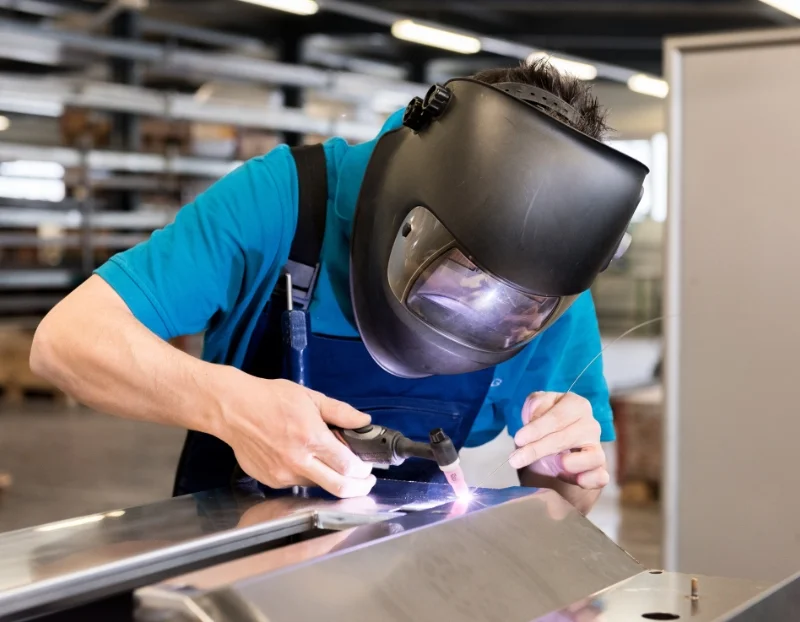
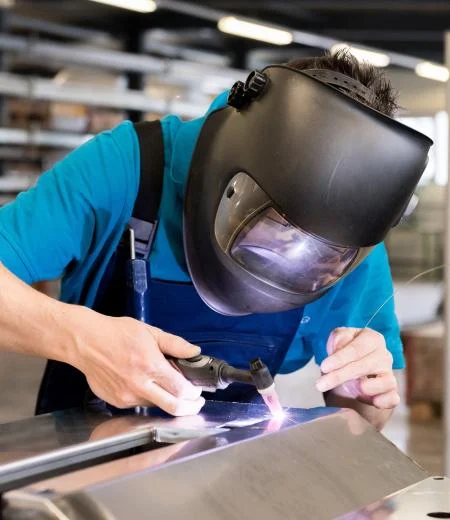
Those mounts carry thrust, steering loads, the motor’s weight and vibration, and the shock of every wave and prop strike. Cracks appear around bolt holes, at the welds between the mount and the tube, and where the pod meets the cross members. Partner welders inspect the whole stern structure, grind cracks to sound metal, reweld with 5356 filler using AC TIG or a spool gun, and add doubler plates or gussets so the load spreads into more metal.
For the rest of the boat, see our pontoon boat repair hub and our aluminum pontoon tube welding page.
- Transom bracket and motor plate repair
- Tritoon motor pod welding
- Splash guard and underskin mounts
- Doubler plates and gussets
- Stern cross member reinforcement
Common stern problems
Pontoon Transom Problems We Fix
Most stern damage comes from load, vibration and impact.
Cracks around mounting bolts
Repeated thrust and vibration work the motor plate until cracks radiate from the bolt holes.
Pod-to-tube weld cracks
On tritoons, the welds joining the motor pod to the center tube carry heavy load and crack at the toes.
Prop strike damage
Hitting a stump or rock with the lower unit sends a shock into the mount, cracking welds or bending the plate.
Overpowered boats
Motors heavier or stronger than the boat was built for overload the stern structure and crack it early.
Splash guard cracks
Splash guards and underskin panels near the motor crack at their mounts from spray, vibration and debris.
Corrosion at the stern
Stainless bolts, the motor’s own metals and salt water speed up corrosion around the mount.
Transom welding services
Pontoon Transom and Motor Mount Services
We fix the crack and the reason it cracked.
Transom bracket repair
Rewelding cracked brackets and motor plates, with doublers added around bolt holes and stress points.
Motor pod repair
Rewelding pod-to-tube joints, repairing pod skins and reinforcing the pod with gussets.
Stern cross member reinforcement
Rewelding or adding cross members and gussets so the motor load spreads into the frame.
Splash guard repair
Rewelding cracked splash guard and underskin mounts, or fabricating new aluminum guards.
Bolt hole repair
Filling elongated or cracked bolt holes with weld, then redrilling so the motor mounts tight.
Leak repair after stern damage
Pressure testing the center or outer tubes after stern cracks, and welding any leaks found.
Why Alpha Welding
Why Owners Call Us for Transom Repairs
Motor mount repairs need to be done right the first time.
Load-path thinking
Partners look at where the load goes, not just the crack, so the repair doesn’t move the problem next door.
Aluminum focus
AC TIG and spool-gun setups made for marine aluminum plate and tube.
Repairs where the boat sits
Lift, driveway, storage lot or marina, so the boat doesn’t need a tow.
Honest answers
If the motor is too big for the boat, we’ll tell you.
How it works
How a Pontoon Transom Repair Works
Four steps from photos to a solid mount.
Send photos
Call or text 979-250-7486 with photos of the mount, pod and any cracks.
Inspect
The partner checks the bracket, pod, stern cross members and nearby tube welds.
Repair and reinforce
Cracks are welded and doublers or gussets added where the load needs spreading.
Test and check
Tubes near the repair are pressure-tested and the motor mount is checked for fit.
Technical guide
Pontoon Transom and Motor Mount Repair Guide
What owners should know about how pontoon motor mounts fail and how partner welders repair them.
How motor loads move through a pontoon
An outboard pushes the boat through its mount. That thrust, plus steering loads, the motor’s weight and vibration, goes from the mount into the stern cross members and then into the tubes. On tritoons with a center-tube pod, most of it goes straight into the center tube. Anywhere that load path has a sharp change, like a weld toe, a bolt hole or the end of a gusset, is where cracks start. A good repair smooths that path out instead of just filling the crack.
Spotting cracks early
Look at the stern every few trips. Check around each motor mounting bolt for hairline cracks or paint cracking in a star pattern. Look along the welds where the bracket or pod meets the tubes and cross members. Check that the motor bolts are tight and the motor doesn’t shift when you push on the lower unit. Catching a crack when it’s an inch long means a quick repair. Waiting until it’s six inches can mean rebuilding part of the mount.
Prop strikes
When the lower unit hits a stump or rock, the shock goes up the motor and into the mount. Even if the prop and skeg look fine, check the mount afterward. Bent motor plates, cracked bracket welds and elongated bolt holes are common after a hard strike. Have the motor itself checked by a marine mechanic too, since a strike can damage the gearcase or shaft.
Horsepower ratings and repowering
Every pontoon has a capacity plate with a maximum horsepower rating. That rating reflects what the stern structure was designed to carry. Hanging a motor above it overloads the mount and cracks it early, and it can create a real safety problem at speed. If you’re repowering, stay at or below the rating. A welder can reinforce a mount that’s cracked, but reinforcement doesn’t raise the boat’s rating.
Repairing the bracket and pod
Cracks are traced to their ends, stop-drilled, ground into a groove down to sound metal and welded with 5356 filler. Around bolt holes, a doubler plate with rounded corners is often added so the clamping load spreads over more area. Pod-to-tube joints get gussets where the original design leaves a hard stress point. Elongated bolt holes are filled with weld, ground flush and redrilled to the correct size so the motor sits tight.
Splash guards and underskins
Many pontoons and tritoons have a splash guard, spray deflector or aluminum underskin near the stern to keep spray off the deck and smooth water flow at the motor. These thin panels and their mounts crack from vibration and spray load, and get torn by debris. Partners reweld cracked mounts, patch torn panels, or fabricate a new guard from marine aluminum sheet when the original is too far gone.
Welding near the motor
Welding near an outboard takes care. The battery is disconnected so welding current doesn’t travel through the motor’s electronics, and the ground clamp is placed close to the weld on clean aluminum. Fuel lines and tanks nearby are moved or protected, and any fuel vapor in the area must be cleared before heat goes on. Sometimes it’s easier and safer to have the motor removed by a marine mechanic before major mount work.
Corrosion at the stern
The stern has a lot of mixed metals: stainless mounting bolts, the motor’s aluminum and steel parts, sacrificial anodes and sometimes a steel jack plate. In salt water that speeds up corrosion on the pontoon’s aluminum. Partners check for pitting around fasteners and the mount, grind it back to sound metal before welding, and isolate stainless hardware where possible. Keep the motor’s anodes in good shape, because they protect the motor, not the pontoon.
Checking the tubes after stern damage
A crack in the mount or pod can run into the tube skin, and a hard strike can open a seam at the back of a tube. After any stern repair, the nearby chambers are pressure-tested with a very small amount of air, usually a couple of psi, and soapy water. Any leaks found are welded and retested before the boat goes back in.
Repair or replace the mount?
Most cracked brackets and pods can be repaired and reinforced. A mount that’s badly bent, cracked in many places or heavily corroded may be better rebuilt with new plate. Check warranty terms with the builder before outside welding on a newer boat.
Before the welder arrives
- Get the boat out of the water on a lift, trailer or stands
- Tilt the motor up and disconnect the battery
- Tell us the motor's horsepower and the boat's rating
- Mention any recent prop strikes
- Let us know if power is available
Related welding services
Cracks around the motor bolts?
Don’t run it hard until it’s checked. Send close-up photos and we’ll tell you what the repair involves.
Service areas
Pontoon Transom Welding Near Me in Texas
Partner welders cover lakes, bays and storage lots across Texas. Availability is confirmed for each address. Find your area below.
Houston and the coast
Dallas-Fort Worth
Central Texas
South Texas
FAQs
Pontoon Transom Welding Questions
What owners ask about pontoon motor mounts and transoms.
Can a cracked pontoon motor mount be welded?
Usually, yes. The crack is stop-drilled, ground to sound metal and welded with 5356 filler, then reinforced with a doubler plate or gussets so the load spreads out. Badly bent or heavily corroded mounts may need new plate instead.
Is it safe to run my pontoon with a cracked transom bracket?
It’s not a good idea. Motor loads make cracks grow quickly, and a failed mount at speed is dangerous. Run slowly back to the dock or ramp and get it inspected before the next trip.
Can you repair a tritoon motor pod?
Yes. Pod-to-tube weld cracks, pod skin cracks and stern cross member damage are common tritoon repairs. The center tube near the pod is pressure-tested afterward in case a crack reached the tube.
Can I put a bigger motor on my pontoon if the mount is reinforced?
No. Reinforcing a cracked mount restores strength but doesn’t raise the boat’s horsepower rating. Stay at or below the maximum on the capacity plate.
Is there a pontoon transom welder near me?
Alpha Mobile Welding TX coordinates partner welders across Texas, including Houston, Dallas, Fort Worth, Austin, San Antonio, Corpus Christi and the major lakes. Call or text 979-250-7486 with photos and your location.
How much does pontoon transom welding cost?
It depends on how far the cracks have spread, whether doublers or new plate are needed, access around the motor and travel. A short crack costs much less than rebuilding a pod. Photos let us estimate realistically.
Does the motor have to come off?
Not always. Many repairs can be done with the motor tilted up and the battery disconnected. Larger rebuilds around the mount are safer and easier with the motor removed by a marine mechanic first.
Request an estimate
Get Your Pontoon Motor Mount Fixed
Send close-up photos of the mount and tell us where the boat is. We’ll reply with an estimate and partner availability.
- Free, no-obligation estimates
- Photos help us understand the job faster
- Same-day requests depend on partner availability