Mobile Welding ServicesOn-site welding & metal repair across Texas — we come to you
MOBILE WELDING IN WACO, TX
Mobile Welding in Waco, TX – On-Site Repair and Fabrication for Ranches, Fleets and Businesses on I-35
Waco sits halfway between Dallas and Austin on I-35, and that position shapes the welding work: distribution and manufacturing along the interstate, ranch and hay country in every direction, boat trailers headed to Lake Waco, and a downtown rebuilt around Magnolia and Baylor. When steel breaks on a pipe fence, a gooseneck or a warehouse dock, the welder needs to come to it. Alpha Mobile Welding TX coordinates independent partner welders who serve Waco and McLennan County. Text a photo and measurements to 979-250-7486 for a straight quote.
✓Certified and Insured Welders
Same-day visits in Waco are subject to partner availability. Photos get you a faster quote.
Services
Which welding repairs can be done on site in Waco?
Partner welders bring the process the job calls for, from stick in a windy pasture to TIG on an aluminum hull.
Ranch and farm welding
Pipe fence, gates, cattle guards, pens, chutes, hay equipment and implement repairs across McLennan County, with engine-driven machines for sites without power.
Trailer and fleet repair
Goosenecks, bumper-pulls, stock, flatbed and boat trailers, plus service-truck beds and toolboxes, welded in your yard or driveway.
Commercial and warehouse welding
Racking, dock equipment, bollards, rolling gates, mezzanine stairs and security steel for the I-35 and Loop 340 business parks.
Structural and light fabrication
Beams, columns, lintels, canopies, carports and platforms, welded to engineer drawings where the work carries load and needs a permit.
Aluminum and stainless welding
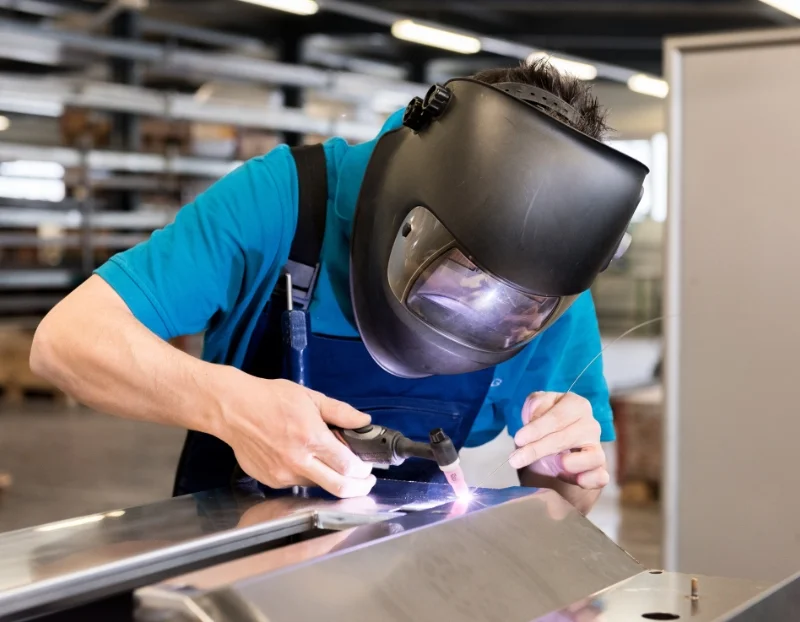
AC TIG and spool-gun MIG for aluminum boats, ramps and toolboxes with 4043 or 5356 filler; TIG for stainless restaurant and food-plant fittings.
Heavy equipment welding
Buckets, blades, loader arms, skid-steer attachments and tractor frames repaired on site with preheat and hardfacing where wear parts demand it.
How it works
How do you book a mobile welder in Waco?
Four steps, and most Waco repairs are completed in a single visit.
Send photos and details
Text or email pictures, the metal type, rough dimensions and your address or gate location. Mention if there is no power on site.
Get a scoped quote
A partner welder reviews the job and we send a price and time window. Bigger jobs may get a quick walk-through first.
Welder arrives on site
The partner brings the machine, gas, rod or wire, grinders and safety gear, clears a safe work area and starts.
Inspect and sign off
You check the weld, fit and function before the truck leaves. Bare steel gets primer or cold galvanizing.
Pricing
How much does mobile welding cost in Waco?
Most Waco jobs are quoted as a range from your photos, then confirmed by the partner on site before any work starts. A hinge repair on a residential gate and a full day of structural work at a commercial site land in very different places, and five factors decide where.
Travel and after-hours charges are quoted before scheduling, not added to the invoice. If the photos show a job that would cost more to repair than to replace, we say so.
- Travel distance from the nearest available partner, including addresses on the edge of the service area
- Time on site: cutting, prep and cleanup of rust, paint or galvanizing
- Materials, and whether you or the partner supply pipe, plate or hinges
- Metal and process: stick on steel versus TIG on aluminum or stainless
- Site requirements: hot work permits, fire watch, weekend or after-hours timing
Why Alpha Welding
Why do Waco customers use Alpha instead of hauling equipment to a shop?
We coordinate the right welder for the job and keep the process honest from first photo to sign-off.
Matched to the job
Pipe fence, aluminum hull or warehouse rack, we send a partner with the right process and experience, not just the nearest truck.
Scoped before quoted
Photos and measurements go to the welder first, so the price reflects the real repair rather than a guess over the phone.
Ready for rural sites
Engine-driven machines, long leads and wind-tolerant stick rod mean a partner can work a pasture as easily as a loading dock.
Straight talk on code work
If a job needs an engineer, permit or inspection, we say so up front instead of welding first and asking later.
What we do
What does a mobile welder bring to a Waco job site?
Waco is a working Central Texas city. I-35, Loop 340, US-84 and SH-6 move trucks through distribution centers, tire and food plants and building-supply yards. The Brazos runs through the middle of town, Lake Waco draws boats every weekend, and once you clear Hewitt, Woodway, Robinson or Bellmead you are in cattle, hay and pipe-fence country on Blackland clay. Add Baylor and the Magnolia crowds downtown and the mix of welding calls is as varied as anywhere in the state.
Alpha does not run a shop or branch in Waco. We coordinate vetted, independent partner welders who already work McLennan County and the I-35 corridor. We match the job to a welder with the right process and machine, confirm a window, and send them to your address with a truck-mounted rig, gas, rod or wire and grinders. Most repairs are finished in one visit.
That matters when the broken thing is a cattle guard at the end of a county road, a boat trailer in a Woodway driveway, or a dock leveler holding up a shift on Loop 340.
- Engine-driven stick, MIG, flux-core and TIG rigs
- Steel, stainless and aluminum repaired on site
- Ranch, fleet, commercial and residential work
- Scoped from photos, quoted before work starts
- Partners serving Waco, Hewitt, Woodway, Robinson and Bellmead
Common jobs
What welding problems do Waco customers call about?
Ranch steel, trailers and I-35 commercial sites make up most of the calls from McLennan County.
Pipe fence and cattle guards
Blackland clay heaves posts and cracks welds at the rail-to-post joint. Partners re-weld with 6011 and 7018, replace rotted sections and reset posts so the fence stays straight through the next wet winter.
Gooseneck and stock trailer frames
Hauling cattle and hay on county roads cracks necks, crossmembers and ramp hinges. Crack-stop drilling, V-groove prep and multi-pass welds put the trailer back to work before the next sale.
Lake Waco boat trailers
Galvanized and aluminum trailers crack at the tongue, winch post and bunk brackets. Partners weld steel and aluminum on site and recoat where zinc was burned off.
Warehouse racks, docks and gates
Distribution and manufacturing sites along I-35 and Loop 340 bend rack uprights, break dock bumpers and jam rolling gates. Repairs happen in place around the shift schedule.
Farm equipment and implements
Hay rings, shredder decks, bale spears, loader buckets and cast-iron implement parts get repaired in the barn with preheat, hardfacing or nickel rod as the part requires.
Railings, stairs and ornamental iron
Older homes near Baylor and downtown, plus rental properties around Magnolia, need handrail, balcony and stair repairs that look right and pass inspection.
Local guide
What affects welding repairs in Waco?
What ranchers, fleet owners, facility managers and homeowners around Waco ask most, answered the way a welder would.
Pipe fence on Blackland clay
The clay around Waco swells when it rains and shrinks hard in August, and a fence line built on it moves every year. Posts lean, top rails pull away and the welds at the saddle crack. A repair that lasts starts with resetting the post, not just re-welding the joint. Partners cut the cracked saddle clean, re-notch the rail for full contact, and weld with 6011 on the root for penetration through mill scale and 7018 on top for strength. Setting posts below the active clay layer and bracing corners does more than any weld to keep the line straight.
Stock and gooseneck trailers between sales and pastures
Cattle trailers on county roads crack at the neck-to-frame weld, the rear gate hinges and the crossmember-to-rail joints. Partners find the crack end, drill a stop hole, grind a V-groove and weld in multiple passes, keeping the heat-affected zone small so the repair does not become the next crack. Where the manufacturer prohibits welding on the main rail flange, a bolted or sleeved reinforcement is used instead. Trailers inspected under DOT rules get welds checked for porosity and undercut and photographed for your records.
Boat trailers and aluminum hulls at Lake Waco
Lake trailers crack at the tongue, winch post and bunk brackets, and galvanized steel needs special handling. Partners grind the zinc back from the joint, weld with 7018 or MIG with good ventilation, then recoat with cold galvanizing spray. Aluminum jon boats and bass boats crack at ribs and transoms; those are welded with AC TIG or pulse MIG using 5356 filler after cleaning with a dedicated stainless brush. Below-waterline repairs are leak-tested before launch, and fuel tanks are never repaired on site.
Warehouses and plants along I-35 and Loop 340
Rack uprights hit by forklifts are replaced to the manufacturer’s repair guidance or an engineer-approved detail, with the bay unloaded until welds cool. Dock bumper brackets and leveler lips are repaired in the pit with 7018 or MIG. Indoor work in a sprinklered building usually means a hot-work permit, fire watch and welding blankets over anything combustible within 35 feet. Partners plan this with your facility team so an early-morning repair does not become an alarm call.
Implements, cast iron and hardfacing
Shredder decks, bale spears and loader buckets wear and crack with hay season. Mild steel repairs run on stick or MIG; cast-iron housings and older implement parts need preheat, nickel rod, short beads and slow cooling to limit cracking in the heat-affected zone. Cutting edges and bucket lips get a hardfacing overlay so they wear slower than the base metal. Send a photo and partners will tell you whether a field repair makes sense or the part should be replaced.
Structural steel and city permits
Carports, canopies, lintels, beams and exterior stairs that carry load fall under the City of Waco permit process and usually need engineer-stamped drawings and inspection of field welds. The same applies to railings and stairs on rental properties near Baylor and downtown. Partners weld to the drawing with the specified electrode, joint prep and weld size and leave the welds accessible for the inspector. Unsure whether your job needs an engineer? Send the sketch before anyone quotes it.
What should you do before the welder arrives?
- Clear livestock, dry grass and fuel cans well away from the work
- Have a gate code or pasture directions ready for rural sites
- Know the metal type and thickness, or photograph a cut edge
- Pull a hot-work permit for indoor commercial work if required
- Keep a water source or extinguisher nearby in dry months
Related welding services
Is it a field repair or a shop job?
Send a photo to 979-250-7486. If the part is faster, safer or cheaper to fix in a fabrication shop, we will tell you before anyone drives out.
Service area
Which Waco neighborhoods and nearby cities do you cover?
Partner welders cover Waco and McLennan County, from the I-35 business parks to ranch country out past Lake Waco and the Brazos bottoms. Coverage is confirmed per address, because availability shifts with hay season and weather. Send your street address or gate location with your photos.
Waco
- Waco
- Downtown and Magnolia area
- Baylor area
- China Spring
- Lake Waco
McLennan County suburbs
- Hewitt
- Woodway
- Robinson
- Bellmead
- Lacy Lakeview
Surrounding towns
- McGregor
- Lorena
- West
- Mart
- Valley Mills
Central Texas
- Temple and Belton
- Killeen
- Georgetown
- Round Rock
- All Texas service areas
FAQs
What do Waco customers ask before booking a mobile welder?
Answers to what ranchers, fleet owners, facility managers and homeowners in Waco ask before booking.
How do you price a job?
From photos and measurements first, then a firm quote. Small repairs are a flat job price covering travel, setup, consumables and welding. Larger work is quoted per the drawing. Surprises found on site are discussed before more work is done.
Can you get a welder out the same day?
Sometimes, subject to partner availability. During hay season and after storms, welders around Waco book fast. Send photos with your address and we will give you an honest window rather than a promise.
Does Alpha have a welding shop in Waco?
No. Alpha coordinates independent partner welders who serve Waco and McLennan County. The welder comes to your location with a truck-mounted machine and consumables. If a job is better done in a fabrication shop, we will tell you.
Does structural work need a permit in Waco?
Load-bearing work such as carports, canopies, beams, lintels and exterior stairs generally requires a City of Waco permit, engineer-stamped drawings and inspection of field welds. Partners weld to the drawing and leave welds accessible for the inspector.
Do you repair gooseneck and stock trailers?
Yes. Necks, crossmembers, gate hinges, ramps and floor supports are routine. DOT-inspected trailers get welds checked for porosity and undercut and photographed. Main rail flanges follow the manufacturer’s repair rules.
Can you weld on my ranch if there is no power?
Yes. Partners run engine-driven welders with long leads, so pipe fence, cattle guards and implement repairs happen at the pasture. Stick rod handles wind and dirty steel; 6011 for penetration and 7018 for strength are the usual choices.