Aluminum welding near you
Aluminum Welding and Repair, Done On Site
Aluminum does not forgive shortcuts. It pulls heat away fast, gives no color warning before it melts, and cracks when the prep or filler is wrong. Alpha Mobile Welding TX matches aluminum jobs with partner welders who have the TIG or spool-gun MIG equipment and the experience to do them properly, at your location wherever the job allows. Send photos of the part and we will tell you what the repair involves.
Trailers, ramps, boat and marine parts, toolboxes and custom aluminum work.
Aluminum basics
What makes aluminum welding different?
Aluminum behaves very differently from steel under the torch. It conducts heat several times faster, so the joint keeps drawing heat away as the weld goes on. It melts at a much lower temperature, around 1,220°F for pure aluminum and lower for many alloys, and it does not glow or change color first. Its surface is covered by an oxide layer that melts at roughly 3,700°F, far above the metal underneath, and that layer has to be removed or broken up for the weld to fuse.
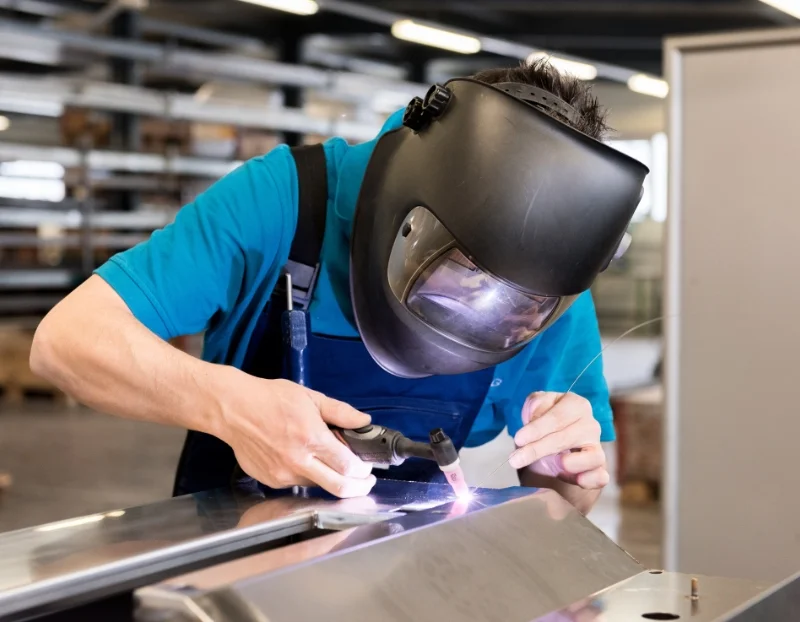
That combination is why aluminum needs the right machine and a practiced hand. TIG on alternating current breaks up the oxide while the welder controls heat precisely. Spool-gun or push-pull MIG feeds soft aluminum wire without tangling, which makes longer and thicker welds practical. Filler choice matters too: 4043 and 5356 are the most common, and the right one depends on the base alloy, the strength needed and how the part will be finished.
Alpha reviews each aluminum request and sends it only to partners with aluminum equipment and experience, then stays your contact through the estimate and repair.
- TIG and spool-gun MIG aluminum welding
- Crack repair, reinforcement and fabrication
- Filler selected for the alloy and use
- Trailer, marine, truck and equipment parts
- On-site work where conditions allow
Common aluminum jobs
Aluminum repairs we are asked about most
Aluminum is used wherever light weight matters, which also means it is everywhere vibration and fatigue cause cracks.
Aluminum trailers
Cracked crossmembers, tongue joints, ramp hinges, fenders and stake pockets on utility, car-hauler and boat trailers.
Boat and marine parts
T-tops, rails, brackets, ladders, pontoon fittings and dock components. Hull work below the waterline needs extra care and is assessed case by case.
Ramps and loading equipment
Loading ramps, dock plates and walkways that crack at welds or hinges from repeated heavy loads.
Truck accessories
Toolboxes, headache racks, running boards and the brackets that hold them. Tanks that have held fuel are never welded until properly cleaned and made safe.
Cast aluminum parts
Housings, brackets and some engine parts are cast aluminum, which is often porous and oil-soaked. Some can be repaired; others are better replaced.
Custom aluminum fabrication
Brackets, enclosures, rails and simple custom parts built to measurement, on site or at a partner workshop.
Processes and capabilities
How aluminum is welded and repaired
The method depends on the alloy, the thickness, the location and what the part has to do afterward.
AC TIG welding
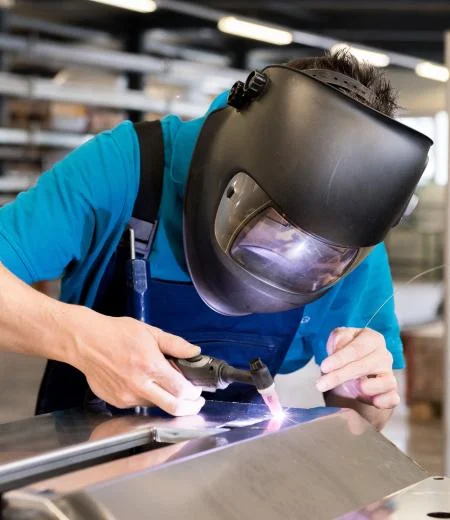
TIG on alternating current is the standard for thin and precise aluminum work. The AC cycle breaks up surface oxide while the welder controls heat with a foot pedal or torch control.
Spool-gun and push-pull MIG
For thicker sections and longer welds, MIG with a spool gun or push-pull feeder is faster and puts more heat into the joint. It is common for trailer frames and heavier fabrication.
Crack repair
The crack is located, its ends are drilled to stop it spreading, and it is ground out to clean metal and rewelded. Reinforcement plates are added where fatigue caused the failure.
Filler metal selection
5356 offers higher strength and a better color match after anodizing. 4043 flows well and resists cracking on many 6000-series alloys. The partner chooses based on the part and its use.
Cleaning and preparation
Oil and dirt are removed with solvent, then the oxide is brushed off with a stainless brush kept only for aluminum, just before welding. Contamination is the leading cause of porous aluminum welds.
Shop or on-site work
Many aluminum repairs can be done on site in sheltered conditions. Wind blows shielding gas away, so some jobs are moved under cover or to a partner workshop.
Why Alpha Welding
Why aluminum jobs come to Alpha
Aluminum is where an inexperienced welder costs you twice. Our job is to make sure the right person and equipment are sent.
Photos reviewed before dispatch
We look at the part, thickness and alloy clues first, so the partner brings the right process and filler.
Matched aluminum capability
Only partners with aluminum equipment and experience are sent on aluminum jobs.
Clear about limits
If a casting is not repairable, or a weld would weaken a heat-treated part, you hear that before any work starts.
One point of contact
Alpha coordinates the estimate, scheduling and follow-up, so you are not chasing individual welders.
How it works
How an aluminum welding request works
The steps are simple, but photos matter more with aluminum than with almost any other metal.
Describe the part
Tell us what it is, what broke and how it is used. Boat, trailer and truck parts each have different needs.
Send close-up photos
Include the crack or break, the welds around it and any markings or alloy stamps.
Confirm method and estimate
We match a partner with aluminum capability and confirm whether the work is on site or at a workshop.
Repair and review
The partner preps, welds and finishes the repair, and you review it before sign-off.
Technical guide
Aluminum welding explained in practical terms
You do not need to know metallurgy to get an aluminum part repaired, but a little background explains why quotes differ and why some repairs are not recommended.
Why aluminum cracks and porosity happen
Aluminum shrinks a lot as it cools, so the weld and the metal beside it can crack if the joint is tightly restrained or the filler is a poor match for the base alloy. Porosity, the tiny gas bubbles that weaken a weld, usually comes from hydrogen: moisture, oil, paint or old oxide on the metal or the filler. That is why preparation is not optional. Clean metal, clean filler, dry conditions and good gas coverage solve most problems before they start.
Heat-treated alloys and lost strength
Many structural aluminum parts are heat-treated alloys such as 6061-T6. Welding heat softens the metal next to the weld, and that zone loses a meaningful share of its original strength unless the whole part is heat-treated again. For trailers, rails and brackets this is normally handled with joint design and reinforcement. For load-rated, lifting or safety-critical parts, the manufacturer or an engineer should confirm whether a weld repair is acceptable.
Cast aluminum: repair or replace?
Castings are often porous and soaked with oil, and many cast alloys do not weld as predictably as sheet, plate or extrusion. Small cracks in housings and brackets can sometimes be repaired after thorough cleaning and preheating. Parts under pressure or high load, or parts that are inexpensive to replace, are usually better replaced. A clear photo of the casting and any part number helps us give you an honest answer.
Marine and trailer considerations
Boats and boat trailers see saltwater, which speeds up corrosion and leaves contamination in every seam, so expect extra cleaning time. Fuel lines, tanks, batteries and wiring near the repair have to be protected or removed first. On trailers, cracks tend to return where the design concentrates stress, so a good repair often adds a gusset or doubler plate rather than simply refilling the crack.
Painted, anodized and coated aluminum
Paint, powder coat and anodizing all have to come off around the joint before welding, because the coating contaminates the weld and burns back unevenly. Anodized parts will not match their original finish after welding; the weld and the area around it turn a different shade, and the only true match is stripping and re-anodizing the whole part. Painted or powder-coated parts can be touched up afterward. If appearance matters, say so in your request so the repair and finishing can be planned together.
Thickness and what can be fixed on site
Very thin aluminum, such as light sheet, diamond plate and thin-wall tubing, burns through easily and calls for TIG and patience. Thick sections soak up so much heat that they may need preheating or a larger machine to fuse properly. Most trailer, ramp and marine work falls between those extremes and suits on-site repair. When a part is at either end of the range, the partner may recommend bringing it to a workshop, where the conditions and equipment give a better result.
How to prepare for an aluminum repair
- Unload the trailer or part and support it safely
- Remove or protect fuel, batteries and wiring near the repair
- Note the alloy or part number if it is stamped or labeled
- Leave paint and coatings on; the welder removes what is needed
- Tell us if the job has to be done outdoors in an open area
Related welding services
Have a cracked aluminum part?
Send a close-up and a wide photo. We will tell you whether it is a good candidate for welding and how it would be done.
Where we work
Aluminum welding across supported Texas areas
Aluminum-capable partners work in the main Texas metro areas. Because not every welder handles aluminum, availability can differ from general welding, so we confirm the partner and your location before scheduling.
Greater Houston
- Houston
- Katy
- Cypress
- The Woodlands
- Southwest Houston
- Pasadena
Dallas–Fort Worth
- Dallas
- Fort Worth
- Arlington
- Plano
- Irving
- Frisco
Central Texas
- Austin
- San Antonio
- Killeen
South & West Texas
- Corpus Christi
- Laredo
- Brownsville
- El Paso
- Lubbock
- Amarillo
FAQs
Aluminum welding questions, answered
Answers to the aluminum questions we hear most often.
Where can I find aluminum welding near me?
Send your city and photos through the estimate form or call 979-250-7486. Alpha checks which partner with aluminum equipment works in your area and confirms availability and an estimate.
Can aluminum be welded on site?
Often, yes. TIG and spool-gun MIG equipment can be brought to your location. Wind is the main problem because it blows away shielding gas, so the work may need shelter or a partner workshop.
Is TIG or MIG better for aluminum?
TIG gives more control and a cleaner finish on thin material and visible welds. MIG with a spool gun is faster and better suited to thicker sections and longer welds. The partner chooses based on the part.
Can you repair a cracked aluminum trailer?
Usually. The crack is stopped, ground out and rewelded, and reinforcement is often added where the design caused the stress. Trailers that are badly corroded or repeatedly cracked may need a section replaced.
Can you weld an aluminum boat?
Many fittings, rails, brackets and above-waterline repairs can be welded. Hull repairs below the waterline, thin or corroded hulls and anything near fuel systems are assessed case by case.
Can cast aluminum be welded?
Sometimes. Castings are often porous and oil-soaked, which makes them unpredictable to weld. Small cracks may be repairable; high-load or pressure parts are usually better replaced.
Will welding weaken my aluminum part?
Welding softens heat-treated alloys near the weld. For most trailers and fabrications this is handled through design and reinforcement, but load-rated or safety-critical parts should be checked with the manufacturer or an engineer.
What does aluminum welding cost?
It depends on the part, thickness, preparation, access and travel. Aluminum usually takes longer than similar steel work because of the cleaning and heat control involved. Photos let us estimate before anyone drives out.
Why do aluminum welds sometimes come out porous?
Porosity usually comes from contamination: moisture, oil, paint or oxide on the metal or filler, or shielding gas blown away by wind. Careful cleaning and sheltered conditions prevent most of it.
Can you weld aluminum to steel?
Not with ordinary welding. Aluminum and steel form brittle compounds when fused together. Joints between them are usually bolted, riveted or made with special transition inserts.
Request an estimate
Get help with your aluminum repair
Tell us what the part is and send a few photos. We will match an aluminum-capable partner and come back with options and an estimate.
- Free, no-obligation estimates
- Photos help us understand the job faster
- Same-day requests depend on partner availability