METAL STAIR WELDING & REPAIR
Exterior Metal Stair Welding for Apartments, Townhomes and Homes
Exterior steel stairs take weather, foot traffic and neglect for years, then fail at a weld nobody looked at. A tread that rocks, a handrail that moves in your hand or a stringer rusted through at the base plate is a liability as much as a repair. Alpha Mobile Welding TX coordinates partner welders who come to the property, make damaged stairs safe and bring them back to sound condition. Apartment complexes, townhome communities, single-family homes and small commercial buildings. Call 979-250-7486 or send photos through the estimate form.
Block off a damaged stair before anyone uses it. Same-day visits depend on partner availability.
Stair welding explained
What exterior metal stair welding covers
An exterior steel stair is a small structure: two stringers of channel or plate carry treads, which land on a platform framed in angle or channel, with handrails and guardrails welded to posts. Each tread connects to its stringer with a few welds, and every one of those welds lives outdoors, usually under a layer of paint that stopped protecting the steel years ago.
Treads come in three common forms. Pan treads are steel trays filled with concrete, heavy and prone to hidden rust under the concrete. Bar grating treads drain well and are common at commercial buildings. Checker plate treads are solid diamond plate, easy to replace but slick when worn. Landings use the same materials. Handrails are typically 1 1/4 or 1 1/2 inch pipe or tube with balusters or infill panels between posts.
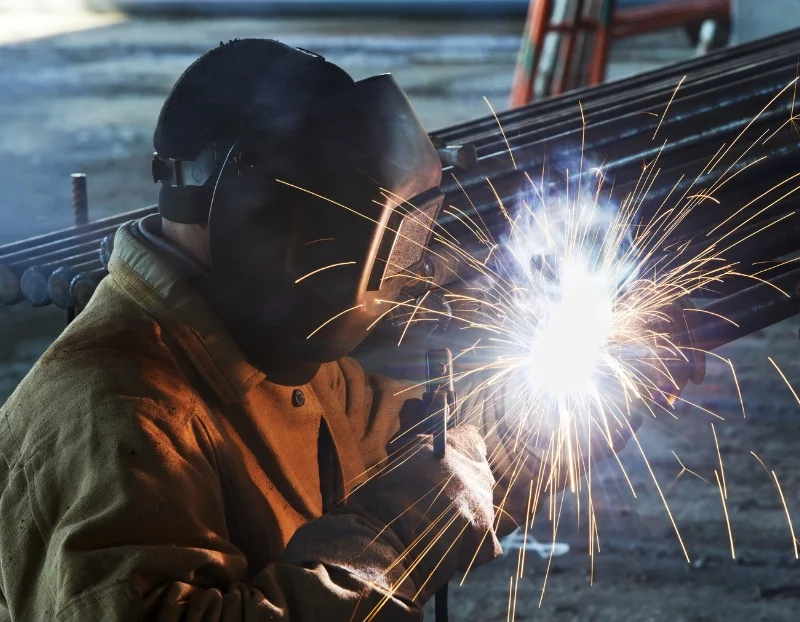
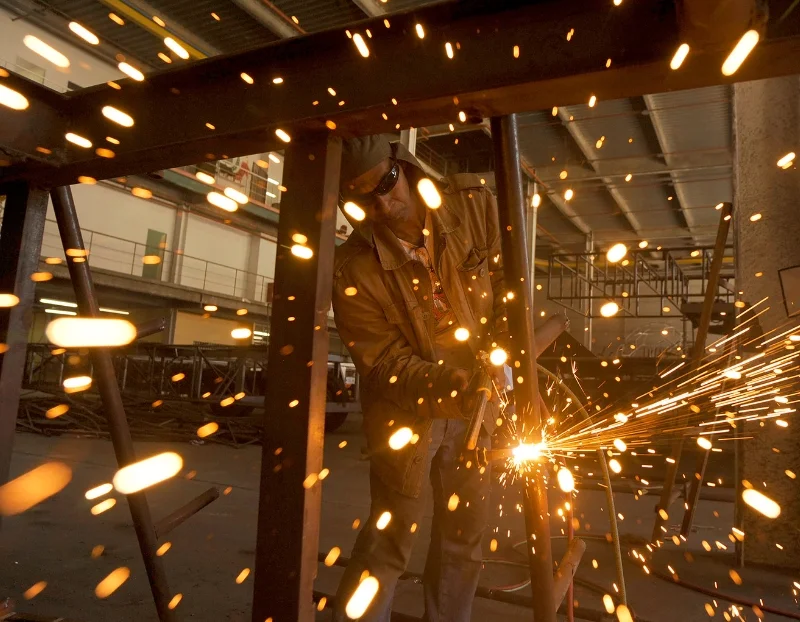
Stair welding is the repair of any of these parts in place: cutting out rusted tread ends and welding in new treads, plating or replacing stringer sections, resetting base plates on new anchors, re-welding loose rail posts and replacing missing balusters. Partner welders also fabricate replacement rail sections and small landings on site when a like-for-like replacement is the right answer.
- Stringers, treads and landings
- Handrails, guardrails and balusters
- Base plates, anchors and support posts
- Pan-filled, grating and checker-plate treads
- Apartment, townhome and residential exterior stairs
Common failures
Where exterior stairs fail
Six problems account for most stair repair calls from property managers and homeowners.
Rust at tread-to-stringer welds
Water runs down the stringer and sits in the corner where the tread lands. The weld and the tread end thin out until the tread rocks or drops. Pan treads hide it under the concrete fill.
Base plates rusted or loose
Stringers and rail posts end on base plates bolted to concrete. Standing water rots the plate and the first inch of steel above it, and anchors pull or corrode. The whole stair leans slightly.
Loose handrails and guardrails
Rail posts welded to the stringer edge crack from years of people leaning on them. A rail that moves under hand pressure will not resist a fall and is the first thing an inspector pushes on.
Cracked welds at landings
Landing frames carry the stair load into posts or the building. Cracks appear where the stringer meets the landing, often from thermal cycling and undersized original welds.
Missing or bent balusters
Balusters get kicked out, hit by moving carts or cut away. Each missing one opens a gap larger than code allows and is an easy fix to leave undone.
Worn or damaged treads
Checker plate polishes smooth, grating bars break, pan concrete cracks and lifts. Each one is a slip or trip hazard and usually a tread-by-tread replacement.
Stair services
Stair repairs a partner welder can do on site
Most work is done in place without removing the stair from the building.
Tread replacement
Cutting out rusted pan, grating or checker-plate treads and welding in new ones at the original rise, matching the tread depth and nosing so the stair stays consistent step to step.
Stringer repair and plating
Cutting out rusted stringer sections and splicing new channel, or plating a thinned web with new steel, with full-penetration welds where the stringer carries load.
Base plate and anchor replacement
Cutting off rotted base plates, welding new plates to the stringer or post and setting new wedge or epoxy anchors in sound concrete.
Handrail and guardrail repair
Re-welding cracked post connections, replacing bent rail sections, adding missing balusters and bringing rail height and openings back to the original design.
Landing and platform repair
Replacing rusted landing frame members, re-welding stringer-to-landing connections and replacing decking in grating or plate.
Replacement rail and stair sections
Fabricating new rail runs, small landings or short stair flights to match the existing building when repair of the old steel is no longer economical.
Why Alpha Welding
Why property managers call Alpha for stairs
Stairs are a safety structure, and the repair has to be treated that way.
Safety first on arrival
The welder assesses whether the stair is safe to use and tells you plainly if it should stay blocked until repaired.
Like-for-like or engineered
We say clearly when a job is a straightforward repair and when it changes the structure enough to need an engineer or permit.
Multi-unit experience
Partners who work apartment properties understand working around residents, scheduling by building and documenting the repair for your files.
Finished to last
Welds are primed and painted, drainage problems that caused the rust are pointed out, and galvanized replacement parts are offered where they make sense.
How it works
From a dangerous stair to a sound one
Four steps, with safety handled before anything else.
Send photos and block the stair
Photograph the damage, the base plates and the full flight. Tape off or sign the stair until it is checked.
Assessment and estimate
We review the scope, flag anything that needs an engineer, and send a price range and schedule.
On-site repair
The welder shores the stair as needed, cuts out failed steel, welds in replacements and re-anchors base plates.
Finish and documentation
Welds are ground, primed and painted. You get a walkthrough and photos of the completed repair for your records.
Technical guide
What matters in a metal stair repair
The points below explain how a partner welder judges a stair and why some repairs are simple while others need more than a welder.
Code basics an inspector looks at
Building codes treat stairs in plain terms that are easy to check. Risers in a flight should be consistent, generally within 3/8 inch of each other, and treads deep enough to stand on. Handrails sit roughly 34 to 38 inches above the tread nosing and must be graspable, which is why pipe and small tube are used. Guardrails along open sides on elevated landings are commonly 42 inches at multi-family buildings, and openings in the guard should not pass a 4 inch sphere. These are items to verify with your local jurisdiction, but a repair that leaves a tread high or a gap wide will be noticed.
Repair or structural change?
Replacing a tread, re-welding a rail post or swapping a base plate for the same size is a like-for-like repair. Splicing a stringer, changing the landing support, adding a flight or moving the stair footprint changes the structure, and that usually calls for an engineer’s review and a permit. The welder will tell you which side of that line the job is on. For apartment properties, having a stamped detail for a stringer splice protects the owner and makes the inspection straightforward.
Working on pan, grating and plate treads
Pan treads are the hardest to assess because concrete hides the steel. The welder taps the pan and probes the tread end; a hollow sound or soft steel means the tread comes out. New pans are welded in and filled, or swapped for grating if the property prefers a tread that drains. Grating treads are cut free, replaced and welded at the bearing bars with the carrier plate aligned to the stringer. Checker plate treads are replaced in kind or fitted with a nosing. In every case the new tread sits at the original rise so the flight stays consistent.
Stringers, base plates and anchors
A stringer rusted at the bottom is cut back to sound steel, then either spliced with a new channel section and full-penetration bevel welds, or reinforced with a plate on the web and flanges. The base plate is cut off, a new plate sized to the stringer is welded on and set on new anchors drilled into sound concrete, with a gap or grout bed that lets water drain rather than pool against the steel. Rail posts get the same treatment: cut, re-weld on a fresh plate, re-anchor.
Corrosion: paint vs hot-dip galvanizing
Most apartment stairs are painted steel, which lasts as long as the paint is maintained. Repairs are primed with a rust-inhibitive primer and top coated, with special attention to the inside corners where water sits. For replacement treads, rail sections and landings, hot-dip galvanized parts cost more up front but resist Gulf Coast humidity far better. Welding on galvanized parts means grinding the zinc back, ventilating the fumes and restoring with cold galvanizing compound. Fixing the drainage that caused the rust matters as much as the finish.
Property manager checklist
- Block off and sign any stair with a loose tread or rail before it is repaired
- Photograph damage, base plates and the full flight for the estimate
- Note whether residents have another exit route during the repair
- Ask whether the repair is like-for-like or needs an engineer
- Keep the completion photos and invoice with your inspection records
Related welding services
Is the stair safe to use right now?
If a tread moves underfoot, a rail shifts under hand pressure or a stringer is visibly rusted through, keep it closed until a welder has looked at it.
Where we work
Stair welding coverage across Texas
Partner welders handle exterior stair repairs at properties across the metros below. Coverage is confirmed per address when you request an estimate, and multi-building properties can be scheduled building by building so residents keep an open exit.
FAQs
Metal stair repair questions
Answers for property managers, HOA boards and homeowners.
Can exterior stairs be repaired in place?
Almost always. Treads, rails, balusters, base plates and most stringer damage are repaired with the stair where it stands. Removing a flight is only needed when the stringers are gone along most of their length, and at that point replacement is usually cheaper.
How do I know if a stair repair needs an engineer?
Like-for-like replacement of a tread, rail or base plate does not. Splicing a stringer, changing how a landing is supported or altering the layout does. The welder tells you which it is before quoting, and we can wait for an engineer’s detail if needed.
Should I close the stair before the welder arrives?
Yes if a tread moves, a rail is loose or a stringer is visibly rusted through. Tape it off and post a sign. A fall on a known-damaged stair is a serious liability for a property owner.
How much does metal stair repair cost?
A single tread or rail post is a short job priced on the call-out plus materials. Base plate replacement and stringer splices take longer. Full tread replacement on a flight is priced per tread. Photos get you a range before scheduling.
Do you replace concrete-filled pan treads?
Yes. Rusted pans are cut out, new pans welded in and filled, or replaced with grating treads if you prefer treads that drain and dry. The rise is kept consistent with the rest of the flight.
What handrail height is required?
Handrails are generally 34 to 38 inches above the nosing, and guards on open landings are commonly 42 inches at multi-family buildings. Verify with your local code office; the welder restores rails to the original design height unless you ask for a change.
Can you add missing balusters?
Yes. Balusters are matched in size and spacing to the existing rail so openings stay under the 4 inch sphere limit inspectors use. Bent balusters are cut out and replaced rather than straightened.
Will the repaired area rust again?
Not quickly if it is finished right. Welds are primed and painted or treated with cold galvanizing. The welder also points out the drainage issue that caused the rust, which is usually standing water at a base plate or tread corner.
Do you work on apartment properties with residents in place?
Yes. Partners schedule by building, keep an exit route open and coordinate with on-site staff. Noisy cutting and grinding are kept to agreed hours where the property requires it.
Can you fabricate a new rail or short flight?
Yes. Replacement rail runs, small landings and short flights are fabricated to match the existing stair. Anything that changes the structure is coordinated with an engineer and the permit office first.
Request an estimate
Make the stairs safe again
Send photos of the damaged stair, the base plates and the full flight with your property address. We confirm a partner welder and send a price range.
- Free, no-obligation estimates
- Photos help us understand the job faster
- Same-day requests depend on partner availability