BOAT AND MARINE WELDING
Aluminum Boat and Marine Welding Repair
A cracked hull seam or a leaking rivet line ends the weekend fast. Alpha Mobile Welding TX coordinates partner welders who handle aluminum boat welding, marine hardware and boat trailer welding where the boat sits: your driveway, a storage yard or a marina with permission. Jon boats, bay boats, pontoons and airboats are TIG or MIG welded with the right filler for the hull alloy. Trailers in galvanized steel or aluminum are repaired the same visit. Send photos or call 979-250-7486 for a quote.
Fuel and batteries are isolated before any hot work. Below-waterline repairs are water tested afterward.
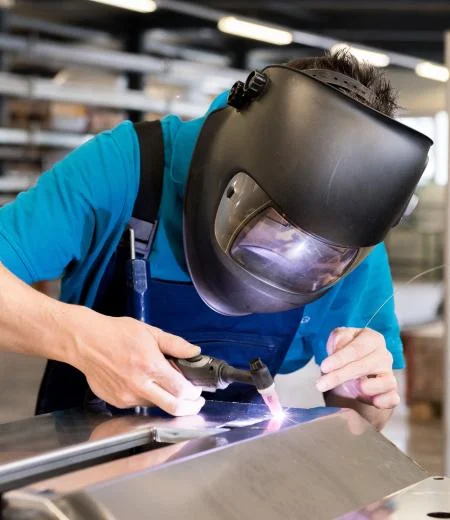
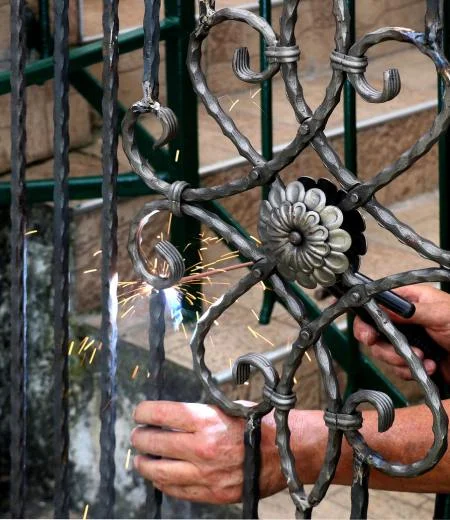
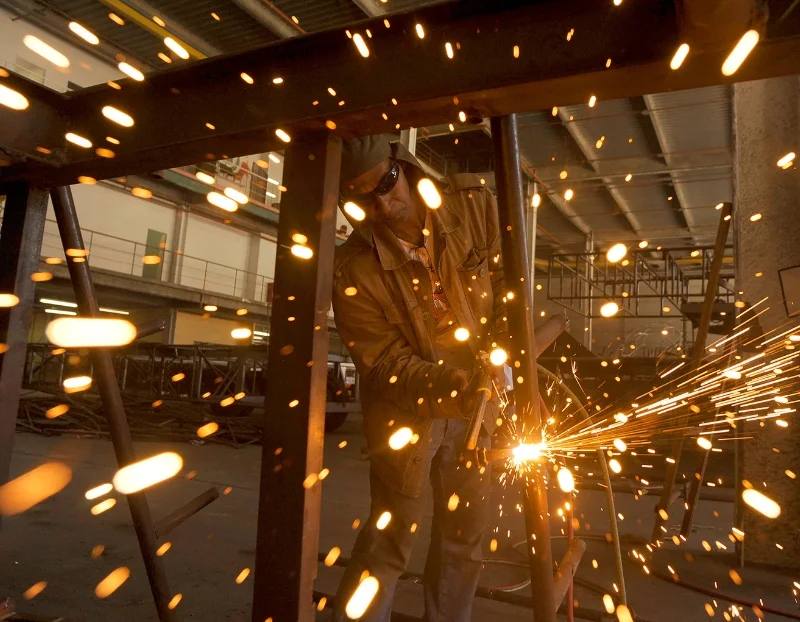
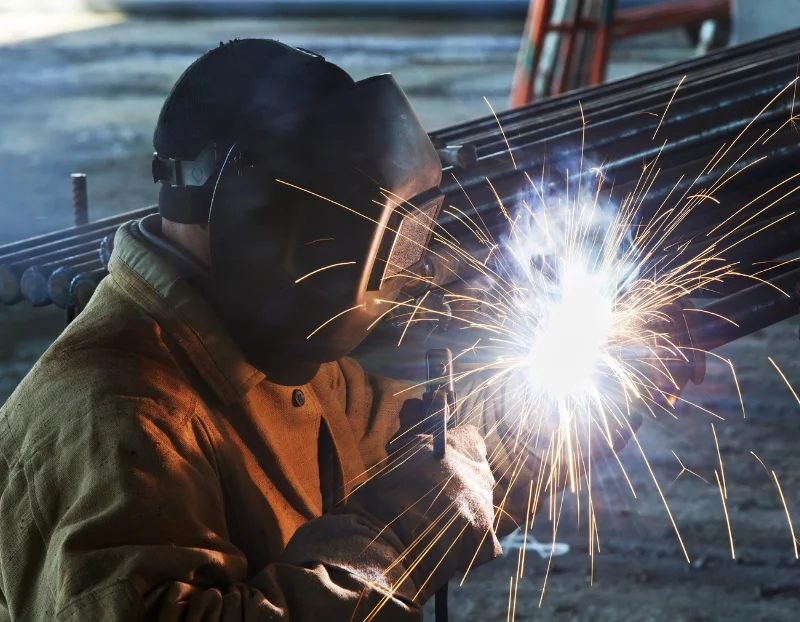
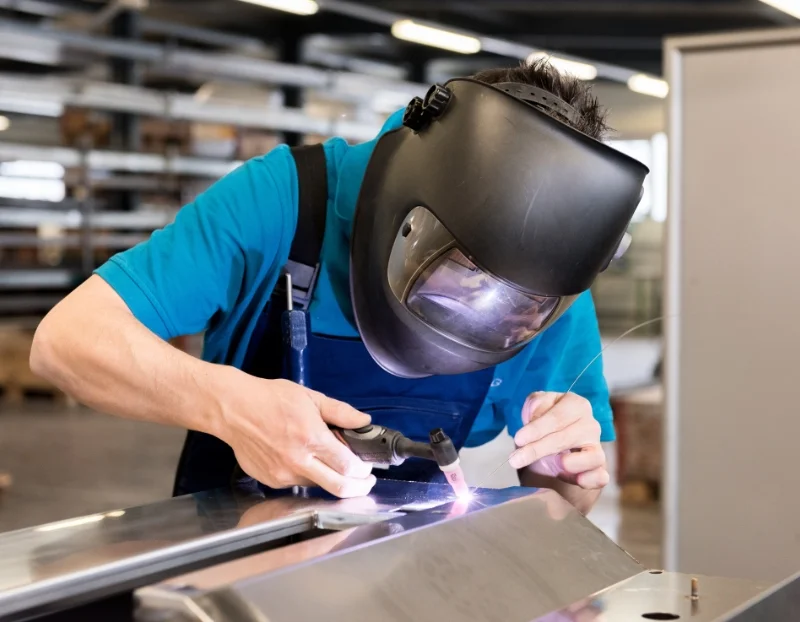
Marine welding
What marine welding repair involves
Most Texas boats are welded or riveted aluminum. Hulls are usually 5052 or 5086 sheet, while T-tops, towers, rails and leaning posts are 6061 tube. All of these are welded with 5356 filler, which matches strength and corrosion resistance in salt and brackish water. TIG gives the cleanest result on thin hull sheet and polished rails; spool-gun MIG is faster on thicker transoms, keel strips and trailer frames.
Aluminum must be cleaned to bare, oxide-free metal with a dedicated stainless brush and solvent before welding, because the oxide layer melts at a far higher temperature than the metal under it. On a hull, the welder also looks for what caused the crack: a loose transom, a trailer bunk in the wrong place or stress at a rib. Welding the crack without fixing the cause invites a repeat.
Marine work is also about what is not welded. Fuel lines and tanks are isolated and vented, batteries are disconnected, and foam flotation near the repair is protected from heat. After a hull repair below the waterline, the boat is filled or floated and the seam is checked before it goes back on the water.
- 5052, 5086 and 6061 aluminum with 5356 filler
- TIG for hull sheet and rails, MIG for thick sections
- Fuel and battery isolation before hot work
- Water test after below-waterline repairs
- Galvanized and aluminum trailers in the same visit
Common problems
Boat and trailer failures we repair
Salt, vibration and trailer miles find every weak point on a boat.
Rivet leaks on jon boats
Loose rivets weep along the chine and bottom seams. Depending on count and location, rivets are re-bucked, replaced with solid rivets or the seam is welded. Welding over a riveted seam is only done where the sheet is sound.
Hull cracks above and below the waterline
Cracks at ribs, transom corners and keel strips are stop-drilled, cleaned, welded with 5356 and, where the hull is thin, backed with a doubler plate. Below-waterline work is pressure or water tested.
Transom and motor-mount damage
Flexing transoms crack at the corners and around the motor bolts. The welder checks the transom core, welds the aluminum skin and adds knee braces or a transom plate if the structure needs it.
T-tops, towers and rails
6061 tube cracks at welded joints from engine vibration and rough water. Joints are cut back, re-coped and TIG welded, with gussets added where the original design was marginal.
Corrosion and galvanic damage
Stainless bolts in aluminum, missing zinc anodes and stray current eat aluminum around fittings. Pitted areas are cut out and replaced, and the dissimilar-metal contact is corrected with isolation and fresh anodes.
Boat trailer breaks
Galvanized steel and aluminum trailers crack at crossmembers, winch stands, fender brackets and bunk supports. These are repaired with the right process for the material and coated against salt afterward.
What we repair
Aluminum boat and marine welding services
From a 14-foot jon boat to a pontoon or airboat, the work comes to the boat.
Jon boats and bass boats
Seam welding, rivet repair, rib cracks, transom repair, bow eye and cleat reinforcement, and patching holes from stumps and rocks.
Bay boats and center consoles
Hull cracks, chine damage, T-top and leaning post repair, rod holder and cleat mounting plates, and hardtop bracket fabrication.
Pontoons
Punctured or cracked pontoon logs, leaking nose cones, cracked lifting strakes, deck cross-member repair and motor pod cracks, with pressure checks on tubes.
Airboats and duck boats
Hull bottom patches, polymer-protected hull brackets, engine stand and cage welding, grass rake mounts and gun box frames.
Docks and bulkhead hardware
Aluminum dock frames, gangway hinges, ladders, boat lift brackets and steel bulkhead hardware repaired on site, with isolation between dissimilar metals.
Boat trailers
Bunk brackets, winch stands, fenders, tongue and crossmember cracks on galvanized steel and aluminum trailers, plus new guide-on and spare tire mounts.
Why Alpha Welding
Why boat owners call Alpha
Marine aluminum is unforgiving of dirty metal, wrong filler and skipped safety steps.
Marine-correct materials
5356 filler on 5052, 5086 and 6061, stainless-only brushing and solvent cleaning, so repairs match the hull in strength and corrosion resistance.
Hot-work safety
Fuel isolated and vented, batteries disconnected, flotation foam shielded and an extinguisher in reach before the first arc.
Tested before it floats
Below-waterline welds are water or pressure tested and inspected from both sides where access allows, not just ground smooth and painted.
Honest scope
Partner welders repair metal. Marine surveys, Coast Guard compliance and fiberglass are outside our scope, and you will be told when another specialist is needed.
How it works
How a boat welding repair runs
Photos first, then one visit for most repairs.
Send photos and the boat type
Pictures of the damage from inside and outside the hull, the boat make and length, and where it is sitting speed up the quote.
Quote and location
You get a price range and a plan for where the work happens: driveway, storage yard, marina with permission or a partner shop.
Prep, isolate and weld
Fuel and batteries are isolated, the metal is cleaned to bright, the crack is stopped and opened, and the repair is TIG or MIG welded with 5356.
Test and finish
Hull repairs are water tested, welds are dressed, and the trailer is checked so the boat leaves ready for the ramp.
Technical guide
What good marine aluminum welding looks like
Boat repairs fail for predictable reasons. Here is how an experienced marine welder avoids them.
Alloys and filler
Hull sheet is typically 5052-H32 or 5086 on better bay boats, chosen for saltwater corrosion resistance and formability. Extruded tube for T-tops, rails and ladders is 6061-T6, which is strong but loses temper in the heat-affected zone. 5356 filler is the standard for all of these in marine service; 4043 flows easier but is weaker and corrodes faster in salt. On 6061, the welder adds gussets or sleeves at joints because the weld area will never be as strong as the untouched tube.
Cleaning and oxide removal
Aluminum oxide melts at roughly 3,700°F while the metal underneath melts around 1,200°F. Any oxide, bilge grime or anti-fouling paint left on the joint goes into the weld as porosity and lack of fusion. The welder grinds paint back well past the repair, degreases with solvent, then brushes with a stainless brush used only on aluminum. On old hulls, salt and corrosion products inside the seam are dug out before welding, otherwise the weld bubbles and blows through.
Hull cracks and doubler plates
A crack in thin hull sheet is stop-drilled at each end, veed with a carbide burr and welded from the outside with TIG, then checked from the inside. Where the sheet is thin or the crack is in a high-stress spot like a rib or the transom corner, a 5052 doubler plate is welded over the repair to spread the load. Welds are kept short with cooling between passes so the sheet does not warp or burn through. Below-waterline repairs are filled with water or floated and watched at the seam before the job is signed off.
Rivets: buck, replace or weld
A few loose rivets are best re-bucked with a bucking bar and rivet gun or replaced with solid aluminum rivets, which keeps the hull flexible the way it was designed. A seam with dozens of weeping rivets, or a riveted boat that has already been patched several times, is a candidate for welding the seam. Welding is permanent but stiffens the seam, so the welder checks that the surrounding sheet can carry that stress. Sealants are a short-term fix at best.
Corrosion, galvanic action and dissimilar metals
Aluminum in contact with stainless steel, bronze or copper in salt water becomes the sacrificial metal and dissolves. Pitting around through-hull fittings, stainless bolts and bronze props is the usual sign. The repair cuts out pitted metal, welds in new sheet, isolates fittings with nylon washers or sleeves and installs fresh zinc or aluminum anodes. Stray current from dock wiring causes the same damage faster, so a marine electrician may be the next call.
Hot work around fuel and flotation
No welding starts on a boat until fuel tanks are isolated, lines disconnected and the bilge ventilated. Portable tanks come off the boat. Batteries are disconnected and foam flotation near the repair is shielded or removed, because it burns and produces toxic smoke. Built-in fuel tanks themselves are not welded on site. Marinas have their own hot-work rules, so permission is confirmed before the truck arrives.
Before you send photos, check these
- Is the crack above or below the waterline?
- Can you see the damage from inside the hull?
- Is the boat on a trailer or in the water?
- Does the marina or yard allow hot work?
- Are there transom, trailer or corrosion issues to bundle in?
Related welding services
Boat in the water?
Many repairs need the boat on a trailer or lift. If it cannot be pulled, send photos and the welder will say whether an in-water repair is realistic.
Service area
Gulf Coast and lake coverage across Texas
Partner welders cover the Gulf Coast from Beaumont to Brownsville and the lake country around Houston, Dallas–Fort Worth, Austin and San Antonio. Driveway, storage-yard and permitted marina visits are confirmed per address before quoting. See all areas at Texas coverage.
North Texas lakes
Highland Lakes and Hill Country
FAQs
Boat welding questions
What boat owners ask before booking aluminum boat welding.
Can you weld my jon boat in my driveway?
Yes, as long as the boat is on a trailer or blocks with access to both sides of the repair. The welder brings power, gas and filler. Fuel is removed from the boat and batteries disconnected before the first arc.
Should rivet leaks be welded or re-riveted?
A handful of loose rivets are best re-bucked or replaced so the hull keeps its designed flexibility. A long weeping seam or a boat already patched several times is often better welded. The welder will recommend based on the sheet condition.
What filler do you use on boats?
5356 on 5052, 5086 and 6061 marine aluminum. It matches the hull for strength and holds up in salt water, unlike 4043, which corrodes faster and is weaker in marine service.
Can you fix a crack below the waterline?
Yes. The crack is stop-drilled, opened, welded and usually backed with a doubler plate. The repair is water tested before the job is finished, and you are shown the result from inside and outside where access allows.
Do you repair pontoon tubes?
Yes. Punctures, cracked seams, nose cones and lifting strakes are welded, and the tube is pressure checked afterward. Heavily corroded tubes with thin walls may need a section replaced rather than patched.
Will welding weaken my T-top or tower?
The heat-affected zone on 6061 tube is softer than the rest, so good repairs add a gusset or sleeve at the joint. Done that way, the repair is as strong as or stronger than the original welded joint.
Can you work at my marina?
With the marina’s permission. Most have hot-work rules about fuel, distance from other boats and fire watch. Confirm permission first, or the boat can be pulled to a driveway, storage yard or a partner shop.
Do you do marine surveys or Coast Guard work?
No. Partner welders repair aluminum and steel. Marine surveys, Coast Guard compliance, fiberglass repair and electrical fault finding are referred to the right specialists when the job calls for them.
Do you repair boat trailers too?
Yes. Galvanized steel and aluminum trailer frames, bunk brackets, winch stands, fenders and tongues are repaired the same visit, with the coating ground back and restored so the repair does not rust first.
How do I get a quote for boat welding?
Send photos from inside and outside the hull, the boat make and length, and where it is sitting to 979-250-7486. You get a price range and a plan for the location. Final pricing is confirmed on site before welding.
Request an estimate
Get the boat back on the water
Send photos of the crack, leak or broken hardware and where the boat sits. A partner welder will quote the repair and bring the right filler and gas.
- Free, no-obligation estimates
- Photos help us understand the job faster
- Same-day requests depend on partner availability