MOBILE STEEL WELDING
Mobile Steel Welding Services
Carbon steel is the workhorse of every job site, shop floor and back yard in Texas, and it is what partner welders weld most. Alpha Mobile Welding TX coordinates on-site carbon steel welding for plate, tube, pipe, angle, channel and rebar across the state. Repairs, new fabrication and modifications are done where the steel already sits. Stick, MIG or flux-core is chosen for the thickness, the fit-up and the weather that day. Send photos or call 979-250-7486 for a quote from a welder near you.
Quotes from photos. Engineered or code work is scoped before the truck is dispatched.
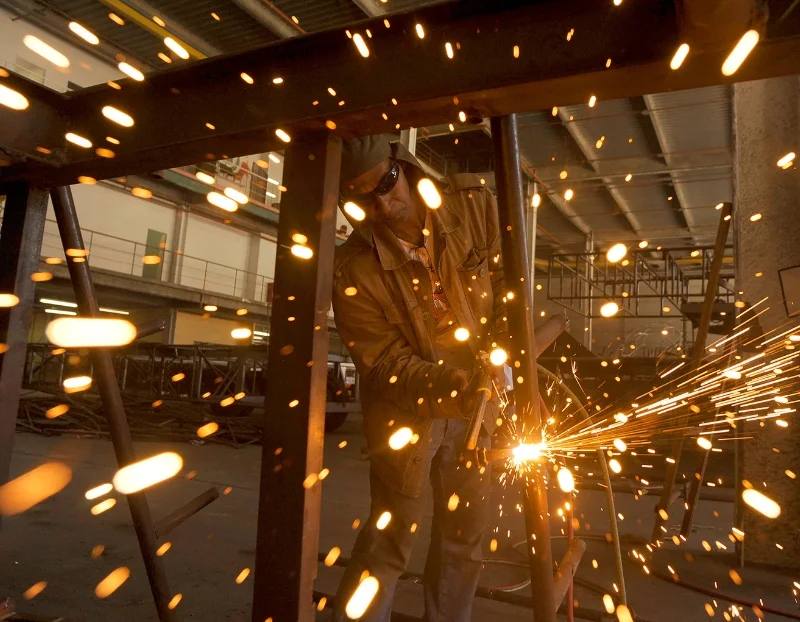
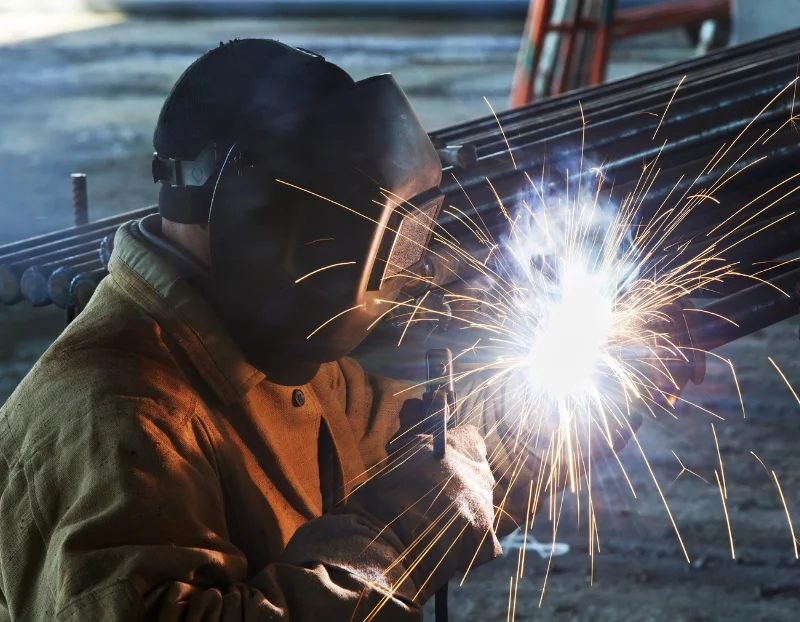
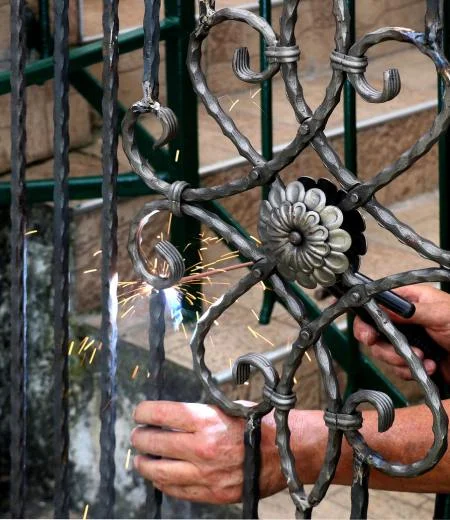
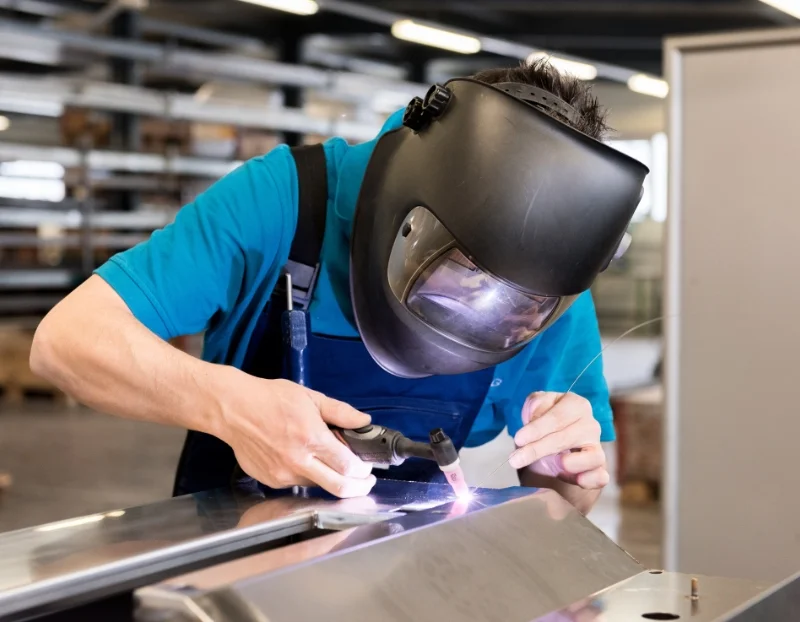
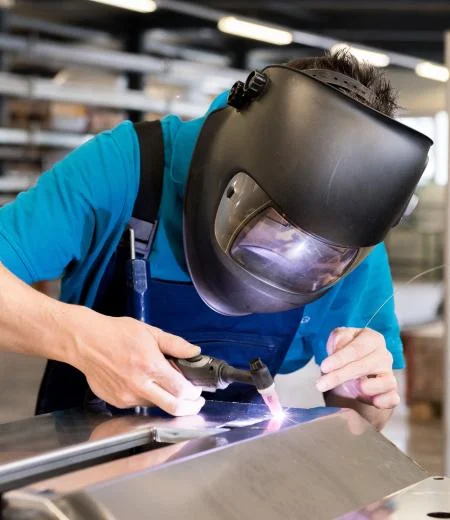
Steel welding
What mobile steel welding covers
Mild steel, usually A36 plate and A500 tube, A53 pipe and A36 angle or channel, is the easiest metal to weld well and the easiest to weld badly. It tolerates a wide range of settings, which is why so many failed welds are on steel. Good steel welding is about joint prep, fit-up, the right process for the section thickness and enough passes to fill the joint, not how hot the machine is set.
A partner welder arriving on site carries an engine-driven stick machine, often a MIG or flux-core setup, oxy-fuel or plasma cutting, grinders and common stock. Stick with 7018 is the default outdoors for anything structural because wind does not strip its shielding. Flux-core is used for long beads on dirty or painted steel, and MIG where the work is clean, indoors or thin. Thicker plate gets a bevel and multiple passes.
Beyond mild steel, the welder handles galvanized steel with the coating ground back and fume control in place, and high-strength or abrasion-resistant plate with preheat and low-hydrogen filler. Rebar is welded only in weldable grades under an engineer’s direction.
- A36 plate, tube, pipe, angle and channel
- Stick, MIG and flux-core on site
- Multipass and beveled joints on thick sections
- Galvanized and high-strength steel handled correctly
- Primed or painted finish on request
Common problems
Steel failures we repair on site
Most broken steel fails at a weld that was undersized, cold or made on an unprepared joint.
Cracked welds and broken brackets
Mounting brackets, lugs, hangers and tabs crack at the toe of a weld that was too small for the load. The old weld is ground out, the joint is re-prepped and rewelded to the correct size.
Rust-through on thin sections
Trailer frames, trough bottoms, posts at grade and handrail bases rust from the inside in Texas humidity. Sound metal is found, the rot is cut out and a sleeve or patch plate is welded in.
Bent or torn tube and pipe
Impact damage on bollards, pipe rails, gate frames and racking tube is straightened where possible or cut out and replaced with matching section, then welded back plumb.
Distorted plate and frames
Heat from a previous repair can pull a frame out of square. The welder plans weld sequence, uses tacks and bracing, and back-steps beads to keep new work straight.
Galvanized steel repairs
Fence, guardrail, bollards and racking are often galvanized. The coating is ground back, fumes are controlled, and the repair is cold-galvanized afterward so it does not become the first spot to rust.
Hard steels welded wrong
AR plate on buckets and chutes, or high-strength frames, cracks when welded cold with the wrong rod. These are repaired with preheat, 7018 or matched wire and slow cooling.
What we weld
On-site carbon steel welding services
Residential, commercial and industrial steel work, repaired or fabricated where it stands.
Residential steel
Gate and fence frames, handrails and stair stringers, carport and patio posts, mailbox and sign posts, trailer frames and the brackets that hold all of it together.
Commercial steel
Bollards, dock bumpers and dock plates, racking repair, roll-up door frames, dumpster enclosure gates, awning brackets, security grilles and storefront steel.
Industrial steel
Equipment skids, pipe supports and hangers, platforms and grating, conveyor frames, hoppers, chutes and guards, with AR plate liners where abrasion wears parts out.
Structural and heavy sections
Beams, columns, base plates and moment connections are welded under an engineer’s detail, with beveled multipass joints and inspection where the code requires it.
Pipe and tube
Schedule 40 pipe fence, bollards, pipe rails, round and square tube frames and chassis-style repairs, cut to length and coped on site for a tight fit.
Plate work and modifications
Mounting plates, gussets, stiffeners, patch plates and custom brackets cut from A36 plate and welded in place to strengthen or adapt existing steel.
Why Alpha Welding
Why call Alpha for steel welding near you
Steel is forgiving until it is loaded, which is when the shortcuts show.
Process matched to the job
Stick for wind and structure, flux-core for speed on long runs, MIG for clean thin work. The welder picks, not the machine that happens to be on the truck.
Full joint prep
Mill scale, paint, rust and galvanizing are ground back, joints are beveled and fit before the first arc, so welds reach full depth.
Code awareness
Structural steel, rebar and anything a building official will inspect is flagged up front so engineering and inspection are arranged before the work starts.
Finished against rust
Welds are ground where required, cleaned and primed or cold-galvanized on request so the repair outlasts the metal around it.
How it works
How a mobile steel welding job runs
Clear scope first, then one efficient visit.
Photos and dimensions
Send pictures of the steel, a rough thickness or section size and the address. Note whether it is painted, galvanized or structural.
Quote and scope
You get a price range, material list and a window. Engineered or inspected work is identified here, not on site.
On-site welding
The welder preps the joint, sets process and polarity for the section, welds in the planned sequence and controls heat to limit distortion.
Inspection and finish
Welds are checked visually, ground where needed, and primed or coated on request. Any inspection requirement is coordinated before sign-off.
Technical guide
How steel is welded properly in the field
Steel does not need exotic technique, but it does need the fundamentals done every time. Here is what a partner welder is doing when the job looks slow at the start.
Choosing stick, MIG or flux-core outdoors
Shielding gas is the first casualty of a Texas breeze. Solid-wire MIG loses its argon-CO2 shield in a light wind and produces porosity, so it is reserved for indoor or sheltered work on clean, thinner steel. Stick welding with 7018 carries its shielding in the flux coating and runs well on painted or lightly rusted steel, which makes it the default for structural and outdoor repair. Self-shielded flux-core gives wire-feed speed with the same wind tolerance and suits long fillet runs on fence, racking and frames. Choosing by convenience instead of conditions is where porous welds come from.
Joint prep and fit-up
Mill scale, paint, galvanizing and rust are ground to bright metal on both sides of the joint. Plate over about a quarter inch gets a bevel so the weld reaches the root instead of bridging the top. Gaps are set deliberately: too tight and the root does not fuse, too wide and the welder is filling air. Parts are tacked, checked square and braced before the main welds. On repairs, the old weld is ground out completely, because welding over a cracked weld leaves the crack inside.
Multipass welding on thick sections
A single heavy pass on half-inch plate looks strong and is not. The weld needs a root pass, one or more fill passes and a cap, with slag chipped and the bead wire-brushed between each. Each pass tempers the one below and keeps heat input controlled. Passes are stacked so the joint is filled without undercut at the toes, which is where fatigue cracks start. On structural connections an engineer may specify weld size, sequence and inspection, and the welder follows the detail.
Distortion control
Steel shrinks as a weld cools and pulls the assembly toward the weld. Long frames, gate panels and stair stringers go out of square if welded in one direction from one end. The welder alternates sides, back-steps along long seams, uses short stitch welds where full-length welds add no strength and clamps the work to something rigid. A frame that is checked for square before, during and after welding stays straight.
Galvanized, high-strength and AR steel
Galvanizing must be ground back at least an inch from the joint and the welder works upwind or with extraction, because zinc fume causes metal fume fever. The repair is coated with zinc-rich paint afterward. High-strength low-alloy frames and abrasion-resistant plate need preheat, low-hydrogen 7018 or matched wire and slow cooling, or the heat-affected zone cracks. AR plate is welded with mild steel filler so the weld stays ductile, and is used as a bolt-on or liner rather than a structural member.
Rebar and code work
Common rebar is not a weldable grade and cracks when welded. Weldable grades such as A706 can be welded to AWS D1.4 under an engineer’s direction. Structural beams, columns and connections, vehicle frames, pressure vessels and fuel tanks all carry engineering or code requirements. These jobs are scoped up front, and inspection is arranged where it is needed.
Keeping steel from rusting in Texas
- Grind welds smooth where water can pool
- Prime bare metal the same day it is welded
- Cold-galvanize repairs on galvanized steel
- Seal open tube ends with caps or weld-closed plates
- Keep posts and rails off bare soil with sleeves or plates
Related welding services
Not sure what steel you have?
Send a photo and a magnet test. If it sticks and shows mill scale or rust, it is almost certainly carbon steel and a partner welder can quote it.
Service area
Steel welding near you across Texas
Partner welders cover the Houston, Dallas–Fort Worth, Austin and San Antonio regions plus West Texas, the Panhandle and the Gulf Coast. Every address is confirmed for partner availability before a quote is given. See the full map at Texas coverage.
Houston metro
Dallas–Fort Worth
Austin and San Antonio
FAQs
Steel welding questions
What people ask before booking on-site carbon steel welding.
What thickness of steel can you weld on site?
Engine-driven stick machines handle everything from 16-gauge tube to plate well over an inch with proper beveling and multiple passes. Very thin sheet is better suited to MIG in a sheltered spot. Tell us the section size so the right setup is on the truck.
Can you weld painted or rusty steel?
Yes, after prep. Paint, rust and mill scale are ground back to bright metal around the joint. 7018 stick tolerates light surface rust better than MIG, but no process makes a sound weld through heavy scale, so grinding is part of every job.
Is MIG or stick better for outdoor steel welding?
Outdoors, stick or self-shielded flux-core. Wind strips the gas shield from MIG and leaves porosity. Indoors or behind a windbreak on clean, thinner steel, MIG is faster and cleaner. The welder picks based on conditions on the day.
Can you weld galvanized steel?
Yes, with the coating ground back from the joint and fume precautions in place. Zinc fume is a real health hazard, so the welder works upwind or with extraction. The finished repair is coated with zinc-rich paint to restore protection.
Will you weld rebar?
Only weldable grades, and only with an engineer specifying the joint, since common rebar cracks when welded. If a project calls for welded rebar under AWS D1.4, send the drawings and the welder will confirm whether it can be done on site.
Do you do structural steel that needs inspection?
Yes, under an engineer’s detail. Beams, columns, base plates and connections may require permits and third-party inspection. That is identified at the quoting stage so inspection can be scheduled and the welder works to the specified sizes.
How do you keep a frame from warping?
By planning the weld sequence: tacking everything first, alternating sides, back-stepping long seams, clamping to a rigid surface and using stitch welds where full-length welds are unnecessary. Square is checked before, during and after the work.
Can you weld high-strength or AR plate?
Yes. High-strength frames and AR liners are welded with preheat, low-hydrogen filler and slow cooling so the heat-affected zone does not crack. AR plate is attached as a wear liner rather than used as a load-carrying member.
Do you finish or paint the weld?
On request. Welds are ground smooth where appearance or water pooling matters, then primed, painted or cold-galvanized. In Texas humidity a bare weld starts rusting within days, so some finish is always recommended.
How do I get a quote for steel welding near me?
Send photos, the approximate thickness or pipe size, the address and whether the steel is painted or galvanized to 979-250-7486. You get a price range and an arrival window, and final pricing is confirmed on site before welding starts.
Request an estimate
Get your steel welded where it stands
Send photos and a rough size. A partner welder near you will quote the repair or fabrication and bring the machine, rod and stock to finish it on site.
- Free, no-obligation estimates
- Photos help us understand the job faster
- Same-day requests depend on partner availability