Mobile Welding ServicesOn-site welding & metal repair across Texas — we come to you
Galveston pontoon repair
Pontoon Boat Repair in Galveston, TX: Mobile Saltwater Pontoon Welding on the Island
A pontoon on Galveston Island never gets a break from salt. It’s in the water on West Bay, sitting on a canal lift in Jamaica Beach or Tiki Island, or parked in storage where salt air still settles on every surface. That’s why island pontoons come to us with pitting, pinholes and brackets weakened by corrosion. Alpha Mobile Welding TX sends partner welders to island canal homes, marinas and storage lots to repair aluminum pontoons on site. Send photos and we’ll tell you what it needs.
Close-up photos of corrosion help us quote faster. Visits depend on partner availability on the island.
Island repairs
What Pontoon Repair Looks Like on Galveston Island
Galveston pontoons mostly run the protected water: Offatts Bayou inside the island, West Bay between the island and the mainland, the canals of the west end, and Christmas Bay out toward San Luis Pass. It’s calmer than the open Gulf, but it’s full salt water, often shallow, with grass flats, sandbars, oyster shell and strong tidal current near the passes.
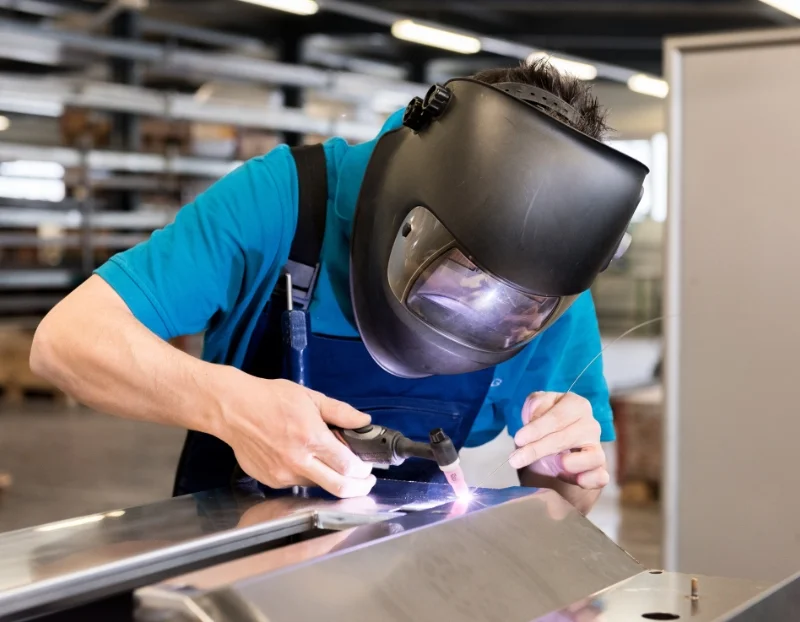
That mix produces two kinds of repairs. Corrosion repairs come from salt and from mixed metals touching aluminum: pitting, pinholes and cracked brackets in thinned metal. Impact repairs come from shallow water: worn keels, cut strakes, split cone seams and damage from docks and pilings when current or wind pushes the boat around. Partner welders grind corroded areas back to solid aluminum, weld with 5356 filler by TIG or spool gun, add doubler plates where metal is thin, and retest the chambers with low air pressure.
Our main pontoon boat repair page lists every service. If you keep the boat on the mainland side, see League City and Clear Lake pontoon repair.
- West Bay, Offatts Bayou, Christmas Bay
- Canal lifts on the west end and Tiki Island
- Saltwater pitting and pinholes
- Keel, strake and cone damage
- Fishing hardware and rail mounts
Common damage
Pontoon Problems Common on Galveston Island
Full salt, shallow bays and storms make island pontoons work for their keep.
Salt air corrosion
Even boats in dry storage pick up salt from the air. It settles in crevices under brackets and on the deck frame and keeps working on the metal.
Pinhole leaks
Pits that start along the waterline or under brackets eventually go through the tube wall. A boat that sits low at one corner usually has one.
Shallow-water keel damage
West Bay flats, sandbars and shell bottoms grind keel guards and lifting strakes down and can split the keel seam.
Current and piling damage
Tidal current near San Luis Pass and wind in the canals push boats into pilings and seawalls, denting cones and tearing brackets.
Corroded rail and hardware mounts
Rod holder bases, Bimini and T-top mounts and rail stanchions corrode at their welds and start to wobble or crack.
Hurricane and storm damage
Storms toss boats against lifts, docks and each other. Torn brackets, cracked cones and split seams are the result.
What we repair
Mobile Pontoon Welding Services in Galveston
Island repairs start by mapping the corrosion, then fixing every leak.
Corrosion and pitting repair
Grinding pits back to solid aluminum, welding small pits and adding rounded doubler plates over thinned areas.
Tube leak repair
Low-pressure air and soap testing, draining, grinding and 5356 welds, then a second test.
Keel and strake repair
New keel guards and lifting strakes, and repair of keel seams opened by sandbars and shell.
Bracket and cross member repair
Rewelding cracked brackets, reinforcing with gussets and replacing corroded cross members.
Rail and hardware mount repair
Rewelding cracked rail stanchions, rod holder bases and Bimini or T-top mounts on aluminum.
Trailer welding
Rusted steel crossmembers, bunk brackets and tongues on trailers launched in salt water.
Why Alpha Welding
Why Island Boaters Call Alpha Welding
Getting a pontoon off the island and back for repairs is a long day.
Repairs at your canal lift
West end and Tiki Island lifts usually allow repairs on site with the tubes raised and dry.
Salt-aware repairs
Partners grind to sound metal before welding, because welds over pitted aluminum don’t last.
Aluminum focus
AC TIG and spool-gun setups suited to thin marine aluminum.
Straight answers
If corrosion has gone too far, you’ll hear about replacement before paying for patches.
How it works
How a Galveston Pontoon Repair Works
Four steps and the boat’s back on the bay.
Send photos
Call or text 979-250-7486 with close-ups of the damage and the boat’s location on the island.
Estimate
We review the corrosion or damage and explain price, prep and any marina approvals.
On-site repair
The partner tests, grinds, welds and adds doublers where needed.
Retest
Low-pressure air and soap confirm the repair before the boat goes back down.
Local guide
Galveston Island Pontoon Owner's Repair Guide
Notes for pontoon owners on Galveston Island, Tiki Island and the Bolivar Peninsula, from what partner welders see on full-salt boats.
Salt air never stops
On the island, corrosion doesn’t wait for the boat to be in the water. Salt carried on the Gulf breeze lands on everything, including boats in covered storage. It collects in the gaps under brackets, along the deck frame and inside the open ends of cross members. Combine that with humidity and the metal stays damp and salty most of the year. A regular freshwater rinse of the whole boat, including the underside of the deck, matters even more here than on the mainland.
West Bay flats and shallow water
West Bay is shallow over much of its area, with grass flats, sandbars and shell. Pontoons draw little water, which is why they’re popular here, but running across a bar at low tide still grinds keels and strakes, and a hard grounding can open a keel seam or split a cone. Worn strakes get replaced before the tube underneath wears through. If you hear the tubes scrape, check the keel line once the boat is out of the water.
Canal homes, lifts and current
The west end canal neighborhoods, like Jamaica Beach, Pirates Beach and Sea Isle, and Tiki Island near the causeway, are full of boat lifts. They’re the easiest place to repair a pontoon, as long as the lift raises the tubes clear of the water and the boat can be rinsed and dried first. Wind and tidal current push boats into lift posts and seawalls, so dented cones and bent brackets are common. Check that the lift bunks still sit evenly under both tubes.
Mixed metals and galvanic corrosion
In full salt water, any contact between aluminum and another metal speeds up corrosion. Stainless bolts, steel lift parts, steel trailer bunks and copper-based bottom paint are the usual culprits. Partners look for pitting around fasteners and contact points and isolate or replace those parts where they can. Never paint aluminum tubes with copper antifouling. If a dock’s wiring might be leaking current into the water, have a marine electrician check it, because no amount of welding will fix that.
Why corrosion must be ground out first
A weld laid over pitted, oxidized aluminum won’t fuse properly and fills with porosity. Every corroded spot gets ground back to bright, solid metal. Small pits are welded with 5356 filler. Where grinding leaves the wall too thin, a doubler plate with rounded corners goes over the area. When deep pitting covers a large part of a tube, replacing that section or the whole log usually makes more sense than a dozen patches.
Finding every leak
The chamber gets sealed and a very small amount of air pressure, usually a couple of psi. Soapy water goes on every seam, bracket and pitted area, and each bubble is marked. Corroded metal can be thin, so pressure is kept low with a regulator. Island boats often have several pinholes, and fixing them all in one visit keeps water from coming back next month.
Hurricane season
Storms like Hurricane Ike in 2008 showed how much damage surge and wind can do to boats and docks on the island. Before a storm, get the boat off the water if you can and tie down everything loose. After it passes, photograph all damage for insurance, check each tube for dents and split seams, and check the lift before raising the boat. Torn brackets and cracked cones are standard repairs once the water goes down.
Fishing pontoons and hardware mounts
A lot of island pontoons are set up for fishing, with rod holders, livewell brackets, T-top or Bimini frames and extra rail mounts. Each of those is a small welded or bolted joint exposed to salt spray, and each one is a place for corrosion to start. Loose or cracked rod holder bases and Bimini mounts are common repairs. Partners clean the joint back to solid aluminum, reweld it, and add a small backing plate where the original mount was too light for the load a fish or a Gulf breeze puts on it.
Before the welder arrives
- Raise the boat on the lift or put it on the trailer
- Rinse with fresh water and let the tubes dry
- Pull the tube drain plugs
- Get marina approval for hot work if needed
- Tell us about foam-filled tubes or a center-log fuel tank
Related welding services
Boat sitting low on the canal lift?
That’s usually a pinhole. Send photos of the low tube and any white corrosion, and we’ll tell you what it needs.
Service area
Pontoon Repair Near Me in Galveston
Partner welders cover Galveston Island, Tiki Island, the Bolivar Peninsula and the nearby mainland. Availability is confirmed for each address, and marina jobs need approval for hot work.
West end
- Jamaica Beach
- Pirates Beach
- Sea Isle
- Spanish Grant
- San Luis Pass area
East end and bayou
- Offatts Bayou
- Downtown and the port area
- Pelican Island
- Tiki Island
Bolivar Peninsula
- Port Bolivar
- Crystal Beach
- Gilchrist
- High Island
Mainland
- League City and Clear Lake
- Texas City
- La Marque and Hitchcock
- Houston
FAQs
Galveston Pontoon Repair Questions
What island pontoon owners ask us most.
Is there a mobile pontoon welder near me in Galveston?
Alpha Mobile Welding TX coordinates partner welders who cover Galveston Island, Jamaica Beach, Tiki Island and the Bolivar Peninsula. Call or text 979-250-7486 with photos and the boat’s location, and we’ll confirm availability and give you an estimate.
Can a corroded saltwater pontoon tube be fixed?
Usually. Corroded areas are ground back to solid aluminum, small pits are welded with 5356 filler, and thinned spots get doubler plates. When deep pitting covers large parts of a tube, replacing the section or the log may be the better call. Photos help us tell.
Can you repair my pontoon on a canal lift in Jamaica Beach or Tiki Island?
In most cases, yes. The tubes need to be raised clear of the water, rinsed and dry, with room for the welder to reach underneath. If the lift can’t expose the damage, the boat goes on a trailer or stands.
How can I slow down corrosion on my pontoon?
Rinse the whole boat with fresh water after every trip, including under the deck. Keep stainless and steel parts isolated from the aluminum, never use copper-based bottom paint on the tubes, and have dock wiring checked if corrosion seems unusually fast.
How much does saltwater pontoon repair cost in Galveston?
It depends on how much corrosion there is, the number of leaks, whether doubler plates are needed and access. A few pinholes cost much less than wide pitting needing several doublers. Close-up photos let us give you a realistic estimate.
How long does a repair take?
A few pinholes or one crack are often fixed in a few hours, including testing and retesting. Corrosion repairs with doublers or several brackets take longer. Timing depends on partner availability on the island, and same-day visits are never guaranteed.
Request an estimate
Get Your Galveston Pontoon Repaired
Send close-up photos and tell us where the boat is on the island. We’ll reply with an estimate and partner availability.
- Free, no-obligation estimates
- Photos help us understand the job faster
- Same-day requests depend on partner availability