DUMPSTER & CONTAINER REPAIR
Dumpster and Metal Container Welding Repair
A dumpster with a rusted floor or a sprung door is a liability every time a truck lifts it. Alpha Mobile Welding TX coordinates partner welders who repair front-load and rear-load dumpsters, roll-off containers, compactor receivers and shipping containers on-site. Patches in 10-gauge and 3/16 plate, rebuilt pockets and trunnions, new hinges, doors that latch again. Work happens in your yard or at the customer’s site, so containers go back into rotation instead of sitting on a lowboy. Call 979-250-7486 for an estimate priced by patch size and scope.
Field response subject to partner availability. Containers must be emptied before hot work.
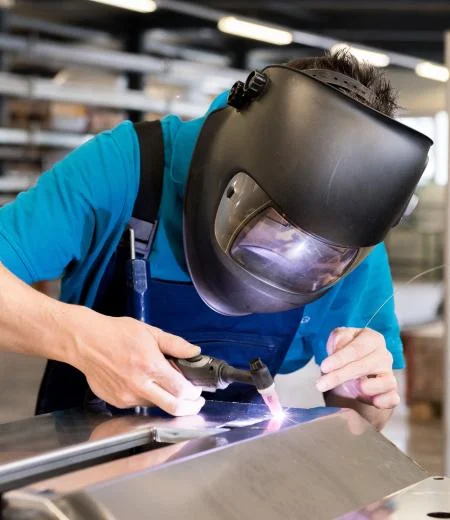
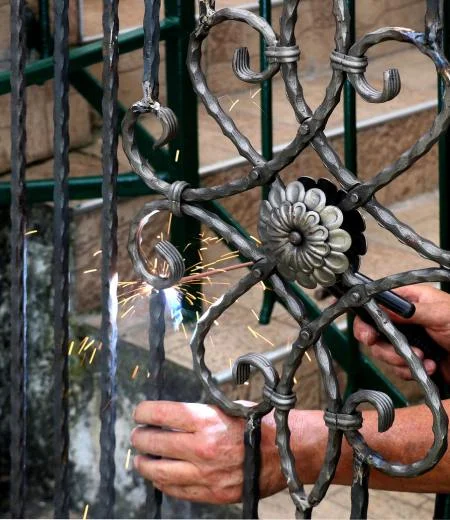
What this covers
What dumpster and container welding repair looks like
Waste containers get dragged across asphalt, slammed onto truck forks, filled with wet debris and left in the sun. Steel that started at 10-gauge on the sides and 3/16 on the floor thins out from the inside where moisture and acidic waste sit. Eventually a floor goes soft, a corner splits, a hinge tears out or a lifting pocket cracks at the weld.
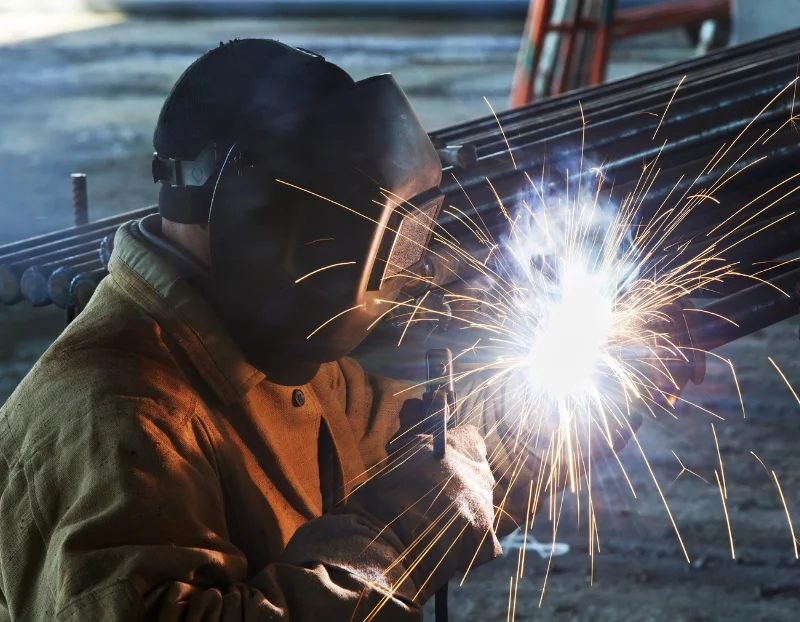
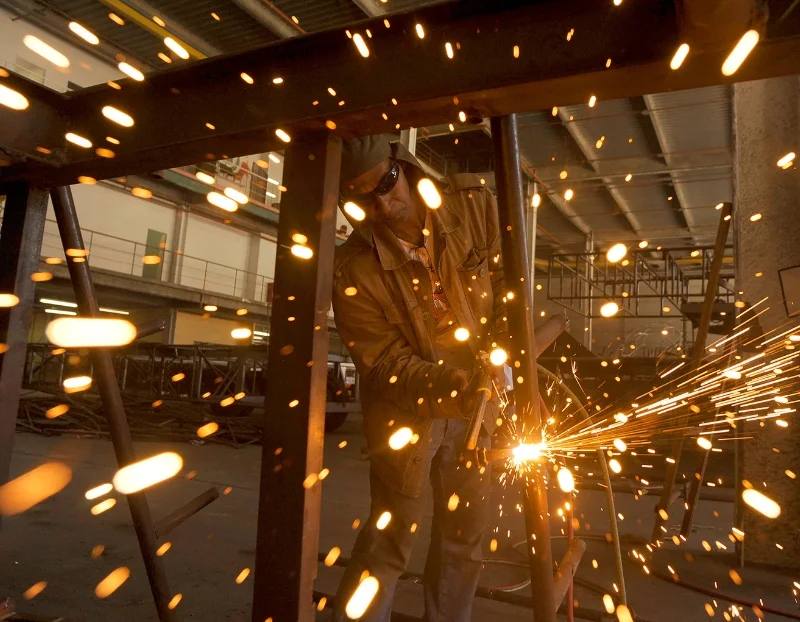
Repair work is mostly plate patching and structural rework. A rusted floor section gets cut out to clean metal and a new plate is welded in, overlapping the sound steel so the seam carries load instead of just sealing a hole. Door frames are straightened or replaced, hinge pins and bushings renewed, and latch hardware rebuilt so the door closes flush. On roll-offs, ground rollers, rear wheels, cable hooks and the nose roller get checked and rebuilt. On front-loaders, the fork pockets and lid hinges take the most abuse.
Partners work with FCAW or stick, which tolerate rust, mill scale and wind. Shipping containers add corten (weathering) steel patching, corner casting welds, door gear and floor cross-member repairs so the box stays weather-tight. Every job ends with weld inspection, grinding where it matters and, on request, primer, paint and stenciling.
- Floor, wall and corner patching in 10-gauge and 3/16 plate
- Fork pockets, trunnions and lifting points rebuilt and inspected
- Doors, hinges, latches and lids straightened or replaced
- Roll-off wheels, rollers, hooks and rails repaired
- Shipping container floors, doors and corner castings
Common failures
What partners are called out to fix
Most container failures fall into a handful of patterns, and nearly all of them are repairable in the field.
Floors rusted through
Standing water and wet waste eat floors from the top down. A soft spot becomes a hole, then a hole becomes a liner that drops debris on the street. Floors are cut back to sound steel and replated.
Cracked fork pockets and trunnions
Pockets take the full container weight on every lift. Fatigue cracks start at the weld toes and in the end plates. A cracked pocket is a drop hazard and gets rebuilt, not just capped.
Doors sprung or torn off
Rear doors on roll-offs and lids on front-loaders get bent by overloads and backing accidents. Hinge barrels crack, pins wear oval, and latches no longer reach. Partners straighten, re-pin or replace.
Split corners and seams
Corner posts and vertical seams split when a container is dragged or set down crooked. Cracks are ground out, re-welded full length and reinforced with gusset or doubler plate where needed.
Compactor receiver damage
Receiver boxes see repeated ram loads. Floors wear thin, side walls bow, and the charge-box opening distorts until the ram binds. Reinforcement plate and rebuilt wear surfaces restore the box.
Shipping container holes and rot
Corten panels pinhole from the inside, cross-members rust out under the plywood floor, and doors stop sealing. Patching keeps the box weather-tight for storage, site offices or export.
Services
Mobile welding services for waste and storage containers
Partners handle the full range of container steel work at your yard, your customer’s site or a construction job.
Front-load and rear-load dumpster repair
Floors, lids, lid hinges, fork pockets, side walls and casters on 2 to 8 yard front-loaders and rear-load boxes. Lid hinge plates are a common rebuild.
Roll-off container repair
Floor patching, rail, ground roller and rear wheel repair, nose roller and cable hook rebuilds, rear door work and trunnion repair on 10 to 40 yard roll-offs.
Compactor receiver and self-contained units
Reinforcement of charge-box openings, floor and wall replating, ram guide wear surfaces and hopper repairs. Hydraulics and electrical stay with your compactor technician.
Shipping container repair
Corten panel patching, door and hinge repair, lock bar and cam keeper replacement, corner casting welds, cross-member replacement and modifications for storage use.
Lifting point and pocket rebuilds
Fork pockets, trunnions, lift lugs and hook bars rebuilt with new plate and full-penetration welds, then checked for crack indications before the container goes back into service.
Painting and stenciling
After repairs are ground and cleaned, partners can prime and paint the repaired area or the whole box and reapply your company name, numbers and warning stencils on request.
Why Alpha Welding
Why haulers and yards call Alpha
The job is to get steel back in rotation safely, without hauling containers to a shop.
On-site in the yard
Repairs happen where the container sits. No lowboy, no shop queue, no lost rental days while an empty box waits for its turn.
Right process for dirty steel
FCAW and stick handle rust, scale and wind. Partners prep by grinding and washing, then weld with filler suited to heavy plate.
Safety-critical parts first
Lifting points, pockets and hinges get the attention. Partners say so when a container is beyond economical repair.
Priced by the patch
Estimates are built from patch size, plate thickness and hardware. Fleet rates available for recurring yard visits.
How it works
From call to container back in service
A simple process that fits around your routes.
Send photos and counts
Text or email photos of the damage, container type and how many boxes need work. A rough patch size helps with pricing.
Get a scoped estimate
Alpha returns pricing by patch and hardware, with any items that need replacement parts or a shop called out separately.
Empty and stage the containers
Containers are emptied, washed if needed and set where a truck and welding rig can reach them safely.
Partner repairs and signs off
The partner cuts, patches, welds, grinds and inspects. Paint and stencils follow if requested. Boxes go back on the route.
Technical guide
How container welding repair is actually done
What a competent container repair involves, so you know what to expect and what to ask for.
Emptied, cleaned and safe for hot work
No partner welds a loaded container, and none should. The box is emptied, debris is swept out, and if there is grease, oil, paint residue or anything that could have held fuel or solvent, it is pressure washed and allowed to dry. Hot work near flammable residue is refused, full stop. A fire watch stays in place during and after welding because smoldering material in a corner is easy to miss. Grinding to bright metal removes the rust and scale that cause porosity and poor fusion.
Patching floors and walls in 10-gauge and 3/16 plate
Thin patches on rotten steel do not last. The rule is to cut back until the parent metal is sound, then size the patch to overlap that clean steel by a comfortable margin. Floors usually get 3/16 plate; side walls and lids are often 10-gauge to match the original. Partners weld the patch perimeter with FCAW or 7018 stick, skip-welding to control distortion on long seams, then seal weld so water cannot get between plates and start the rot again. Plug welds through the patch tie it to floor cross-members for stiffness.
Pockets, trunnions and other lifting points
This is the part that can hurt somebody. A front-load pocket or roll-off trunnion carries the whole container every time it leaves the ground. Repairs use full-penetration welds, beveled fit-up on heavy plate, and new end plates or pocket tubes where the old ones are cracked or thinned. Partners inspect for crack indications before release and will not sign off on a pocket that has been welded over previously without the crack being removed. If a lifting point is too far gone, the recommendation is replacement, not another layer of weld.
Doors, hinges, lids and latching hardware
A door that will not close is a spill and a fine waiting to happen. Hinge barrels and pins wear oval, mounting plates crack, and door frames twist. Partners straighten frames with heat and force, replace pins and bushings, re-weld hinge plates with gussets if they tore out, and set latch keepers so the door pulls tight. On roll-off rear doors the ratchet binders and latch dogs are checked; front-load lids get new hinge plates and straightened lid rods.
Shipping containers and corten steel
Weathering steel welds fine with ordinary E71T-1 wire or 7018 rod, but the patch should be corten or at least a compatible grade so it does not rust faster than the surrounding panel. Corrugated panels are patched to the profile. Floor cross-members under the plywood are replaced section by section, then the floor is refastened. Door gear, lock bars, cam keepers and seals are renewed so the box stays wind- and water-tight. Corner castings are only welded to the posts, never modified, because they are the lifting and twist-lock points.
Pricing, paint and keeping boxes in rotation
- Pricing is by patch size, plate thickness and hardware, not by the hour alone
- Batch several containers per yard visit for better fleet rates
- Primer, paint and stencils are quoted as an add-on after welding
- Photos of every box ahead of time keep the estimate accurate
- Containers beyond economical repair are flagged, not patched
Related welding services
Not sure a box is worth saving?
Send photos. Alpha will tell you honestly whether a patch makes sense or whether the container should be retired and replaced.
Service areas
Container repair coverage across Texas
Alpha coordinates partner welders near waste yards, container depots, industrial parks and construction sites statewide. Coverage and travel are confirmed per address. Same-day visits are subject to partner availability; recurring yard visits can be scheduled around your route days.
Austin and San Antonio
FAQs
Dumpster and container repair questions
Straight answers to what haulers, property managers and yard operators ask most.
Can you repair a dumpster on-site at my customer’s location?
Yes, as long as the container is empty and there is safe room for a truck and welding rig. Hinges, latches and small floor patches are often done where the box sits so you do not have to swap it out.
Does the container really have to be empty?
Yes. Partners will not weld on a loaded container. Trapped moisture and unknown contents make hot work unsafe, and the repair cannot be done properly with debris against the steel. Empty it and wash it if it held anything greasy or chemical.
What plate thickness do you use for patches?
Floors typically get 3/16 plate; walls and lids are usually 10-gauge to match original steel. Heavier plate is used on roll-off floors and compactor receivers that see ram or dragging loads. The patch always overlaps sound metal, not just the hole.
Are cracked fork pockets safe to repair?
They are repairable when the surrounding steel is sound. Pockets are rebuilt with new plate and full-penetration welds, then inspected before release. If the pocket has been welded over repeatedly or the mounting area is thinned, replacement is recommended instead.
Do you repair shipping containers used for storage?
Yes. Rust holes, rotted floor cross-members, doors that will not seal, broken lock bars and damaged corner posts are all common. Patches are done in weathering-compatible steel so the box stays watertight and does not rust out faster around the repair.
How is container repair priced?
By patch size, plate thickness and the hardware involved, with travel confirmed per address. Photos of each container ahead of time let Alpha give a firm number. Batching several boxes in one yard visit lowers the per-container cost.
Can you paint and stencil after welding?
Yes, on request. Repaired areas are ground, cleaned, primed and painted, and partners can reapply company names, container numbers and warning stencils.
What welding process do you use on containers?
Mostly FCAW (flux-cored wire) or 7018 stick. Both tolerate rust, scale and wind better than MIG and lay down sound welds on heavy plate. Corten panels get compatible wire and matching patch material.
Will you fix compactor hydraulics or electrics?
No. Partners handle the steel: receiver floors, walls, charge-box openings and wear surfaces. Hydraulic cylinders, pumps and controls stay with your compactor technician, and welding is coordinated so both trades can work the same unit.
How fast can a partner get to my yard?
Often within a day or two, sometimes same day, always subject to partner availability in your area. Recurring yard visits let damaged boxes be fixed in batches rather than one urgent call at a time.
Request an estimate
Get your containers back in rotation
Send photos of the damage and the number of boxes. Alpha will price the repair by patch and hardware and coordinate a partner welder near your yard.
- Free, no-obligation estimates
- Photos help us understand the job faster
- Same-day requests depend on partner availability