INDUSTRIAL MOBILE WELDING
Industrial Mobile Welding Services
When a conveyor frame cracks on second shift or a hopper chute wears through, the plant does not move to the welder; the welder comes to the plant. Alpha Mobile Welding TX coordinates partner welders for maintenance and repair inside operating industrial facilities across Texas. This page covers the work itself: conveyors, guards, platforms, wear plates, machine bases and tank stands, plus how partners operate under hot-work permits, lockout and downtime windows, and what falls outside their scope.
Nights and weekends subject to partner availability. Pressure vessels and code piping excluded.
Scope
What industrial maintenance welding covers in a running facility
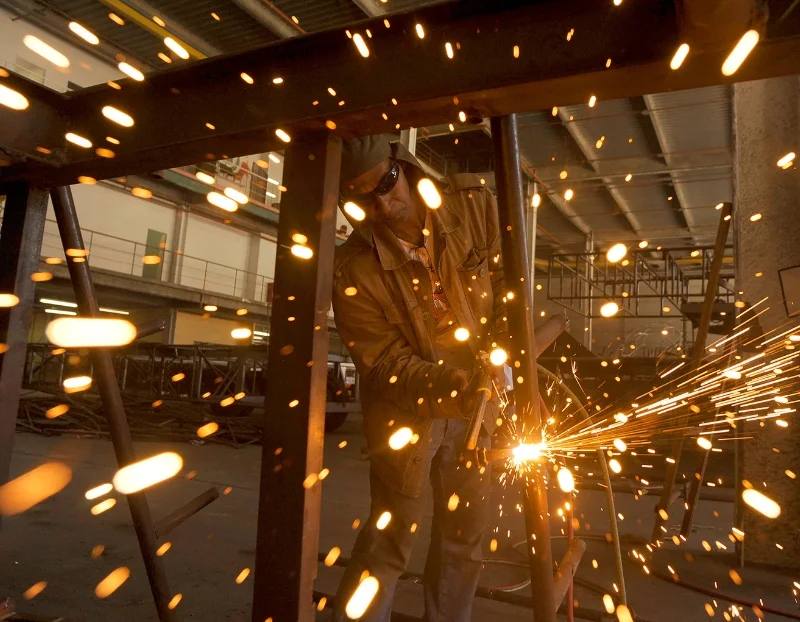
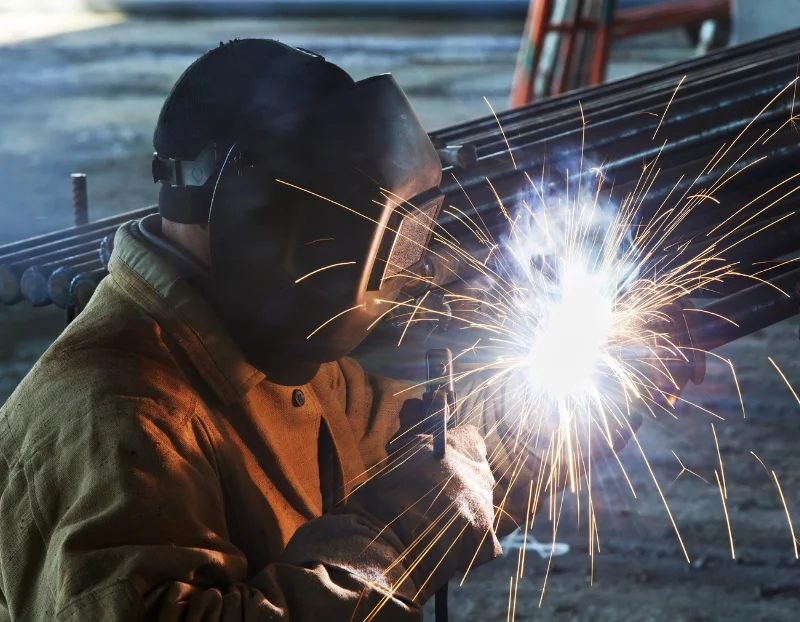
Industrial maintenance welding is the repair of steel that is already in service: the structure, guarding and material-handling equipment a plant depends on every shift. It is different from building a new facility, which is covered on the industrial construction welding page. Here the steel is dirty, loaded, sometimes hot, and surrounded by equipment that cannot be shut down for long.
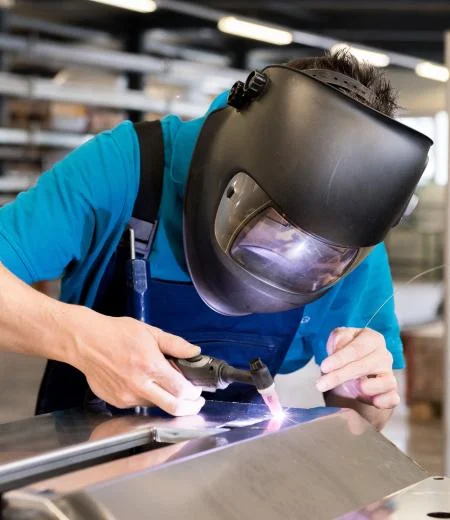
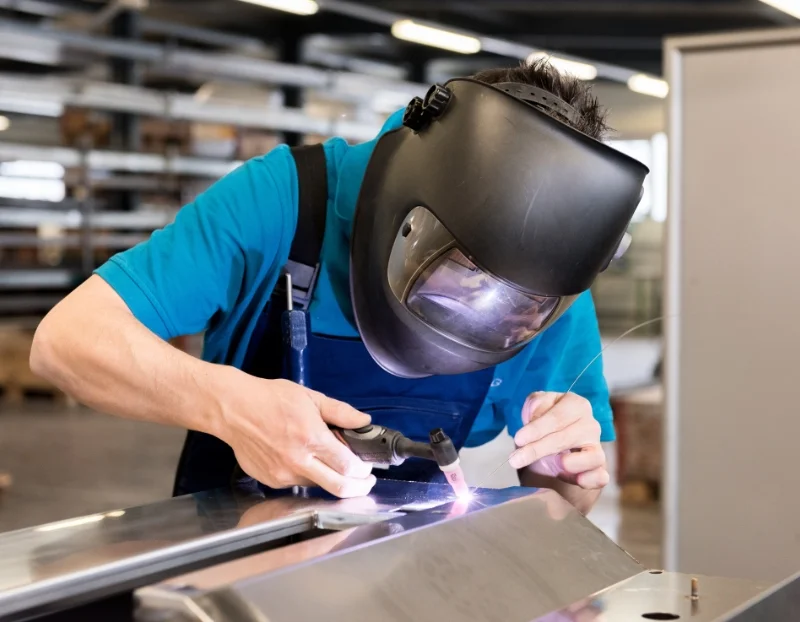
Partner welders arrive with engine-driven machines capable of stick (SMAW) and flux-cored (FCAW) at the amperage heavy plate demands, plus carbon arc gouging and oxy-fuel or plasma cutting to remove failed sections. Typical work is A36 and A572 structural shapes, AR400 and AR500 wear plate, and hardfacing overlays on chutes, bucket lips and screen decks. TIG is reserved for stainless process equipment and thin-wall tubing where contamination or distortion matters.
The job is as much procedure as welding. Every visit runs under the facility’s hot-work permit, with fire watch, lockout and tagout on the equipment being repaired, and clear boundaries on confined spaces. Partners document the repair with photos and a description so maintenance planners can track it. What they do not do is equally clear: no ASME pressure vessel or code piping work, no electrical, and no structural changes without an engineer’s detail.
- Repairs performed in place on loaded, in-service steel
- Hot-work permit, fire watch and LOTO procedures followed
- Hardfacing and wear plate for abrasion-heavy equipment
- Night, weekend and shutdown scheduling through partners
- Photo documentation for maintenance records
Facility types
Where industrial maintenance welding partners work
The steel that fails is specific to each kind of operation.
Manufacturing plants
Machine bases cracked at anchor points, conveyor side frames, guarding and safety cages, mezzanine handrails, equipment skids and tool stands bent by forklift contact. Repairs between shifts or during planned downtime.
Warehouses and distribution
Conveyor supports, sortation frames, dock plates and bumpers, mezzanine stair stringers, guard rails and column protectors. Rack uprights are replaced rather than welded where the manufacturer prohibits repair.
Recycling and scrap yards
Baler and shear frames, hopper and chute wear liners, grapple and magnet mounts, bucket edges and tooth adapters, screen decks. Hardfacing buys months of life on the highest-wear surfaces.
Feed mills and grain handling
Bucket elevator boots and legs, drag conveyor troughs, spout wear, bin ladders and platforms, truck dump grating. Dust-rated hot-work procedures and housekeeping before any arc is struck.
Quarries and aggregate
Crusher and screen frames, chute liners, conveyor idler brackets, stacker structures, hopper lips and loader bucket wear. Abrasion-resistant plate and hardfacing are the staples here.
Oilfield and equipment yards
Pipe racks, skid frames, tank stands and saddles, handrails on walkways, trailer and rig component repairs. Fuel tanks and pressure-containing parts are excluded and referred out.
Services
Industrial welding services for plant maintenance
Partners handle the recurring repair list inside a working facility.
Conveyors, hoppers and chutes
Frame and stringer cracks, idler and pulley bracket replacement, hopper seams, chute liner replacement with AR plate, transfer point rebuilds and skirt board repair.
Guards, platforms and handrails
Machine guarding to keep operators clear of pinch points, platform grating supports, stair stringers, ladder cages, handrail and toe plate repairs that keep walkways compliant.
Machine bases and equipment frames
Cracked base frames, anchor bolt pockets, motor mounts, gearbox stands and skid cross-members, with alignment checked before and after welding.
Wear plates and hardfacing
AR400 and AR500 liners cut and fitted, hardfacing overlay on bucket lips, teeth, screens and chute floors, with proper preheat and pattern selection for abrasion or impact.
Tank stands and supports
Saddles, legs and base plates under non-pressure storage tanks, pipe rack repairs and stand modifications. The tank shell itself and any pressure boundary is out of scope.
Shutdown and turnaround support
Scheduled repair lists worked through during planned outages, with multiple partners coordinated when a facility needs more than one welder on site.
Why Alpha Welding
Why maintenance teams call Alpha
Partners who understand permits, downtime and the cost of a stopped line.
Procedure first
Hot-work permits, fire watch and lockout are part of every visit, not an afterthought, so your safety team has no surprises.
Downtime scheduling
Nights, weekends and shutdown windows are arranged through partners so repairs do not wait for a convenient weekday.
Honest scope limits
Pressure vessels, code piping, electrical and engineered structure are referred out rather than attempted.
Records for planners
Photos, repair descriptions and materials used are supplied so CMMS entries and audits have what they need.
How it works
From work order to completed repair
Industrial jobs follow a short process built around your permit system.
Scope the repair
Send photos, equipment description, material if known and the downtime window. Call 979-250-7486 for urgent failures.
Confirm procedures
The partner confirms permit requirements, LOTO points, fire watch and any site orientation before arriving.
Perform the work
Repairs are completed inside the agreed window with the area cleared, protected and returned to service.
Document and close
You receive photos, a repair summary and the invoice; recurring items can be added to a maintenance schedule.
Technical guide
How partners work inside an operating industrial facility
These notes explain the procedures, processes and limits that apply to maintenance welding on live industrial sites.
Hot-work permits, fire watch and LOTO
No arc is struck in a facility without the site’s hot-work permit. The partner walks the area with your permit issuer, checks for combustibles within the spark radius, covers or removes what cannot be moved, and confirms a fire watch stays through the work and the required period afterward. Equipment under repair is locked and tagged out at the energy source; the partner applies their own lock to the group hasp. In dust environments such as feed mills and grain handling, housekeeping precedes the permit and the welder works under the facility’s combustible dust rules.
Confined spaces and what partners decline
Hoppers, bins, tanks and pits are often permit-required confined spaces. Partners weld from outside those spaces or at their entry points; entry work requires your attendant, atmospheric monitoring and rescue plan, and partners will not enter a space that lacks them. Pressure vessels, boilers and code piping fall under ASME and require certified procedures and stamped repairs, so they are referred out. Fuel tanks are not welded on site. Electrical connections, even on a motor mount the partner just repaired, belong to your electrician.
Wear plates, hardfacing and abrasion
Abrasion-resistant plate is cut with plasma, fitted to the chute or hopper floor and attached with stitch welds or plug welds so it can be replaced later. AR400 and AR500 are welded with low-hydrogen 7018 or FCAW using preheat to avoid cracking in the heat-affected zone. Hardfacing overlays are chosen for the wear mode: a chromium carbide deposit for sliding abrasion on chutes and screens, a tougher martensitic alloy where rocks impact bucket lips. Check-cracking in chromium carbide overlay is normal and relieves stress; it is not a defect.
Conveyors, machine bases and alignment
Cracks in conveyor frames and machine bases usually start at a weld toe or bolt hole under cyclic load. Partners drill the crack tip, gouge to sound metal, bevel and weld with full penetration, then add a gusset or doubler plate where the design allows. On machine bases, the equipment is referenced before welding so heat input does not pull it out of alignment; sequence and stitch length are planned to limit distortion. Weld-induced misalignment on a gearbox or pump stand costs more than the crack did.
Scheduling around production
Most facilities cannot stop a line for a daytime repair, so partners work nights, weekends and planned shutdowns subject to availability in your area. Non-urgent items are grouped into a single visit during a maintenance window, and recurring wear jobs such as chute liners or bucket lips are put on an interval. Turnarounds that need several welders are coordinated through more than one partner. Lead times depend on the city and the season; confirm windows when you request the estimate rather than assuming.
Documentation and records
Every repair is photographed before, during and after. The partner records the location, material, filler and process used, and any preheat applied, so planners can enter it in the CMMS and auditors can trace what was done. Where an engineer has provided a repair detail, the as-built matches it and deviations are reported before the weld cools. Items referred out are noted so the facility can route them to the right contractor. Visit heavy equipment welding for mobile machinery and rolling stock.
Before requesting a visit
- Photos of the failure with surrounding equipment visible
- Material and thickness if known, or a drawing
- Permit, orientation and PPE requirements at the site
- Downtime window and whether the equipment is locked out
- Whether an engineer has issued a repair detail
Related welding services
Building something new instead?
Plant construction, erection support and new-build fabrication are covered on the industrial construction page; this page is for maintenance inside running facilities.
Coverage
Industrial maintenance partners across Texas
Partners are available in the industrial corridors of each major metro and in many manufacturing, agricultural and energy towns. Capability for heavy plate, hardfacing and after-hours work is confirmed per address and per job. See every area on the Texas locations hub.
Dallas–Fort Worth
Central Texas
FAQs
Industrial mobile welding questions
What maintenance managers and planners ask before booking.
Do partners work under our hot-work permit system?
Yes. The partner expects a permit, fire watch and site orientation and will not start without them. Send your permit form and PPE requirements ahead of time so the first visit is not spent on paperwork.
Can you weld pressure vessels or process piping?
No. ASME pressure vessels, boilers and code piping require certified procedures and stamped repairs outside this service. Partners will identify those items and refer them out rather than attempt them.
Do you do hardfacing on chutes and buckets?
Yes. Partners apply chromium carbide and martensitic hardfacing and fit AR400 or AR500 liners with correct preheat. The overlay alloy is matched to whether the wear is sliding abrasion or impact.
Can repairs be done at night or on weekends?
Often, subject to partner availability in your city. Planned shutdowns and recurring maintenance windows are easiest to staff; tell us the window when you request the estimate.
Will you enter a hopper or tank to weld?
Only when the facility provides a complete permit-required confined space program: attendant, atmospheric monitoring and rescue. Without that, partners weld from outside the space or decline the entry portion.
Can you repair a cracked machine base without misaligning the equipment?
Partners reference the equipment before welding, plan the weld sequence to control heat input and check alignment afterward. Precision machinery may still need your millwright to verify final alignment.
Do you weld pallet racking or mezzanine structure?
Mezzanine stairs, rails and grating supports, yes. Rack uprights and primary mezzanine structure are governed by the manufacturer and an engineer; partners follow their limits and replace rather than patch where required.
What documentation do we get?
Before-and-after photos, a written repair summary including material and process, and the invoice. Engineer-directed repairs are documented against the detail provided.
Is this the same as industrial construction welding?
No. Construction welding covers new builds, erection and plant expansion on the industrial construction welding page. This page is maintenance and repair inside facilities already running.
How do we get started?
Call 979-250-7486 or send photos, equipment details and your downtime window through the form. A partner near your facility will scope the repair and confirm procedures.
Request an estimate
Get an industrial maintenance welding estimate
Send photos, equipment details and your downtime window. A partner welder will scope the repair and confirm permit requirements.
- Free, no-obligation estimates
- Photos help us understand the job faster
- Same-day requests depend on partner availability