STAINLESS STEEL WELDING
Stainless Steel Welders Near Me: Clean, Corrosion-Resistant Repairs on Site
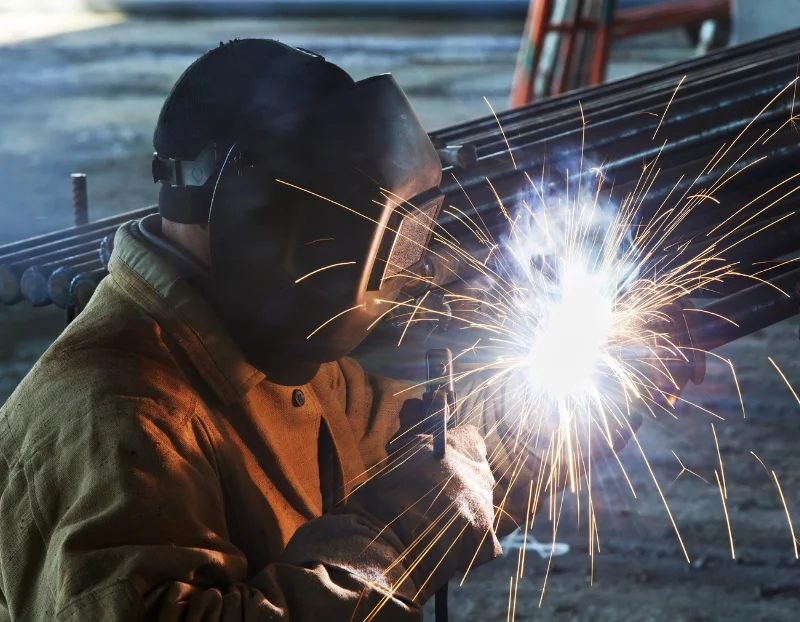
Stainless steel earns its name only when it is welded and finished correctly. Alpha Mobile Welding TX coordinates partner welders who TIG and MIG stainless at your kitchen, shop, dock or job site across Texas. We match the filler to the grade, purge pipe and tube where the inside matters, and remove heat tint so the joint keeps resisting rust. From cracked restaurant sinks and prep tables to handrails, boat hardware and process piping, send photos and we will tell you what a proper stainless repair involves.
Same-day stainless repair is subject to partner availability in your area.
Stainless basics
What stainless steel welding involves and why grade matters
Stainless steel resists corrosion because chromium in the alloy forms a thin, self-healing oxide film. Welding disturbs that film. Heat, contamination and the wrong filler can leave a joint that looks fine on day one and shows rust streaks within a month. Good stainless work is as much about protecting the surface as fusing the metal.
The two grades we see most are 304 and 316. Type 304 is the general-purpose alloy for restaurant hoods, prep tables, sinks, shelving, railings and architectural trim. Type 316 and low-carbon 316L add molybdenum for much better resistance to chlorides, which makes them the choice for marine hardware, coastal railings, chemical and pharmaceutical equipment, and medical or lab fixtures. L grades limit carbide precipitation in the heat-affected zone on thicker sections and corrosive service. Welding 304 with 308L filler and 316 with 316L is standard practice; mixing them up is a common cause of early corrosion at a weld.
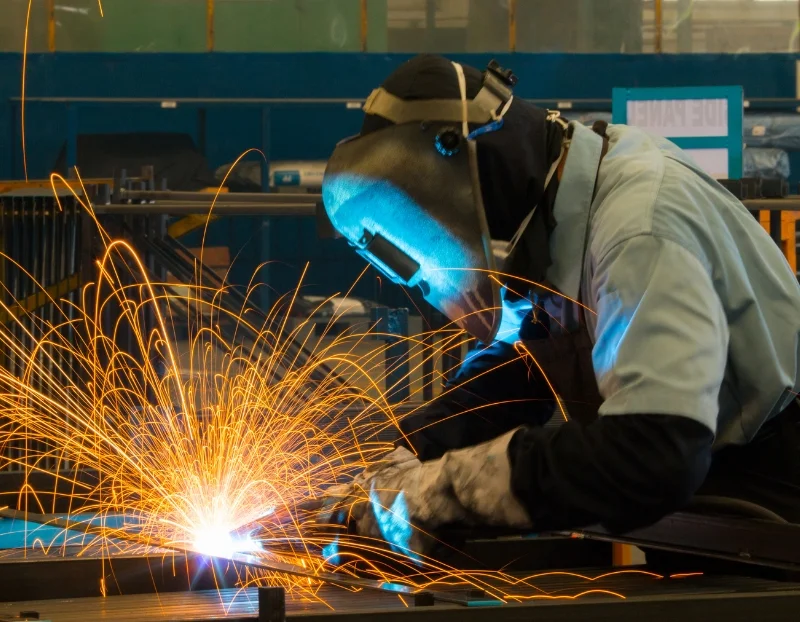
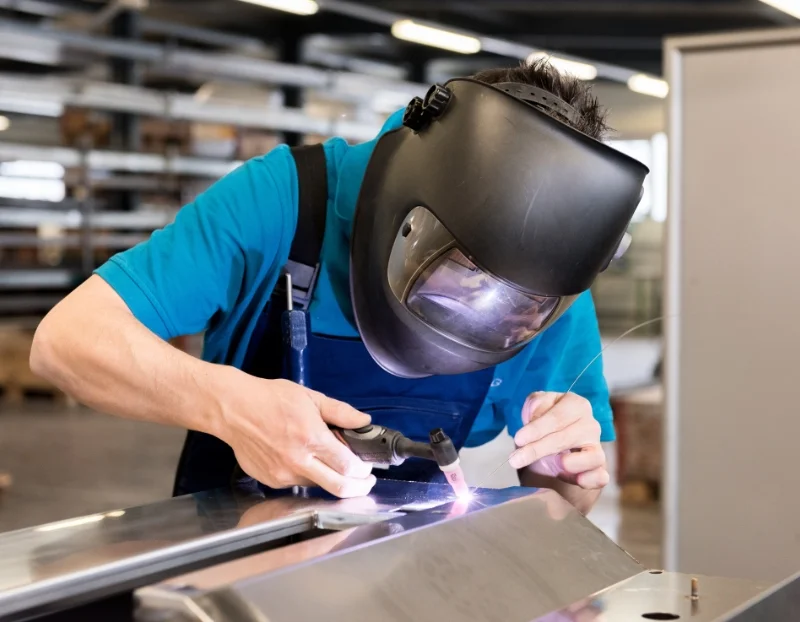
GTAW, or TIG, is the default for visible stainless and anything under about 3/16 inch: full heat control, no spatter, precise fusion on thin sheet. GMAW with tri-mix shielding gas is faster on thicker plate and frames where appearance matters less.
- 304 for food service and architectural work
- 316/316L for marine, chemical and medical service
- TIG for thin, exposed and sanitary joints
- Matching low-carbon filler on every joint
- Dedicated stainless-only tools and brushes
Common issues
Stainless problems we are called to fix
Most stainless failures trace back to contamination, bad fit-up or heat, not the alloy itself.
Cracked sinks and prep tables
Commercial sinks and work tables crack at corners and drain bosses from thermal cycling and heavy loading. Thin 16 and 18 gauge sheet needs low-amperage TIG to close the crack without warping.
Rust spots on stainless
Orange freckles on a stainless surface are usually ferrous contamination: carbon-steel grinding dust, a mild-steel wire brush or shared clamps. The embedded iron rusts, not the stainless. We remove it and passivate.
Broken handrails and brackets
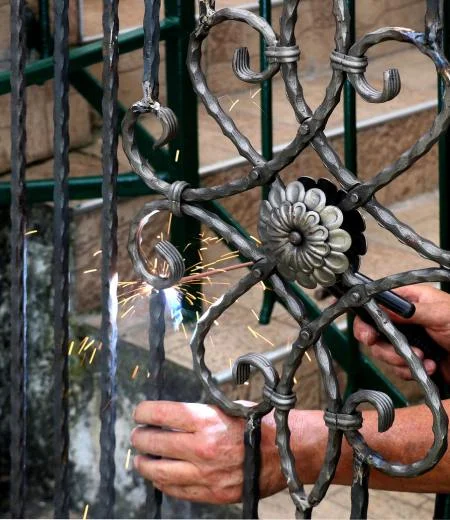
Architectural railings crack at post bases and tube-to-tube joints when anchors loosen and the rail starts to flex. Repairs are TIG welded, blended and polished so the fix is not obvious.
Failed boat and dock hardware
Cleats, stanchions, T-tops and ladder brackets fail from fatigue and crevice corrosion. Marine parts should be 316 and need a full clean-up after welding or salt will find the heat tint quickly.
Leaking tube and pipe joints
Pinholes and cracks on stainless tube appear at joints welded without a purge. Sugaring on the inside creates a rough, oxidized surface that corrodes, traps product and eventually leaks.
Warped and distorted sheet
Stainless holds heat and expands more than carbon steel, so long welds on thin panels pull and oil-can. Skip welding, copper backing and clamping keep hoods, panels and enclosures flat.
What we weld
Stainless steel welding services on site
Partner welders bring TIG and MIG setups to your location, with argon and tri-mix for stainless.
Restaurant and food-service equipment
Sinks, tables, hoods, shelving, drain boards and dish tables. Welds are ground and polished smooth so there are no crevices to trap food or harbor bacteria.
Sanitary tube and pipe
Back-purged TIG welds on tubing for dairies, breweries, commissaries and processing lines. Full penetration with a smooth, oxide-free inside surface.
Handrails and architectural stainless
Guardrails, handrails, cable-rail posts, trim and column covers. Joints are blended to match the existing grain or mirror finish.
Marine and dock hardware
316 cleats, rails, bow rails, ladder mounts, davits and rub-rail brackets. Welded on the boat, at the slip or in the yard.
Tanks, racks and carts
Mixing tanks, drum dollies, wire-shelving carts, utility carts and storage racks repaired or rebuilt in matching grade.
Process and chemical equipment
Brackets, skids, guards and non-pressure fittings in 316L for plants, labs and water-treatment facilities. Code or pressure-boundary work is referred to a certified shop.
Why Alpha Welding
Why call Alpha for stainless work
Stainless rewards discipline, and that is what we ask of every partner welder.
Grade-matched filler
308L on 304, 316L on 316, every time. We ask what the part is and where it lives before anyone strikes an arc.
Stainless-only tooling
Partners use dedicated stainless brushes, discs and clamps so carbon-steel particles never get embedded in your surface.
Finish that lasts
Heat tint is removed by pickling or mechanical blending and the surface is passivated so corrosion resistance returns.
Mobile, with the right gas
TIG with argon and MIG with tri-mix come to your kitchen, plant or marina. No hauling a 12-foot table to a shop.
How it works
From photos to a polished stainless weld
A few details up front let us bring the right process and filler the first time.
Send photos and the grade if you know it
Close-up of the crack or joint plus a wide shot. A stamp, invoice or magnet test tells us 304 vs 316.
Get a clear estimate
We confirm process, filler, purge needs and finish expectations, then quote the visit with any travel for your location.
Partner welder arrives
Clean-up, fit-up, purge if needed, TIG or MIG welding and distortion control, all done on site at a scheduled time.
Finish and hand-off
Tint removed, surface blended or polished, passivated where required, and photos of the completed work for your records.
Technical guide
How a proper stainless weld is made and finished
These details separate stainless that stays bright from stainless that streaks, whether the job is a dish table or a dock rail.
Choosing between 304 and 316
Ask where the part lives before asking what it is. Indoor food service, retail trim and most railings are fine in 304. Anything near salt water, pool chemicals, bleach-based sanitizers, acids or de-icing salts should be 316 or 316L. When repairing an existing part, match its grade; 304 filler on 316 leaves a weaker link in the corrosion chain. If the grade is unknown, a magnet gives a rough screen and a molybdenum spot test or supplier paperwork settles it.
TIG for thin and visible work
GTAW gives the welder separate control over heat and filler, which is what thin stainless demands. On 16 to 20 gauge sheet, a 1/16 inch 308L or 316L rod, a sharp 2% lanthanated tungsten and a gas lens cup produce a narrow bead with minimal tint. Copper or aluminum backing bars pull heat out of sink corners and hood seams so the sheet does not warp. Anything visible on a restaurant line or a railing is TIG, because spatter and a wide profile would need heavy grinding that thins the material.
MIG with tri-mix on thicker sections
Plate, structural stainless, equipment frames and heavy brackets go faster with GMAW. The shielding gas is the key: a tri-mix of roughly 90% helium, 7.5% argon and 2.5% CO2 gives good wetting with low oxidation, while argon-CO2 mixes meant for carbon steel leave a dull, oxidized bead. The bead is wider than TIG, so it suits joints that will be painted, hidden or ground. 308L and 316L solid wire in 0.035 inch is the usual spool.
Back-purging tube and pipe
When the inside of a stainless tube is exposed to air during welding, the root oxidizes into a black, crusty surface welders call sugaring. On sanitary tube that rough surface traps product and corrodes; on exposed handrail it shows at every open end. The fix is to flood the inside with argon before and during the weld: tape the ends, feed gas at low flow, allow time to displace the air and use an oxygen meter when the job is critical. A purged root is smooth, silver and nearly as corrosion resistant as the parent tube.
Heat tint, pickling and passivation
The straw, blue and gray colors beside a stainless weld are chromium oxides that have pulled chromium out of the surface below, and that band corrodes first. Light tint on indoor work can be removed with a stainless-only flap disc or abrasive pad. For food, marine and chemical service the standard is a pickling paste that dissolves the oxide, a thorough rinse and then passivation with citric or nitric acid to rebuild the chromium-rich film. Electropolishing is the top tier for sanitary tube and pharma fixtures.
Contamination and dedicated tools
Iron is the enemy. A grinder that was on mild steel yesterday embeds carbon-steel particles in stainless today, and those particles rust within weeks. Partners carry stainless-only wire brushes, cutting discs, flap discs and clamps, and keep your part off carbon-steel tables. Grinding carbon steel nearby showers stainless with sparks that do the same damage. Existing rust freckles are cleaned with a pickling product, rinsed and passivated rather than polished over.
What to send for a stainless estimate
- Close-up and wide photos of the crack or joint
- Material thickness or gauge if known
- Where the part is used (kitchen, marine, chemical)
- Whether the joint must be sanitary or food-contact
- Finish expected: brushed, polished or as-welded
Related welding services
Rust spots on a stainless table?
That is usually embedded iron from the wrong tools, not failed stainless. Send a photo and we will explain the fix before you replace anything.
Service area
Where our stainless partners work
Stainless welding needs the right gas, filler and tooling on the truck, so we confirm partner coverage for every address before quoting. Kitchens, breweries, marinas, plants and architectural contractors across the main Texas metros are covered, with travel for outlying areas quoted up front.
FAQs
Stainless steel welding questions
Straight answers on grades, finishes and what can be repaired on site.
Can you weld stainless steel on site, or does it need a shop?
Most stainless repairs are done on site. TIG machines, argon and tri-mix cylinders and stainless-only tooling travel well. Large hoods, long sanitary runs or anything needing a flat table and jigs may be better in a partner workshop, and we will say so.
Why did my stainless weld rust?
Usually one of three things: heat tint that was never removed, carbon-steel contamination from shared brushes or grinders, or the wrong filler. Occasionally the part was never 316 and sits in a chloride environment. Photos of the rust pattern tell us which.
Is 304 or 316 better for my project?
Indoors and away from salt or harsh chemicals, 304 is fine and less expensive. Marine, coastal, pool, chemical and medical environments justify 316 or 316L. When repairing an existing item, match what it already is so corrosion resistance stays even.
Can a cracked commercial sink be repaired?
Yes in most cases. Corner and drain cracks on 16 to 18 gauge are TIG welded with low heat, then ground and polished so no crevice remains. If the sheet has thinned from years of scrubbing or the crack keeps spreading, a replacement bowl is the better spend.
What is back-purging and do I need it?
Purging floods the inside of a tube with argon so the root of the weld does not oxidize. You need it on sanitary tube, food-contact piping, pharma fixtures and any exposed tube end where the inside is visible. Hidden structural tube can usually skip it.
Will the weld match my brushed or mirror finish?
Brushed No. 4 finishes can be blended so the repair is hard to find. Mirror and No. 8 finishes can be polished but a close look will usually show the repair. We set that expectation before quoting.
Do you weld stainless to carbon steel?
Yes, with 309L filler, which is designed for dissimilar joints. It is common on brackets, mounts and transitions. The carbon-steel side will still rust, so paint or coat it after welding.
Can you repair stainless boat rails and hardware?
Yes. Partners weld bow rails, stanchions, cleats, ladders and T-top joints in 316 at the slip, yard or on the trailer. Everything is pickled and passivated afterward because salt air finds unfinished heat tint fast.
Does welding weaken stainless steel?
A correct weld with matching low-carbon filler is as strong as the base metal. Problems come from overheating, which can sensitize the heat-affected zone, and from thinning the material with heavy grinding. Controlled heat input and minimal grinding avoid both.
How do I get a stainless welding estimate?
Send a close-up and a wide photo, the thickness if you know it and where the part is used. We confirm partner coverage for your address and reply with process, finish and price. Call 979-250-7486 or use the estimate form.
Request an estimate
Need a stainless steel welder near you?
Send photos of the sink, rail, tube or hardware and tell us where it lives. We will match the grade, process and finish and quote an on-site visit.
- Free, no-obligation estimates
- Photos help us understand the job faster
- Same-day requests depend on partner availability