INDUSTRIAL & CONSTRUCTION
Industrial and Construction Site Welding Across Texas
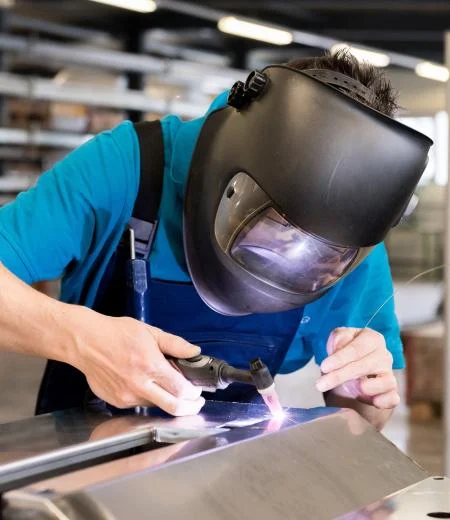
A mislocated base plate, a handrail that has to be in before the inspector walks, a conveyor frame cracked on night shift: construction and plant work does not wait for a shop schedule. Alpha Mobile Welding TX coordinates partner welders who bring the machine, the leads and the consumables to your job site or facility. They work inside your hot-work permit, your fire watch and your safety orientation. Call 979-250-7486 with the scope and the site rules, and we will line up a welder who fits both.
Same-day and after-hours site visits are subject to partner availability.
The scope
What industrial and construction site welding covers
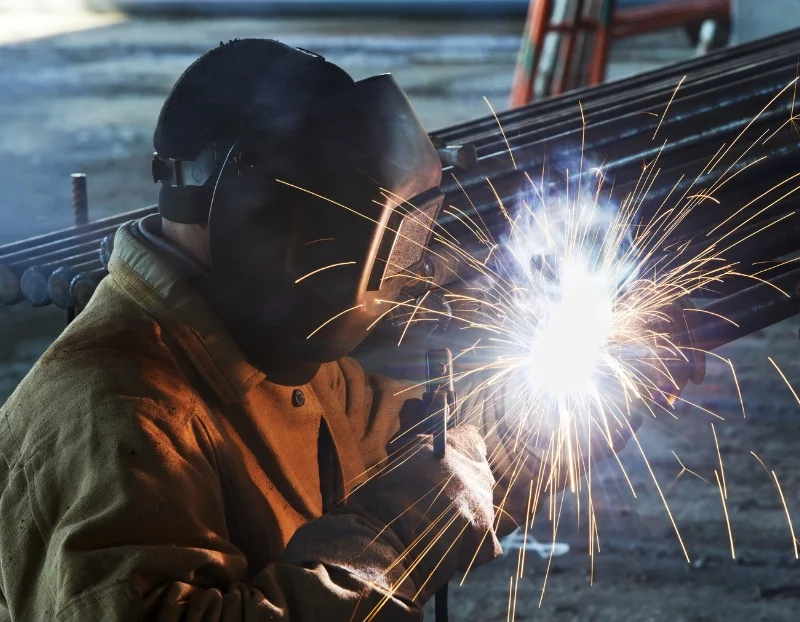
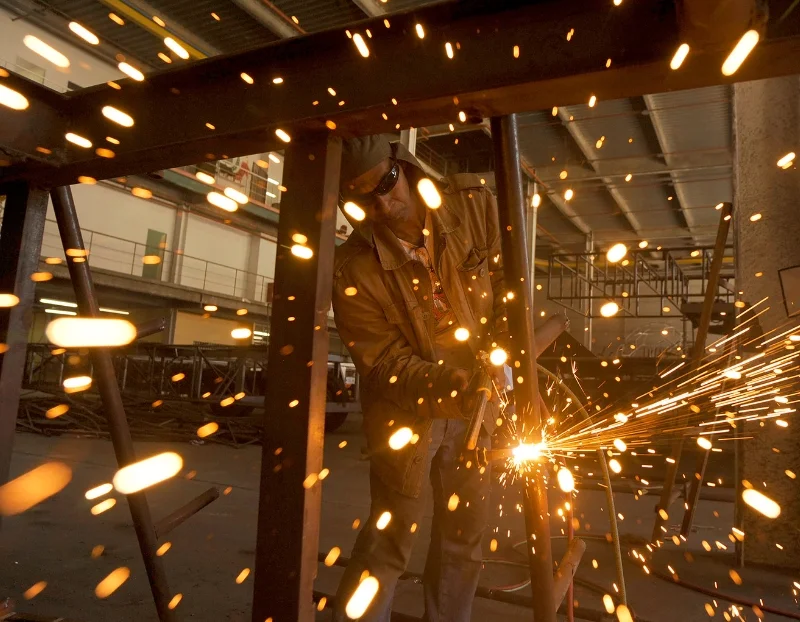
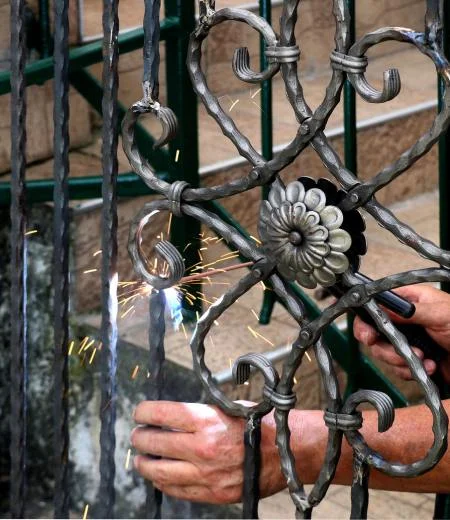
Construction site welding is the field work a general contractor or sub needs between steel delivery and final inspection: setting embeds and anchor bolts, welding stair stringers and handrail, shimming base plates, adding clips the detailer missed, and fixing damage the steel picked up on the truck. It also includes temporary bracing, shoring attachments and the miscellaneous metals that never make it onto the structural drawings but still have to be welded correctly.
Industrial plant support is the other half. Platforms, ladders and cages, pipe supports and shoes, machine guards, conveyor frames, hoppers, chutes and skirting all crack, wear or need changing out. A welder who can get into a running plant, work a short outage window and leave behind sound, documented welds keeps production moving without a crew mobilization.
Partner welders do not weld pressure piping, boilers or pressure vessels unless the job comes with a qualified procedure, a welder qualified to it and an inspector who owns the sign-off. ASME or API code work is a different engagement, and we say so up front.
- Embeds, anchor bolts, base plates and shim packs
- Stair stringers, handrail, guardrail and misc. metals
- Repairs to steel damaged in shipping or erection
- Platforms, pipe supports, guards and conveyor frames
- Hoppers, chutes, liners and wear surfaces in plants
Common calls
Problems site superintendents and plant managers call about
Most requests fall into one of these six situations.
Anchor bolts out of position
The bolts were cast an inch off and the column will not land. Partners weld plate washers, slot and reinforce base plates, or add welded bolt extensions per the engineer’s fix.
Handrail holding up the inspection
Rail is the last thing in and the first thing the inspector looks at. A field welder can set posts, close rails and grind smooth before the walk-through.
Delivered steel damaged or mis-fabricated
Bent flanges, missing clips, holes that do not line up. Field repairs and added connections keep erection moving while the fabricator sorts out the back charge.
Conveyor frame or hopper cracked
Vibration finds every under-welded corner. Partners gouge the crack, add gussets or doubler plates, and weld during a scheduled window rather than a surprise stop.
Pipe supports and platforms corroded
Chemical plants and coastal sites eat steel. Section replacement, new shoes and grating supports are welded in place with the line isolated and the permit active.
Temporary bracing and shoring
Wind bracing, tie-backs and shoring connections that have to hold for weeks, then come out. Welded, documented, and removed cleanly when the permanent work is in.
Field services
Site and plant welding services partners provide
Every job is scoped against the drawings or the plant’s work order before a welder is dispatched.
Embeds and anchor bolt corrections
Welded plate washers, bolt extensions, embed plates and headed studs where the engineer of record has approved the method and the detail.
Miscellaneous metals installation
Stair stringers, landings, handrail, guardrail, ladders, lintels, bollards and trench grating supports welded and fitted on site.
Repairs to erected or delivered steel
Straightening with heat, replacing damaged clips, adding missed connections and welding out field splices under the inspector’s eye.
Plant platforms and pipe supports
New supports, shoes, guides and platform framing welded in place around live equipment inside a permitted outage window.
Guards, frames and material handling
Machine guards, conveyor stringers, idler brackets, hoppers, chutes and skirtboard rebuilt or reinforced to stop recurring cracks.
Temporary works and demolition cuts
Bracing, shoring connections and controlled torch or plasma cutting to remove old steel safely before the new work goes in.
Why Alpha Welding
Why GCs and plant managers use Alpha for site welding
The coordination is the service: one call, the right welder, and paperwork handled before the truck arrives.
Site-ready paperwork
Certificates of insurance, safety orientation, badging and hot-work paperwork are handled before mobilization so the gate does not become a delay.
Welders matched to the process
Outdoor stick and self-shielded flux-core, dual-shield for heavy plate, MIG inside the shop or plant. The welder fits the work, not the other way around.
Scheduled around other trades
Partners show up in the window you give them, work around ironworkers, electricians and crane picks, and leave the area clean.
Honest about code limits
If the work needs a D1.1 welder, a qualified procedure or a stamp, you hear it before anyone strikes an arc.
How it works
From work order to signed-off weld
Four steps, most of them handled before the welder is on site.
Send the scope and the site rules
Drawings, a photo or a work order, plus orientation, badging and permit requirements. Call or submit the form.
Partner and process matched
We confirm a welder with the right machine, consumables and credentials for the material thickness and the site’s exposure.
Permit, fire watch and set-up
The welder arrives with COI on file, attends orientation, pulls the hot-work permit with your safety lead and sets up fire watch.
Weld, inspect, document
Work is welded to the detail, visually inspected, and photographed or logged so your QC file and your inspector have what they need.
Technical guide
Site welding explained: permits, processes, codes and inspection
This guide covers what a superintendent, safety manager or maintenance planner should know before bringing a welder onto an active site or into a running plant.
Hot-work permits, fire watch and safety orientation
Nearly every commercial site and plant requires a hot-work permit for welding, cutting and grinding. The permit names the area, the time window, the extinguisher location and the person on fire watch during the work and typically 30 to 60 minutes afterward. Partner welders attend the site safety orientation, sign in, wear the PPE the site calls for (hard hat, safety glasses under the hood, FR clothing, gloves, boots) and stop when the permit holder says stop. Fire watch is a real position, because slag rolls further than people expect and insulation, cardboard and shrink-wrap burn quietly.
Insurance, COI, badging and TWIC
General contractors and plant owners want a certificate of insurance before a welder passes the gate, and some require the owner named as additional insured. Tell us at the first call so the paperwork is in place. Port facilities, refineries and many chemical plants along the Houston Ship Channel and in Corpus Christi require a TWIC card and site badging, so those jobs need lead time for credential checks. Partners are matched to these jobs only when they already hold the credentials, because a welder turned away at the gate costs everyone a day.
Choosing the process for the exposure and the plate
Outdoors on a windy site, shielding gas blows away and leaves porosity, so field work is usually SMAW with E7018 low-hydrogen electrodes or self-shielded flux-cored wire (FCAW-S), both of which tolerate wind and mill scale. For heavier plate and multi-pass groove welds, dual-shield flux-core (FCAW-G) with CO2 or mixed gas gives higher deposition and cleaner beads, provided the area can be screened. Inside a shop or plant, GMAW with solid wire is fast and clean on thinner material. Preheat matters on thick sections and high-strength steels, and E7018 rods come from a sealed container or rod oven to keep hydrogen out of the weld.
When AWS D1.1 and the engineer of record apply
If a weld carries building load, the engineer of record decides the detail and AWS D1.1 governs how it is made: column splices, moment connections, base plate modifications, anchor bolt fixes and most repairs to erected structural steel. The welder should hold a current D1.1 qualification in the position and process the detail calls for, and the special inspector may witness or test the weld. Handrail, guards, non-structural clips and most plant support work fall outside that envelope, but partners still weld them to D1.1 workmanship. Jobs described as structural are handled through our structural welding process rather than as misc. metals.
Inspection and documentation
Every site weld gets a visual inspection for size, profile, undercut, porosity and cracks before the welder leaves. On structural work the special inspector may also call for magnetic particle or ultrasonic testing. For plant maintenance, the document trail is the work order: what was welded, what process and filler were used, who did it and when. Partners photograph completed welds and provide a short record on request so the QC binder or maintenance log has a clean entry rather than a verbal. Scheduling matters too: the most efficient jobs have a defined window, the area cleared, a power spot confirmed and the steel staged within lead length.
What partners will not weld without the right paperwork
- Pressure piping, boilers or vessels without a qualified procedure and inspector
- Structural load-path changes without the engineer of record's detail
- Hot work in a confined space without gas testing and attendant
- Galvanized steel without ventilation and the coating removed at the joint
- Any work after the permit expires or the fire watch leaves
Related welding services
Have a work order or drawing ready?
Send the detail, the site’s permit and badging requirements and the window you need, and we will confirm a partner welder who fits all three.
Where partners work
Site and plant welding coverage across Texas
Alpha coordinates partner welders in the major Texas metros and the industrial corridors between them. Coverage is confirmed per address and site requirement, because a refinery in Pasadena and a mid-rise in Frisco call for different welders.
FAQs
Construction and industrial welding questions
Straight answers to what site and plant managers ask before booking.
Can a partner welder work under our hot-work permit system?
Yes. Partners attend orientation, sign the permit with your safety lead, and work only in the area and window it allows. If your site supplies its own fire watch, tell us and the schedule will reflect it.
Do you provide a certificate of insurance?
A COI is provided before mobilization. If the owner or GC must be named as additional insured, send the exact wording with the request so the certificate is correct the first time and the welder is not held at the gate.
Are your welders D1.1 certified?
Partners assigned to structural work hold current AWS D1.1 qualifications for the process and position the detail requires. We ask what the engineer and inspector expect before matching a welder to a load-bearing connection.
Can you weld pressure piping in our plant?
Not on a general site-welding call. Pressure piping, boilers and vessels need a qualified procedure, a welder qualified to it and an inspector. If your plant has those in place, describe the job and we will see whether a partner is a fit.
What about TWIC and badged sites?
Port, refinery and some chemical sites require a TWIC card and site badging. Say so at the first call; those jobs are matched only to partners who already hold the credentials, and they need more lead time than an open construction site.
Which process will the welder use outdoors?
Usually stick with E7018 or self-shielded flux-core, because both hold up in wind. Dual-shield flux-core is used for heavier multi-pass work when the area can be screened. The choice is driven by material thickness, exposure and the detail, not by habit.
Can you fix anchor bolts that were set wrong?
Often, but the fix must come from the engineer of record: plate washers, slotted base plates, welded extensions or new epoxy anchors. Partners weld the approved detail and the special inspector checks it.
How do you handle work in a running plant?
Work is tied to an outage window or an isolated line. Lockout, isolation and gas testing are the plant’s responsibility and are finished before the welder enters. Partners leave the area ready to return to service.
Will we get documentation for our QC file?
Yes. Partners provide photos of completed welds and, on request, a short record of process, filler, position and date. For inspected structural welds, the special inspector’s report is the formal document.
Can you come out the same day for a site emergency?
Same-day and after-hours responses are coordinated subject to partner availability. The sooner the site rules, permit needs and material details reach us, the sooner a welder can be matched.
Request an estimate
Need a welder on site or in the plant?
Call 979-250-7486 or send the work order, drawings and site requirements. We will confirm a qualified partner welder and a window that works around your other trades.
- Free, no-obligation estimates
- Photos help us understand the job faster
- Same-day requests depend on partner availability