HEAVY EQUIPMENT REPAIR
Welding on Heavy Equipment: Field Repairs That Hold Up
A cracked excavator stick, a bucket with the cutting edge worn to the moldboard, a dozer blade split at the push arm: every hour that machine sits is an hour the crew is paid to wait. Alpha Mobile Welding TX coordinates partner welders who come to the yard, the pit or the job site with the machine and the rods to put equipment back to work. They understand high-strength steel, preheat, wear plate and the safety steps that come before welding near hydraulics. Call 979-250-7486 with the make, model and a photo of the damage.
Field response is subject to partner availability; large rebuilds may be quoted for shop work.
The scope
What heavy equipment welding repair involves
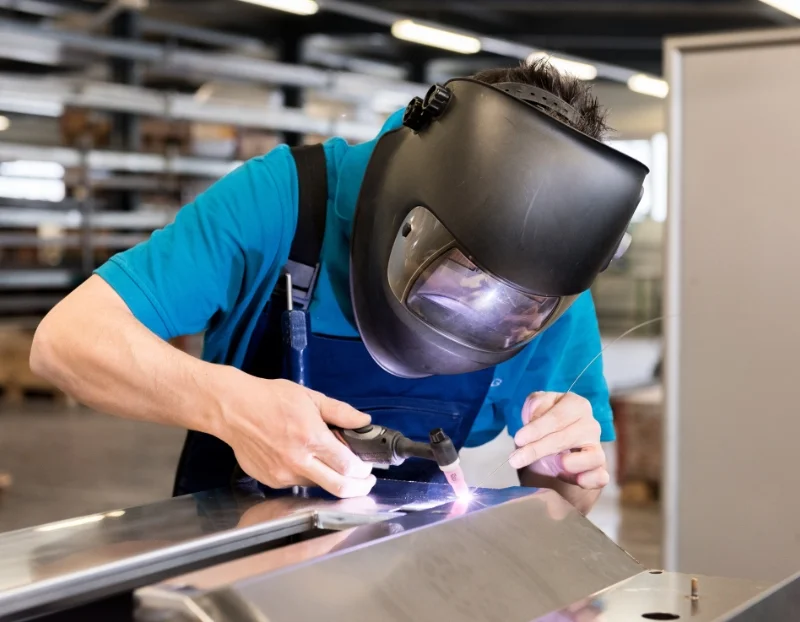
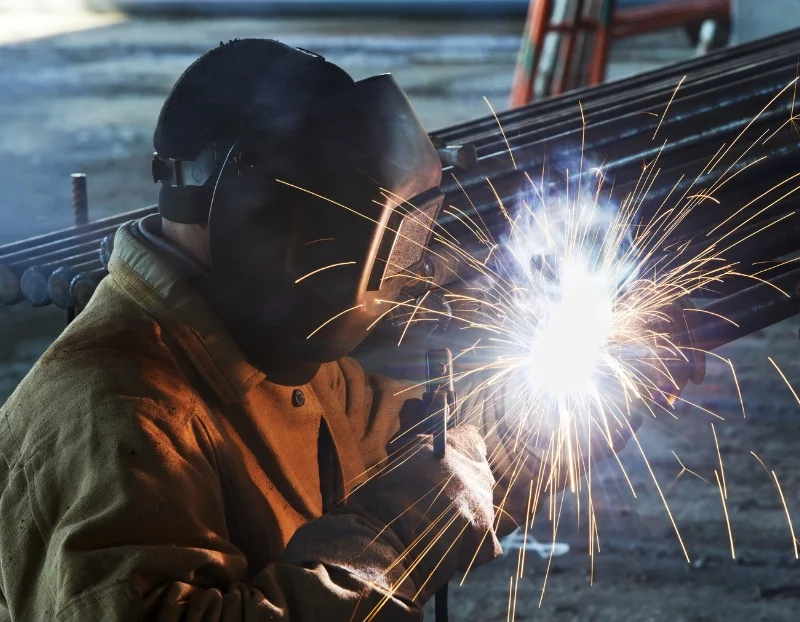
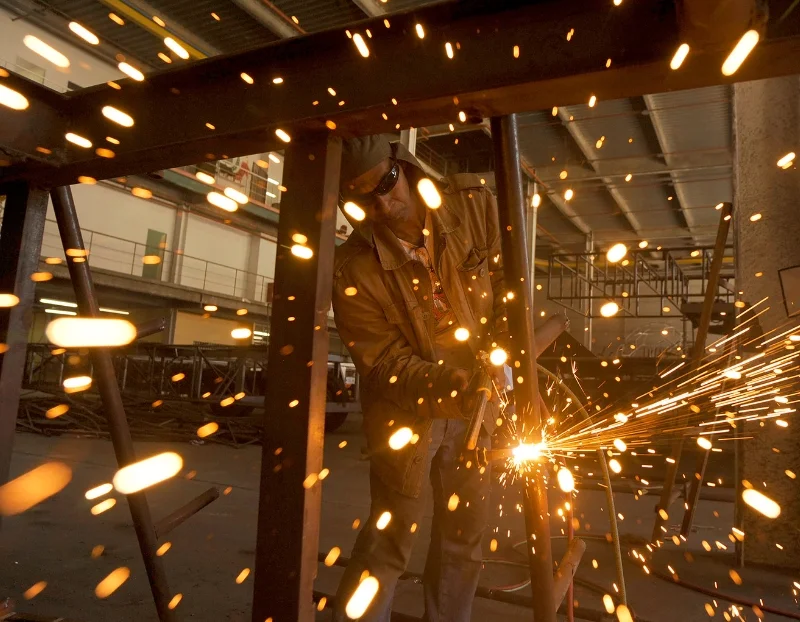
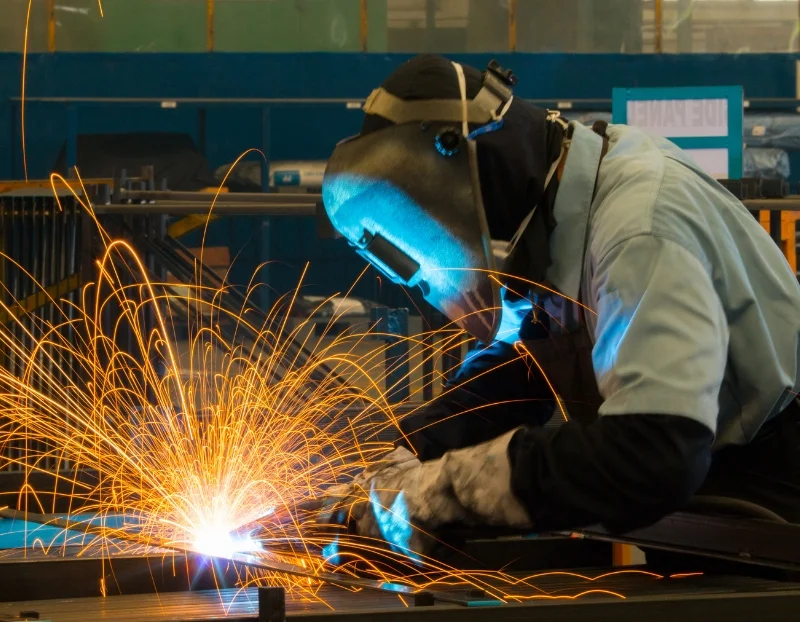
Heavy equipment welding is repair and reinforcement on earthmoving, lifting and hauling machines: excavators, backhoes, wheel loaders, skid steers, dozers, graders, telehandlers and the trailers that move them. The steel is thicker and stronger than anything on a gate or railing, the loads are cyclic, and a repair that would be fine on a mild-steel bracket will crack again in a week on a loader arm.
The work breaks down into three kinds. Wear repair rebuilds the surfaces that grind against dirt and rock: cutting edges, side cutters, wear plates, tooth adapters, bucket floors and blade faces. Crack repair finds the end of a crack, stops it, gouges it out and welds it back with reinforcement where the design allows. Attachment work builds or fixes skid steer plates, quick couplers, trailer ramps and guards.
Partner welders do this work in the field whenever the machine can be made safe where it sits. Booms and sticks that have cracked through, or repairs the manufacturer says must follow a specific procedure, may be quoted for shop work or referred for engineering review first.
- Buckets, cutting edges, side cutters and tooth adapters
- Loader arms, booms, sticks and dozer push frames
- Skid steer attachments, couplers and trailer ramps
- AR400/AR500 wear plate and hardfacing
- Crack repair with preheat and low-hydrogen rods
Common calls
Equipment problems partners are called to fix
Six failures that account for most heavy equipment welding calls.
Bucket cutting edge worn out
The edge is gone and the bucket lip is taking the abuse. Partners cut back the damage, fit a new edge and side cutters and weld them with the right preheat.
Tooth adapters loose or broken
Adapters crack at the weld or the nose wears out of tolerance. They are cut off, the lip ground clean and new adapters welded at the correct spacing and angle.
Excavator stick or boom cracked
Cracks start at a weld toe or stress riser near the bucket pin. Partners locate the crack end, drill, gouge, preheat and weld; through-cracks are referred for review.
Loader arm or lift arm cracked
Cyclic loading splits the arm at the cross tube or pivot boss. Repairs use gouged-out joints, multi-pass low-hydrogen welds and a doubler where the geometry allows.
Dozer blade or push frame split
Blade faces wear thin and push frames crack at the C-frame. New skin, hardfacing on the edge and reinforced welds at the trunnions get the machine pushing again.
Trailer ramp or deck broken
Tilt-deck and beavertail ramps crack at the hinge and the mesh. Hinge rebuilds, replacement ramp sections and new tie-down points keep the trailer safe.
Repair services
Heavy equipment welding services partners provide
Field work by default, shop work when the repair calls for it.
Bucket rebuilds and wear parts
New cutting edges, side cutters, wear plates, bottom skins and tooth adapters fitted and welded on excavator, loader and backhoe buckets.
Hardfacing and wear plate
AR400 and AR500 wear plate welded to buckets, blades, chutes and skids; hardfacing overlay on edges and teeth to extend life between rebuilds.
Crack repair on arms and frames
Crack-arrest holes, gouging, preheat and low-hydrogen multi-pass welding on loader arms, sticks, booms and push frames.
Skid steer attachments
Quick-attach plates, grapple tines, bucket mounts and custom brackets built, repaired or reinforced to fit the machine and the job.
Trailer and ramp repair
Ramp hinges, deck sections, tie-down rings and gooseneck repairs on equipment trailers so the haul to the next site is safe.
Guards, steps and cab protection
Replacement steps, handrails, belly pans, light guards and screen mounts welded back on so operators can climb and work safely.
Why Alpha Welding
Why contractors and fleet managers call Alpha
The right welder for high-strength steel, on site, with the safety steps done first.
Welders who know equipment steel
Partners matched to this work understand preheat, low-hydrogen rods and why a cold weld on a loader arm fails.
Downtime is the enemy
A field repair in the yard or the pit beats a lowboy trip to a shop and a week in the queue.
Safety before the arc
Lockout, blocking, battery disconnect and a proper ground are done before welding near hydraulics or electronics.
Straight talk on forks and frames
Some parts should not be welded. Partners say so and point to replacement instead.
How it works
From breakdown to back in the dirt
Four steps between the call and the machine running again.
Describe the machine and damage
Make, model, the part, where the crack or wear is, and whether the machine can move. Send photos.
Partner matched and parts sourced
A welder with the right machine and rods is confirmed, and cutting edges, adapters or wear plate are sourced.
Machine made safe on site
Attachments blocked, hydraulics locked out, batteries disconnected, ground clamp on the workpiece.
Weld, inspect, hand back
The repair is preheated, welded, inspected and ground where needed, with a clear note on what was done.
Technical guide
Heavy equipment welding explained: steel, cracks, wear and safety
What owners and operators should know about repairing machinery steel, and why mild-steel shortcuts do not work here.
High-strength and cast steel need preheat and low-hydrogen rods
Booms, sticks, loader arms and push frames are built from high-strength low-alloy plate, and pivot bosses and some adapters are cast steel. These materials harden in the heat-affected zone when they cool too fast, and trapped hydrogen then cracks that zone hours after the welder has left. The fix is preheat, typically 200–400°F depending on thickness and alloy, checked with a temperature stick, plus low-hydrogen electrodes such as E7018 or E8018 from a rod oven, or gas-shielded flux-core wire. Thick sections cool slowly under a welding blanket rather than in a cold wind.
Stopping a crack before welding it
Welding over the visible part of a crack leaves the sharp tip buried, and it keeps growing. Partners find the real end of the crack with dye penetrant or by grinding, then drill a crack-arrest hole just beyond it to blunt the tip. The crack is gouged out with a carbon-arc torch or grinder to sound metal and welded from the root in multiple cleaned stringer passes. Where the design allows, a gusset or doubler spreads the load, but a plate in the wrong place creates a new stress riser, so reinforcement is placed by judgment, not habit.
AR400, AR500 wear plate and hardfacing
Abrasion-resistant plate is quenched and tempered to roughly 400 or 500 Brinell. It is welded with low-hydrogen filler, modest preheat on thicker sections and as little heat as the joint allows, because the plate softens in the heat-affected zone and that band wears out first. Partners stitch-weld wear plate on buckets, blades and chutes and use plug welds where the plate is thin. Hardfacing is a hard overlay deposited directly on a mild or low-alloy base; on cutting edges, teeth and blade faces it buys months of extra life, laid in a pattern that suits the material being dug.
Forklift forks are the exception
Forks are heat-treated, load-rated safety parts. OSHA and forklift manufacturers treat welding, heat-straightening or drilling a fork as a modification that is not permitted without the manufacturer’s written authorization, and a fork that has lost 10 percent of its heel thickness is condemned, not repaired. A welded fork can look fine and still fail under a pallet with somebody beside it. Partners will not weld or build up forks; the answer is replacement with forks rated for the truck. The same applies to hooks and other load-rated gear.
Lockout, blocking and protecting the machine
Before anyone welds on a machine, the attachment is lowered or blocked, the hydraulics are relieved and locked out, and the key is removed. Batteries are disconnected, and the ground clamp goes as close to the weld as possible so current never travels through bearings, pins, the alternator or the ECM. Cylinder rods are covered against spatter, because a pitted rod ruins a seal. Hoses, fuel lines and the seat are shielded, and an extinguisher stays within reach. None of it takes long, and all of it is cheaper than the damage it prevents.
Field repair or shop repair
Wear parts, cutting edges, adapters, ramps, guards and single cracks are field jobs, done in the yard or at the pit. A repair goes to the shop when the part must be removed to weld from both sides, when a boom or stick has cracked through and needs engineering review, or when the manufacturer specifies a procedure. Downtime drives the call: a four-hour field repair beats a lowboy move and a shop queue, but a field repair that fails under load costs more than both. Partners quote it honestly.
Before the welder arrives
- Park the machine on level ground with room to work around it
- Wash mud and grease off the repair area
- Have the machine key and the fuel or hydraulic shutoffs identified
- Keep the operator available to run functions if needed
- Send photos of the crack or worn part ahead of time
Related welding services
Machine down right now?
Call with the make, model and a photo of the damage, and we will confirm a partner welder with the rods and plate for the job, subject to availability.
Where partners work
Heavy equipment welding coverage across Texas
Partner welders are coordinated across the Texas metros and the construction, quarry, oilfield and agricultural corridors around them. Coverage is confirmed per address, because a pit south of Houston and a ranch near Amarillo call for different welders.
Greater Houston
Dallas–Fort Worth
Central Texas
- Austin
- San Antonio
- Killeen
- Temple
- Georgetown
South & West Texas
FAQs
Heavy equipment welding questions
What owners, operators and fleet managers ask before booking a repair.
Can you weld my excavator stick in the field?
Usually, if the crack has not gone through and the machine can be made safe where it sits. The crack is drilled, gouged, preheated and welded in place. A through-crack or a previously repaired stick is referred for engineering review.
Will you repair or straighten forklift forks?
No. Forks are heat-treated, load-rated parts, and welding or heat-straightening them is not permitted under OSHA rules without the manufacturer’s written authorization. Worn or bent forks are replaced with forks rated for the truck.
Why does my last bucket repair keep cracking?
Most repeat cracks come from welding over the crack tip instead of drilling and gouging it out, skipping preheat on high-strength steel, or using a general-purpose rod instead of low-hydrogen.
Do you install cutting edges and tooth adapters?
Yes. Partners remove the worn edge or adapters, grind the lip to clean metal, fit the new parts at the correct spacing and weld them with preheat and low-hydrogen filler.
What is the difference between wear plate and hardfacing?
Wear plate is AR400 or AR500 sheet welded onto a surface as a sacrificial skin. Hardfacing is a hard weld overlay deposited directly onto the part. Plate suits floors, sides and chutes; hardfacing suits edges, teeth and blades.
Is it safe to weld on a machine with electronics?
Yes, when done correctly. Batteries are disconnected, the ground clamp goes close to the weld, and current is never routed through pins, bearings or the ECM. Rods and hoses are shielded from spatter.
Can you come to a quarry, pit or oilfield lease?
Partners work at pits, lease roads and remote sites where access and safety rules allow. Tell us about gate requirements and orientation, and we will confirm availability.
How long does a typical repair take?
A cutting edge, adapter set or single crack on a loader arm is often a half-day to a day in the field, including preheat and cool-down. Bucket rebuilds with new floors and wear plate take longer.
Do you weld cast steel parts like bosses and adapters?
Weldable cast steel is repaired with preheat, low-hydrogen filler and slow cooling. Cast iron parts, rare on modern equipment, are usually replaced. The partner identifies the material before committing to a repair method.
Will the repair come with any documentation?
On request, partners note the location, process, filler and preheat used so your maintenance log reflects the repair. For rental fleets and insured equipment that record matters.
Request an estimate
Get the machine back in the dirt
Call 979-250-7486 or send photos of the damage with the make and model. We will confirm a partner welder equipped for high-strength steel and wear parts.
- Free, no-obligation estimates
- Photos help us understand the job faster
- Same-day requests depend on partner availability