CUSTOM METAL FABRICATION
Welding Fabrication Shops Near Me: Custom Metal Built to Your Drawing
Need something built rather than fixed? Alpha Mobile Welding TX coordinates custom fabrication through partner welders across Texas. Some partners run workshops with cutting tables, jigs and finishing space; others fabricate on your site, fitting new steel to the conditions that already exist. Send a sketch with dimensions, a few photos and your material preference, and we will route the job to the partner best equipped to cut, fit, weld and finish it, whether that is a bracket, a gate, a rack or a trailer modification.
Lead times depend on material and partner workload; rush work is subject to availability.
Fabrication basics
What welding fabrication means and how the work is split
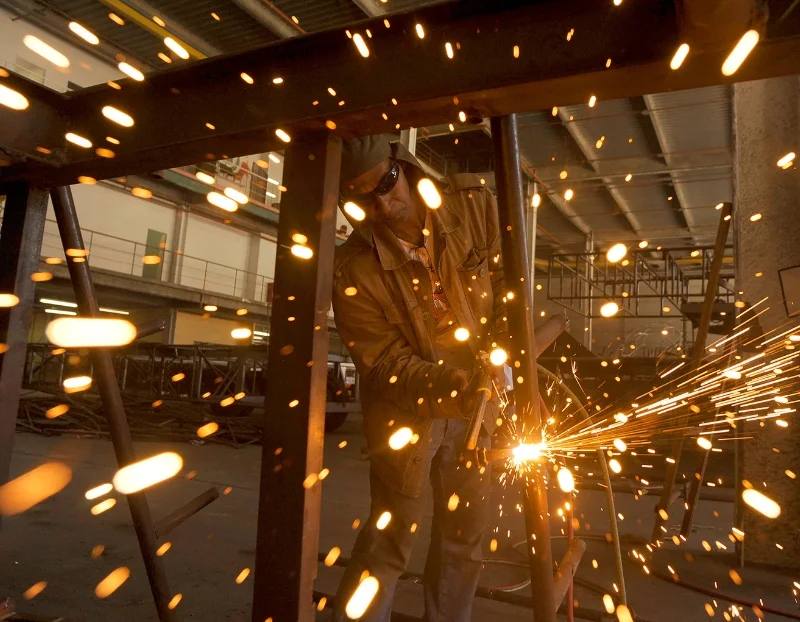
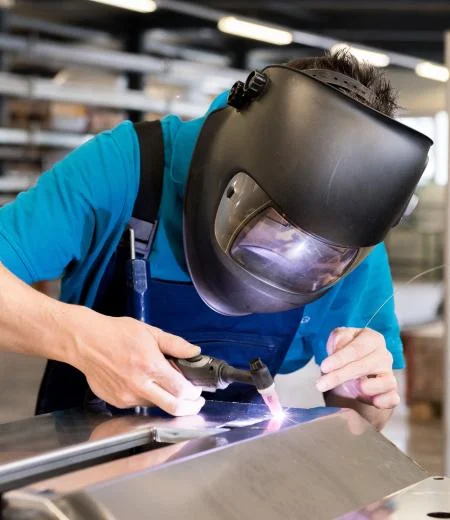
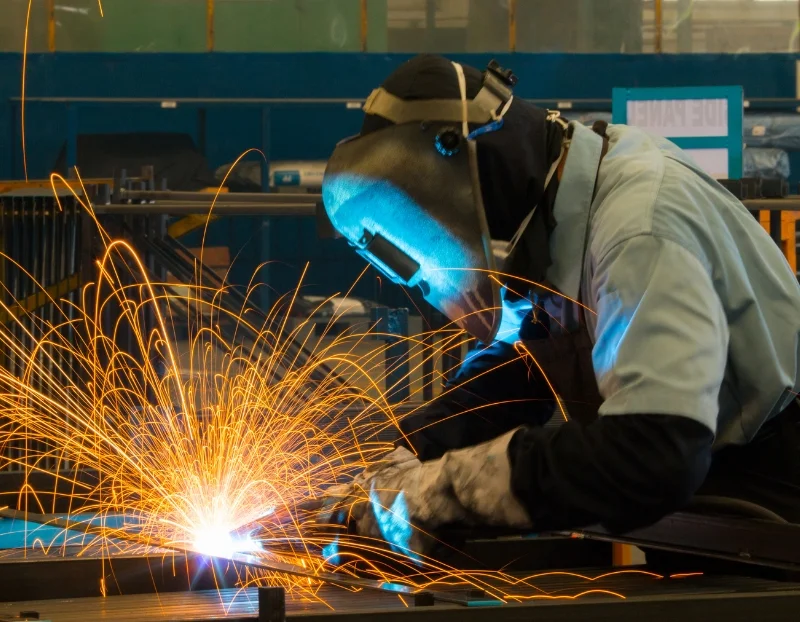
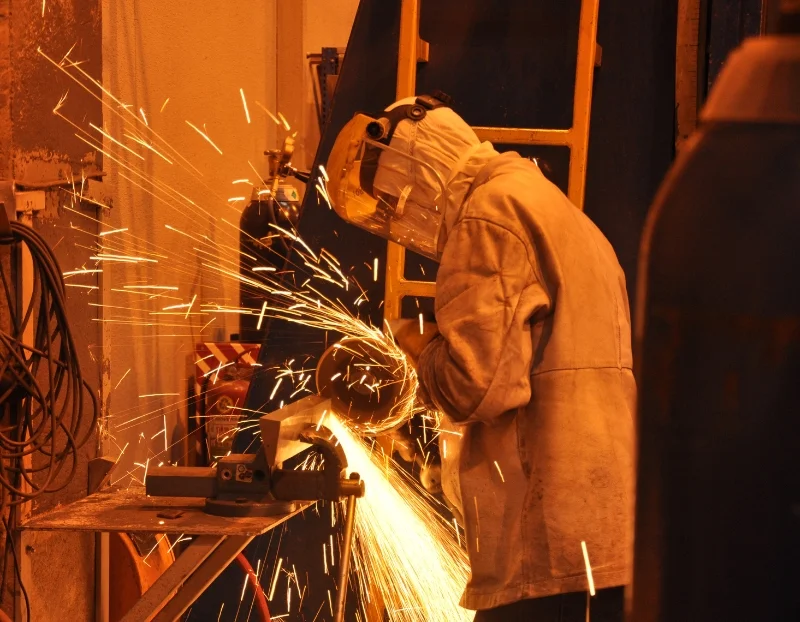
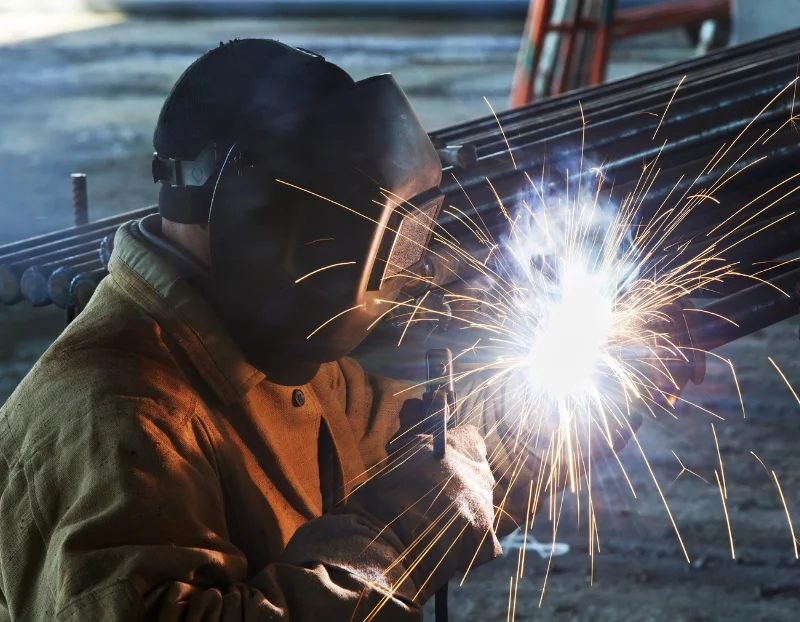
Fabrication is the full sequence of turning stock metal into a finished part: reading a drawing or taking measurements, cutting tube, angle, channel and plate to length, fitting and tacking the pieces square, welding them out, then grinding and finishing. A repair starts from something broken; fabrication starts from a blank sheet and a set of dimensions. Layout, fit-up and finish decide whether the piece bolts up on the first try.
Alpha does not run a shop of its own. We coordinate the work through partner welders, which means the job goes to whoever is set up for it. A workshop with a flat table, a bandsaw, a plasma table and jigs is the right place for repeat parts, long frames, anything that must stay dead flat and anything headed for powder coat. On-site fabrication is the right call when the part has to fit an existing structure, when a gate must hang on posts already set, or when a rack has to thread through a doorway that a finished assembly never would.
Most projects use both: main assembly in the shop, then installation and tie-in welds on site.
- Cut, fit, weld and finish from drawings or measurements
- Shop fabrication through partners with tables and jigs
- On-site fabrication where fit-up to existing conditions matters
- Carbon steel, stainless and aluminum stock
- Paint, powder coat and galvanizing arranged
Why people call
Situations that call for custom fabrication
Off-the-shelf parts rarely fit the odd corner, the old truck or the equipment nobody makes brackets for anymore.
Nothing stock fits
The mount, bracket or stand you need is an inch off from anything in a catalog. Measuring the real condition and building to it beats grinding a stock part until it almost works.
The original part is obsolete
Guards, hangers and brackets on older equipment are no longer sold. A partner measures the mating surfaces and fabricates a replacement from plate and angle.
Weight or load changed
A rack that was fine for pallets of boxes now holds coils or dies. New shelves need heavier channel, more posts and proper gussets, not just extra weld on the old frame.
Truck or trailer needs a modification
Headache racks, toolbox mounts, tie-down rails, extended tongues and ramp hinges are built to your truck or trailer, not a generic template.
Security or code requires it
Dumpster enclosures, bollards, equipment guards and guardrails are often required by a landlord, insurer or inspector and have to be built to a spec.
You have a design but no builder
A furniture base, sign frame or architectural piece from a designer drawing needs someone who can read it, hit the dimensions and deliver the finish shown.
What we build
Custom metal fabrication through our partner network
These are the jobs partners quote most often, in the shop, on site or both.
Brackets, mounts and frames
Equipment mounts, machine bases, conveyor supports, pump skids and motor frames from angle, channel and plate, drilled or slotted to your bolt pattern.
Racks, shelving and storage
Pallet-style racks, cantilever lumber and pipe racks, die racks and mezzanine guardrail built from structural tube and channel with gussets at every load point.
Gates, railings and enclosures
Driveway and pedestrian gates, handrails, guardrails, dumpster enclosures and mechanical screens, fabricated to measure and installed on existing posts or new footings.
Truck, trailer and fleet parts
Headache racks, flatbed decks, truck beds, ladder racks, trailer tongue and ramp repairs, tie-down points and toolbox mounts built for your vehicles.
Guards, covers and signs
Equipment and machine guards, expanded-metal cages, drain covers, sign frames and sign bases, carport frames and awning structures.
Furniture and architectural pieces
Table bases, bench frames, shelving brackets, fireplace surrounds and stair stringers from designer drawings, finished for paint or powder coat.
Why Alpha Welding
Why route a fabrication job through Alpha
One request, matched to the partner with the right equipment, instead of calling five shops yourself.
Shop or site, whichever fits
We send the job to a partner workshop when flatness, jigs or finish demand it, and to a mobile welder when fit-up to your site matters more.
Clear scope before cutting
Dimensions, material, finish and tolerance are written into the estimate so you and the fabricator are looking at the same part.
Real stock, real sizes
Partners build from standard tube, angle, channel, plate and expanded metal and will tell you when a size swap saves money without losing strength.
Finish arranged
Prime and paint, powder coat through a coating partner, or hot-dip galvanizing for outdoor steel, quoted as part of the job.
How it works
From sketch to installed steel
A good request makes a good estimate; here is what moves a fabrication job along.
Send a sketch and photos
A hand drawing with overall dimensions, photos of where it goes, material preference and the finish you want.
Review and estimate
We confirm material sizes, shop vs on-site, lead time and finish, and send a price with any travel for installation.
Fabricate
The partner cuts, fits, welds and finishes in the shop, or builds on site where the part has to match existing conditions.
Install and document
Final welds, anchors and adjustments on site, then photos of the completed work for your records or your landlord.
Technical guide
How to get a fabrication job built right the first time
Most fabrication problems are decided before the first cut. These are the points we go over with every customer and partner.
Shop fabrication vs on-site fabrication
A shop gives the fabricator a flat, level table, clamps and jigs, a bandsaw that cuts square, a plasma or oxy-fuel table for plate and room to turn the part over for out-of-position welds. That is what long frames, repeat brackets, anything that must stay flat and anything going to powder coat need. On site, the welder works with what the ground gives: a gate hung on posts that lean two degrees, a rail that follows a sloped slab, a rack squeezed between a column and a dock door. Field fabrication wins where fit matters more than finish.
Materials and standard stock
Structural work is built from hot-rolled A36 or A500 steel in standard shapes: square and rectangular tube, angle, channel, flat bar, round bar and plate from 1/8 to 1/2 inch, plus expanded metal and bar grating for guards and walking surfaces. Stainless is used where food, chemicals or weather demand it, aluminum where weight matters. Partners keep common sizes and order the rest, so a drawing that sticks to stock sizes is usually quicker and cheaper to build.
Sending a request that can be quoted
A sketch does not have to be pretty. Overall length, width and height, bolt-hole spacing if the part mounts to something, and the load it carries are the numbers that matter. Add photos of where it goes with a tape measure in frame. State the material (mild steel, stainless, aluminum) and the finish (bare, primed, painted, powder coated, galvanized). If a designer or engineer drew it, send the PDF. If it replaces an existing part, photos of the old one from two angles plus key dimensions are usually enough.
Tolerances, squareness and finish expectations
General structural fabrication holds about plus or minus 1/16 inch on cut lengths and 1/8 inch over a long frame, and partners check diagonals to keep frames square. Tighter tolerances cost more; say so if a part has to mate with a machined surface. Finish is agreed up front: as-welded with spatter knocked off, welds ground flush for a painted face, or fully blended for furniture and architectural pieces. Every pass of grinding is labor, so match the finish to where the part lives.
Lead times vs mobile repairs
A mobile repair is often same-week because the welder brings rod and a grinder to a part that already exists. Fabrication has to wait on material, shop time and sometimes a coating partner. Small brackets and simple frames usually run a few days; gates, racks and trailer modifications a week or two; powder coat or galvanizing add their own turnaround. We give a lead time in the estimate and update it if material is delayed.
Finishing: paint, powder coat and galvanizing
Bare steel rusts, so every outdoor part gets a finish. Shop primer and enamel paint are the fastest and easiest to touch up after installation. Powder coat, done by a coating partner, gives a hard, even film and a wide color range; the part must be fully welded before coating, so field tie-ins afterward need touch-up. Hot-dip galvanizing is the long-life choice for fence posts, guardrails and anything in ground contact; vent and drain holes are added to closed tube first. Load-bearing racks, canopies and anything tied to a building structure may need an engineer’s review, which we flag before the job is built.
What to include with your request
- Sketch or drawing with overall dimensions
- Photos of the location with a tape in frame
- Material: mild steel, stainless or aluminum
- Finish: bare, paint, powder coat or galvanized
- Load, use and any deadline
Related welding services
Have a sketch on a napkin?
That is a fine starting point. Photograph it with the main dimensions written in and we will turn it into a quotable scope.
Service area
Where partner fabrication is available
Fabrication partners with workshop capacity are concentrated around the major Texas metros, and mobile partners handle on-site builds and installs in the surrounding suburbs. We confirm which partner covers your address and whether the job runs in a shop, on site or both before quoting.
Greater Houston
Dallas–Fort Worth
Central Texas
- Austin
- San Antonio
- Killeen
- New Braunfels
South & West Texas
FAQs
Custom fabrication questions
What customers ask before sending a drawing.
Does Alpha have its own fabrication shop?
No. Alpha coordinates fabrication through partner welders. Some operate workshops with tables, saws and plasma cutting; others fabricate on site. We match your job to the partner whose setup fits it and tell you up front where the work will be done.
Can you build from a hand sketch?
Yes, as long as the main dimensions are on it. Overall size, mounting hole spacing and the load it carries are what the fabricator needs. For architectural or engineered pieces, a proper drawing avoids guesswork.
What materials can be fabricated?
Mild steel tube, angle, channel, plate, flat bar and expanded metal are the everyday stock. Stainless and aluminum are available through partners set up for them. We will suggest a material if you only know where the part will live.
How long does a custom job take?
Simple brackets and small frames are often a few days. Gates, racks, trailer modifications and larger assemblies typically run one to two weeks, plus coating time if powder coat or galvanizing is included. Rush work depends on partner availability.
Is on-site fabrication as good as shop work?
For fit, it is often better, because the part is built to the real conditions. For flatness and finish, a shop table wins. Many jobs use both: main assembly in the shop, final fit-up and tie-in welds on site.
Can you powder coat or galvanize the finished part?
Yes, through coating partners. Powder coat gives a hard, uniform finish in many colors; hot-dip galvanizing is the long-life option for outdoor and in-ground steel. Both add turnaround time.
Do you fabricate truck beds and trailer parts?
Yes. Flatbeds, headache racks, ladder racks, toolbox mounts, ramps, tongues and tie-down points are common. Anything touching a vehicle frame or coupler is built to the manufacturer’s rating, and partners will say when a certified replacement is safer.
What tolerances should I expect?
Standard structural fabrication holds roughly 1/16 inch on cuts and 1/8 inch over a long frame, with squareness checked by diagonals. Tighter tolerances are possible when a part mates with machined equipment; tell us and we will quote accordingly.
Can you match an existing part or railing?
Usually. Photos from two angles, a few key dimensions and a note on the finish let a partner replicate brackets, rail sections, gate panels and guards. Decorative profiles no longer made may need a close substitute, which we show you first.
How do I get a fabrication estimate?
Send a sketch or drawing, photos of the location, material and finish preference and any deadline through the estimate form or by calling 979-250-7486. We confirm partner coverage and reply with scope, lead time and price.
Request an estimate
Have something that needs to be built?
Send a sketch with dimensions, photos of where it goes and the finish you want. We will route it to the right partner and send a clear quote.
- Free, no-obligation estimates
- Photos help us understand the job faster
- Same-day requests depend on partner availability