Mobile Welding ServicesOn-site welding & metal repair across Texas — we come to you
Haltom City, TX field welding
Mobile Welding in Haltom City, TX for Shops, Yards and Homes
Haltom City lies just northeast of downtown Fort Worth, split by Loop 820 and the Denton Highway (US 377), with older neighborhoods next to working commercial and light-industrial parcels. That mix means welding calls range from a broken shop rack to a cracked truck bed to a driveway gate. Alpha Mobile Welding TX coordinates partner welders who bring their rigs to your location. Send photos, the address and a short description, and we look for a partner suited to the metal and the setting. Coverage is confirmed per address before any visit.
Partner welders serving Haltom City and northeast Fort Worth. Availability varies by day.
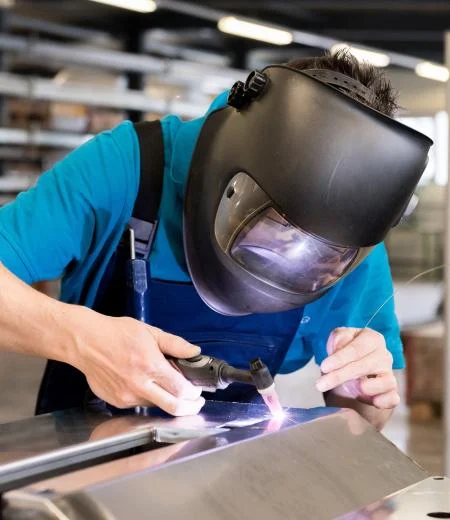
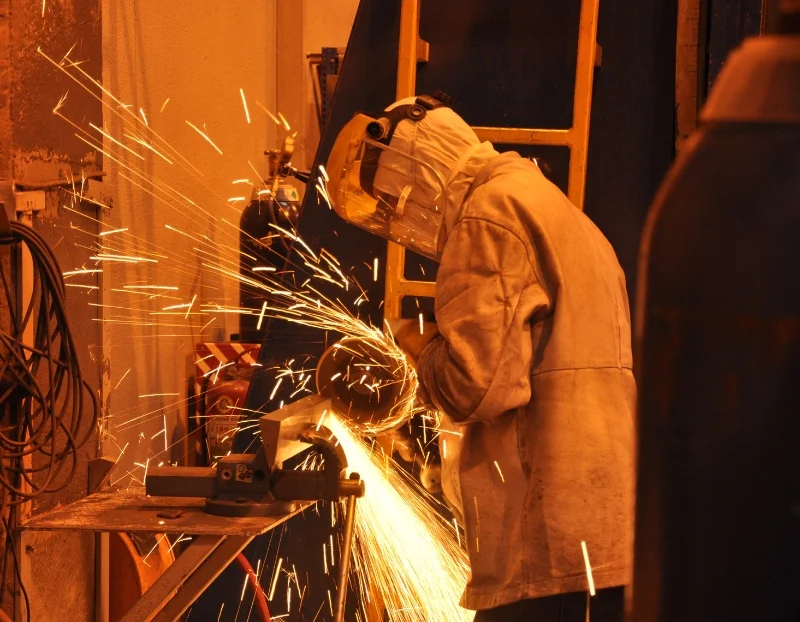
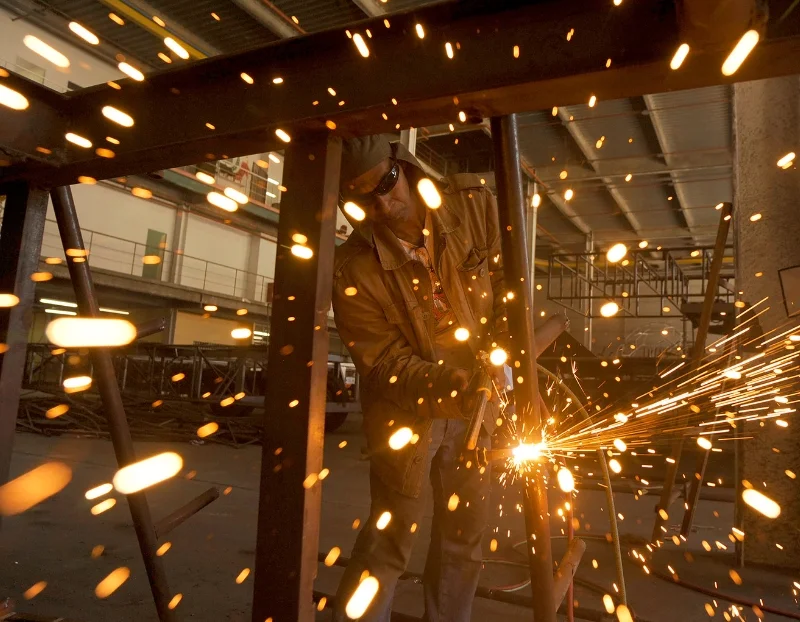
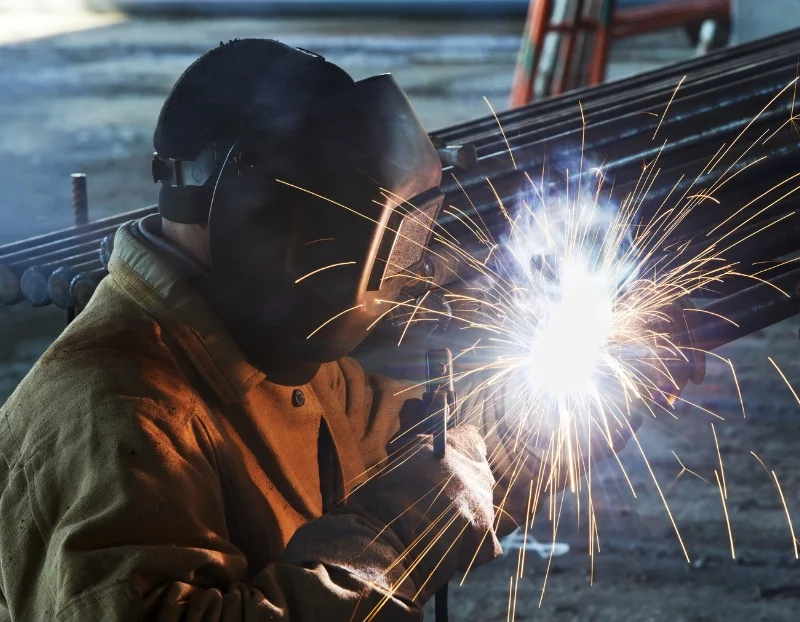
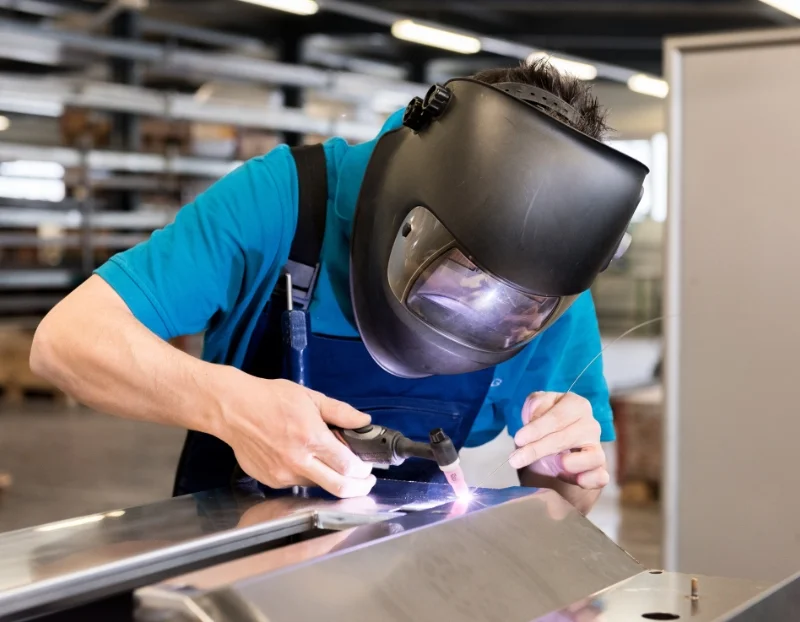
Welding in Haltom City
What a mobile welder handles in Haltom City
Compared with its suburban neighbors, Haltom City has a strong working-business base: auto repair and body shops, towing and trucking operators, fabrication and machine work, storage yards and contractors. Much of their metal equipment is too heavy or too fixed to move, so welding comes to it. A partner can repair a cracked mount on a shop press frame, rebuild the hinges on a yard gate or reinforce a truck bed without anyone loading the equipment onto a trailer.
The residential side is mostly established single-family streets with chain-link, pipe and ornamental fencing, carports and steel gates that have been patched over the years. Repairs on older steel start with finding sound metal: grinding back rust and old welds until the partner reaches clean base material. Stick (SMAW) is the usual outdoor process because it handles wind and less-than-perfect surfaces, while MIG (GMAW) and flux-core (FCAW) cover heavier production-style welds and thicker plate. TIG (GTAW) is used for thin stainless and aluminum parts.
Haltom City shares borders with Fort Worth, North Richland Hills, Watauga and Richland Hills, so partners who work this area also cover the surrounding northeast Tarrant County. For the wider regional view, start with our Fort Worth mobile welding page, and see neighboring North Richland Hills and Watauga.
- Equipment repaired in place at shops and yards
- Truck beds, headache racks and toolboxes fixed on site
- Older residential fence and gate steel restored
- Process selected for thickness, position and conditions
- Hot work coordinated around paint, fuel and solvents
Common repairs
Typical Haltom City welding calls
Working equipment and older steel generate most of the requests.
Cracked shop racks and stands
Pallet racks, engine stands and cart frames crack at welded joints under repeated load. Partners repair where the design allows and flag rated racking that should be replaced instead.
Truck bed and rack damage
Flatbeds, headache racks and toolbox mounts crack from vibration and loading. Repairs often include gussets at stress points.
Yard gates off their track
Rolling and swing gates at storage and contractor yards bend or drop. Track, rollers, hinges and frames are straightened, rewelded or rebuilt.
Worn equipment attachments
Buckets, forks and hitches on small loaders and forklifts wear and crack. Hardfacing and wear plate repairs are possible depending on the steel.
Chain-link and pipe fence
Older fences lose top rails and terminal posts to rust and impacts. Partners weld in new pipe and restore gate frames.
Carport and awning frames
Light steel carports rust at the base and loosen at connections. Repairs are assessed carefully since these frames carry wind load.
Services
Mobile welding services for Haltom City
Partners are matched by process, equipment and the type of site.
Shop and equipment repair
Field welding on racks, stands, presses, carts and fixed equipment inside working businesses, scheduled around production where possible.
Truck and trailer welding
Beds, racks, hitches, crossmembers and mounts on work trucks and trailers, with safety-critical parts treated conservatively.
Heavy equipment attachments
Buckets, forks, blades and hitch plates on loaders and skid steers, including wear plate and crack repair where suitable.
Commercial gates and fencing
Rolling and swing gates, security fencing, bollards and dumpster enclosures for yards and storefronts.
Residential repairs
Driveway gates, chain-link and pipe fence, carport frames, steps and railings for homes across the city.
Light fabrication
Brackets, plates, braces and replacement parts measured and built for your equipment or property.
Why Alpha Welding
Why Haltom City businesses use Alpha
Less downtime starts with sending the right partner the first time.
Matched to the work
A cracked press frame and a sagging gate need different rigs. We match partners whose equipment and experience fit.
Respect for production
We ask about shifts, hazards and access so the visit fits around your operation rather than stopping it.
Straight talk on scope
If a part should be replaced, sent to a shop or engineered, we tell you before a partner drives out.
Realistic timing
Urgent requests are worked as fast as partner availability allows. We do not promise arrival times.
How it works
How to get a welder to your Haltom City site
Clear photos and details make the match faster.
Reach out
Call 979-250-7486 or submit the estimate form with your address and the problem.
Show the damage
Photos, rough thickness and what the part does help us judge process and scope.
Partner confirmed
We find a partner who can cover the address and confirm timing with you.
Repair on site
The partner preps, welds and cleans up, then walks you through the result.
Technical guide
Field welding notes for Haltom City shops and homes
These notes focus on the work most common in Haltom City’s commercial and residential areas and what affects a good field repair.
Welding inside a working shop
Auto, body and fabrication shops hold plenty of things that should never meet a spark: paint, thinner, fuel, oily rags and compressed gas. Before an arc is struck, partners look for flammables within at least 35 feet, cover floor drains and openings, and set up welding curtains or blankets. A fire watch during and after the work is standard practice. If the shop has a paint booth or spray area nearby, it should be idle during the repair. Owners can speed things up by clearing the area and telling us about any hazards ahead of time.
Racks, stands and rated equipment
Not every cracked piece of shop equipment should be welded. Engineered pallet racking, vehicle lifts, hoists and lifting attachments carry manufacturer load ratings, and field welding can void that rating or create a hidden weak point. In those cases the right path is a manufacturer-approved repair kit or replacement. Shop-built stands, carts and fixtures are different: a partner can usually repair and reinforce them, adding gussets and full-penetration welds where the joint allows.
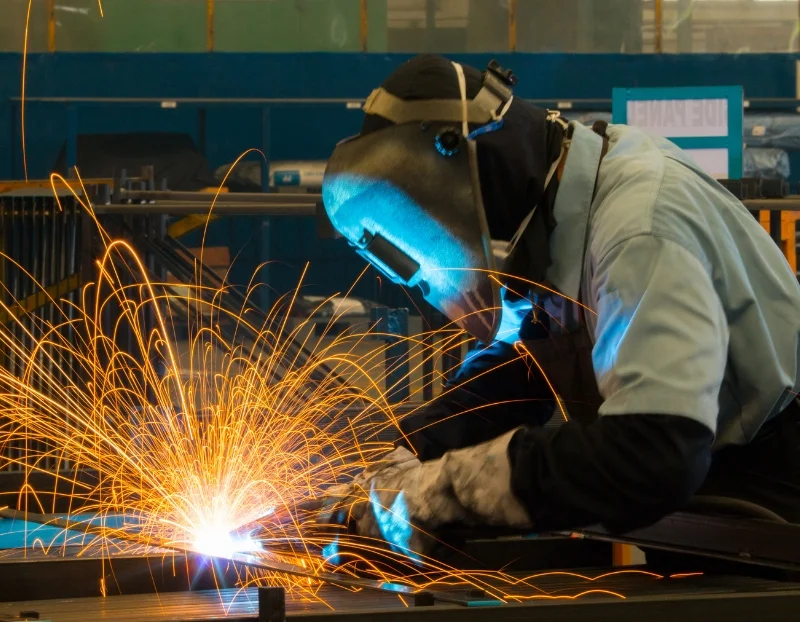
Truck beds and work trucks
Flatbeds and service bodies flex over rough roads, and cracks tend to start at sharp corners, bolt holes and short welds. A durable repair removes the whole crack, sometimes drills a stop hole at its tip, and adds a doubler or gusset to spread the load. Frames themselves are a separate matter. Vehicle frame rails are often heat-treated steel with manufacturer repair procedures, and commercial vehicles fall under federal safety rules, so frame welding is reviewed carefully and may be referred out. Our truck welding repair page covers more of this.
Wear parts and attachments
Loader buckets, forks and blade edges often use abrasion-resistant steel that is harder than mild steel and prone to cracking if welded cold. Partners may preheat, use low-hydrogen 7018 electrodes and control cooling to protect the heat-affected zone. Hardfacing rod can rebuild worn edges. Forklift forks are a common exception: most manufacturers do not allow welding repairs to forks, so a cracked fork is usually replaced, not welded.
Older residential fencing and gates
Many homes in Haltom City have fences and gates that have been repaired several times by different hands. Old brazing, bolted splices and layers of paint all need to come off before a partner can make a sound weld. Galvanized chain-link pipe needs the zinc ground off at the joint, since zinc fumes are hazardous, and the repair should be touched up with zinc-rich paint. Posts that lean because of clay soil movement may need to be reset in concrete before the gate hangs straight again.
Carports and light steel structures
Steel carports, patio covers and awnings are common on Haltom City lots, and many were built from light-gauge tube. Rust starts where posts meet concrete and where water collects inside the tube. Light-gauge steel burns through easily, so partners use lower heat, smaller electrodes or MIG with short stitches. Because these structures carry wind and sometimes hail load, a repair should restore the original connection strength or better. Larger or permitted structures may need the original design details or an engineer’s input before members are replaced; see our structural welding page for how that is handled.
Identifying unknown metals
Older equipment and salvage parts are sometimes cast iron, cast steel, high-carbon steel or an unknown alloy. Each welds differently, and guessing wrong leads to cracking. Partners use spark tests, grinding behavior and the part’s purpose to judge the material, and may recommend preheat, nickel electrodes for cast iron, or replacement when the metal is too uncertain to weld reliably.
Outdoor yard work through the seasons
Storage and contractor yards are often open gravel lots where wind, dust and sun all affect welding. Wind blows away MIG shielding gas, so outdoor work leans on stick or self-shielded flux-core. On hot summer days, steel in direct sun can be too hot to touch and coatings cure poorly, so mornings work best. During winter cold snaps, thick sections may need preheat to avoid cracking. Wet conditions add shock risk, and partners will postpone rather than weld in standing water.
Before the partner arrives
- Move flammables and clear 35 feet around the work
- Lock out powered equipment being repaired
- Note the steel thickness and what the part carries
- Confirm where the rig can park and reach power
- Tell staff when and where hot work will happen
Related welding services
Equipment down and losing time?
Send photos and tell us what the part does. We will check partner availability and be clear about how soon a visit is realistic.
Service area
Partner coverage around Haltom City
Alpha coordinates partner welders across northeast Tarrant County and greater Fort Worth. Coverage is confirmed for each address at the time of your request and depends on which partners are working nearby. These are areas we frequently hear from.
FAQs
Haltom City mobile welding FAQs
Answers for shop owners, fleet operators and homeowners.
Does Alpha have a shop in Haltom City?
No. Alpha coordinates independent partner welders who travel to your site. We do not operate an office, shop or yard in Haltom City.
Can a welder work inside my shop during business hours?
Often, if the area can be cleared of flammables and staff kept clear of the arc. Some shops prefer early or late visits. Partner schedules decide what is possible.
Can you weld my forklift forks?
Most manufacturers prohibit welding repairs to forks because heat changes the steel. A cracked fork should normally be replaced. Other forklift parts like guards and mounts can often be repaired.
Do you repair truck frames?
Frame repairs are assessed case by case. Many frames are heat-treated, and manufacturers publish repair procedures; commercial vehicles also face federal safety rules. Some frame work is referred to a specialist shop.
How soon can you come out?
That depends on which partners are free near your address. Same-day is possible at times but never guaranteed, and we confirm a realistic window first.
How do you price a repair?
Travel, setup, prep, materials and time on site set the cost. We do not quote fixed prices, but photos and measurements let us estimate accurately.
Can you weld cast iron?
Sometimes, with nickel electrodes, preheat and slow cooling. Cast iron is crack-prone, so replacement or a mechanical repair is often more reliable.
Do you fix rolling yard gates?
Yes. Partners straighten or replace bent frames, reweld track and repair roller carriages. Gate operators should be powered off and serviced by the operator vendor.
Can you build a replacement part?
For simple brackets, plates and braces, yes, from measurements or a sample. Machined or rated parts should come from the manufacturer.
What nearby areas do you cover?
Partners commonly work in North Richland Hills, Watauga, Richland Hills, Keller and Fort Worth. Coverage is confirmed per address.
Request an estimate
Request mobile welding in Haltom City
Send the address, the problem and a few photos. We will check partner coverage and come back with honest next steps and timing.
- Free, no-obligation estimates
- Photos help us understand the job faster
- Same-day requests depend on partner availability